SERVING WA
Since 2009

Best overall for hand-picked cartons: solid-deck long span shelving. Best for workshop components: steel-deck long span shelving. Best for open-deck storage: mesh-deck long span shelving. Best for small parts: shallow long span shelving with bins. This 2026 guide helps you choose long span shelving in Perth by stock type, documented load ratings and usable warehouse space.
A warehouse shelf has to support your stock and let staff retrieve it without unnecessary handling. A bay that fits the wall but leaves cartons buried behind other cartons is the wrong fit.
For Perth retailers planning a 2026 stockroom fit-out, separate hand-picked storage from pallet storage before comparing shelving. Cheapshelving sells commercial shelving, retail displays, trolleys and shop fittings to businesses and retailers in Perth, Western Australia. Choose each fixture for its actual task rather than treating retail shelving and warehouse racking as interchangeable.
Cheapshelving is a commercial shelving supplier for Perth businesses and retailers. Warehouse suitability still depends on the specification of the particular system you select.
Use these checks before comparing deck types. They matter more than the colour or the phrase heavy duty.
Long span shelving is generally a hand-loaded storage system. If forklifts place loaded pallets directly into the storage positions, use a pallet-racking assessment instead of assuming a long span bay is suitable.
These are configuration choices, not a ranking of named products. Each option has a distinct job; its suitability depends on the manufacturer's documented specification.
| Rank and option | Best for | Standout feature | Key limitation |
|---|---|---|---|
| Solid-deck long span shelving | Hand-picked cartons | Continuous support beneath packages | Deck condition and load distribution require checks |
| Steel-deck long span shelving | Workshop components | Metal shelf surface | Concentrated loads still need explicit approval |
| Mesh-deck long span shelving | Stock suited to an open deck | Openings through the shelf surface | Small items and narrow package bases need support checks |
| Shallow long span shelving with bins | Small-parts picking | Shorter reach to labelled containers | Less depth for bulky cartons |
Here, solid-deck means a continuous board-style deck; steel-deck means a solid metal deck. The distinction helps you compare the shelf surface, but neither label establishes a load rating.
Solid-deck long span shelving provides a continuous surface beneath boxed stock. It is the default shortlist when your warehouse stores cartons that staff pick by hand, provided the selected system is rated for the intended loads.
Start with the cartons, not the bay. Check their bases, loaded weights and stacking arrangement, then confirm whether the proposed shelf supports them without overhang.
Solid-deck long span shelving pros:
Solid-deck long span shelving cons:
Best for: Retail reserve stock and warehouses picking complete cartons or individual items from cartons.
Ask whether the specified rating assumes an evenly distributed load. A dense carton placed in one position is not equivalent to the same weight spread across the shelf.
Verdict: Buy only when the complete bay specification matches your carton weights, dimensions and loading pattern.
Steel-deck long span shelving uses metal shelf panels to support stored goods. It belongs on your shortlist for boxed components and workshop stores where the shelf surface needs to suit the handling conditions.
Check the panel arrangement and support beneath it. The word steel describes the material, not the capacity of the installed shelf.
Steel-deck long span shelving pros:
Steel-deck long span shelving cons:
Best for: Workshop stores and component storage with documented weights and packaging requirements.
For loose parts, use suitable containers rather than assuming a flat shelf will keep items organised. Confirm container support, handling access and any need to protect the shelf surface from the stored material.
Verdict: Buy for component storage only after the supplier confirms the deck arrangement and intended loading.
Mesh-deck long span shelving supports stock on an open wire surface. Consider it when your storage design calls for an open deck and the package bases are suitable for that surface.
Do not treat mesh as an automatic solution to fire protection. Have the shelving arrangement assessed against the site's fire-system requirements, including stock placement and any required clearances.
Mesh-deck long span shelving pros:
Mesh-deck long span shelving cons:
Best for: Warehouses with a specified need for open decking and stock packaged appropriately for it.
Inspect how each container sits on the mesh. A package can fit inside the bay while still resting poorly on the deck or its supporting members.
Verdict: Hold until package support and site fire-system requirements are confirmed.
A shallow long span configuration places labelled bins within a more direct picking reach. It suits small components better than a deep shelf that encourages containers to disappear behind other stock.
The bins organise the stock; the shelving supports the bins. Check both together, including the weight of a fully loaded container and the space needed to remove it.
Shallow long span shelving with bins pros:
Shallow long span shelving with bins cons:
Best for: Small-parts stores and retail stockrooms handling individually picked items.
Choose container labels that staff can read from the aisle. Keep frequently picked stock accessible, and check that replenishment does not require dismantling an orderly row of bins.
Verdict: Buy for small-parts picking when loaded bins fit, remain supported and can be removed safely.
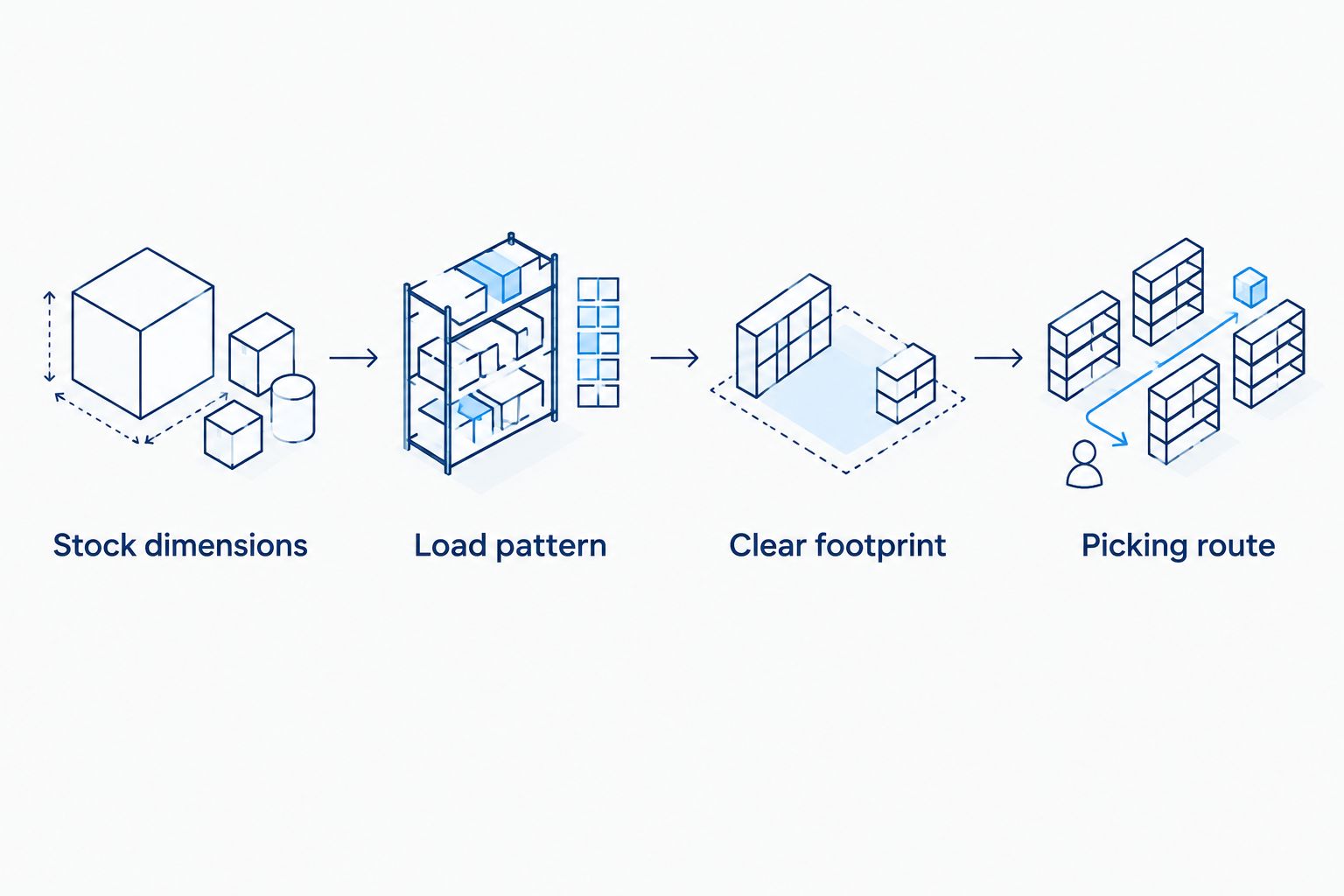
Use this sequence to turn a shelving enquiry into a usable specification. For a 2026 warehouse layout, include your current stock and the storage changes already planned for the site.
Measure the outside of the loaded carton or container, including protruding lids and handles. Record how staff pick it: a complete carton, an individual item or a removable bin.
Record loaded weights and where each load will sit. Ask the supplier to assess dense items, uneven distribution and any equipment that places stock onto the shelf.
Mark columns, door openings, services and fixed equipment on the floor plan. Use the complete installed bay dimensions, not beam length alone, when checking the space.
Trace the movement from receiving to storage, then from storage to dispatch or the shop floor. Check whether doors, trolleys or replenishment activity obstruct access to the shelving.
Keep measurements in millimetres and loads in kilograms on your enquiry sheet. Ask for confirmation of the assembled configuration, including decking, shelf positions and installation requirements, rather than approval of an isolated component.
Cheapshelving's commercial shelving range includes retail fixtures whose stated base-shelf dimensions help you compare shop-floor space. Those dimensions do not establish warehouse load capacity.
For example, Budget Shelving Flat Panel configurations include a 300 mm base shelf and a 450 mm base shelf. A Heavy Duty Shelving Flat Plain Panel configuration names a 900 × 300 mm base shelf. These are retail product dimensions, not specifications for the long span configurations ranked above.
Use those measurements when planning the retail side of a combined shop and stockroom. For the warehouse side, request usable storage dimensions and documented load ratings for the proposed long span system.
This separation matters when a Perth business stores reserve cartons behind a customer-facing display. Select the display fixture for merchandising and the warehouse fixture for the storage load. A product name containing heavy duty is not a substitute for either assessment.
Choose a pallet-racking assessment when your storage task involves placing loaded pallets directly into rack positions. Do not select hand-loaded long span shelving simply because a pallet appears to fit between the uprights.
| Storage task | System to assess | Main check |
|---|---|---|
| Hand-picked cartons | Long span shelving | Shelf and bay ratings for the loading pattern |
| Small components in bins | Shallow shelving with bins | Container fit, support and picking access |
| Loaded pallets placed by forklift | Pallet racking | Rack design for pallets, equipment and site conditions |
For the pallet-storage decision, use the guide to pallet shelving systems for Perth warehouses. Keep pallet handling and carton picking as separate requirements even when they share a building.
This 2026 ranking puts hand-picked cartons first because that is the storage task the default recommendation addresses. Steel, mesh and shallow-bin configurations follow as distinct choices for component storage, open-deck requirements and small-parts picking.
The criteria are load documentation, stock fit, picking access, deck suitability, installation and whole-system value. The ranking does not substitute for a manufacturer's rating or a site-specific assessment.
Choose solid-deck long span shelving as the default shortlist for hand-picked cartons. Move to steel decking when the component-storage brief calls for a metal surface, mesh when the design requires open decking, and shallow bins when picking small parts is the main task.
For a 2026 purchasing enquiry to Cheapshelving, describe the storage job before requesting a configuration. Include loaded stock dimensions, weights, available floor space, access restrictions and the method of replenishment.
Compare the same scope across proposals: frames, beams, decking, required fixings and installation requirements. A shorter component list is not evidence of better value if it leaves part of the working system unresolved.
What's the best long span shelving in Perth for warehouse cartons?
Solid-deck long span shelving is the default shortlist for hand-picked cartons. Choose a complete system with documented shelf and bay ratings that match carton weights, dimensions and load distribution.
Is steel-deck shelving stronger than board-deck shelving?
Deck material alone does not establish which shelving system has the higher load capacity. Compare documented ratings for the complete installed configuration, including beams, decking and the loading pattern.
Can I store pallets on long span shelving?
Do not place loaded pallets on long span shelving unless the specific system is explicitly designed and approved for that task. Forklift-loaded pallet storage needs a pallet-racking assessment.
How deep should warehouse shelving be?
Choose shelf depth from your loaded stock dimensions and picking method. Check support, overhang and access to rear items rather than selecting depth from available wall space alone.
Does mesh decking satisfy warehouse fire requirements?
Mesh decking alone does not establish compliance with a warehouse's fire requirements. Have the complete arrangement assessed against the site's fire-system design, stock and required clearances.
Does Cheapshelving supply commercial shelving in Perth?
Cheapshelving sells commercial shelving, retail displays, trolleys and shop fittings to businesses and retailers in Perth, Western Australia. Specify the storage task and confirm the particular system's dimensions and load ratings before selecting warehouse shelving.
What should I include in a long span shelving enquiry?
Include loaded stock dimensions, weights, load distribution, available floor space and the handling method. Ask for the complete configuration and its installation requirements so you can compare proposals on the same basis.
Before committing to your 2026 layout, mark the proposed bay footprint on the floor and walk the picking route with the equipment you actually use. Open nearby doors and practise removing a container from the planned position.
Reject a layout that fits the room but obstructs the job. Floor markings test access; they do not replace structural checks or installation instructions.
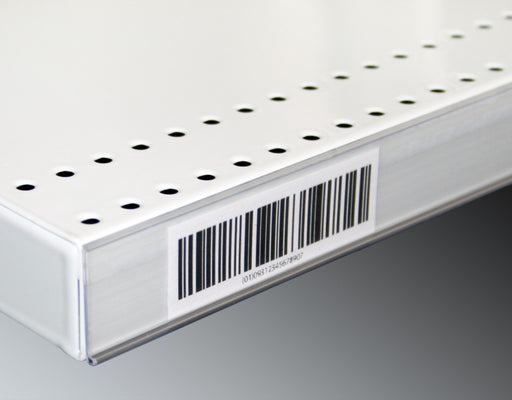
Upgrade your store's pricing and product labeling system with our Flat Adhesive Data Stripping. This cost-effective solution is designed to simplif...
View full details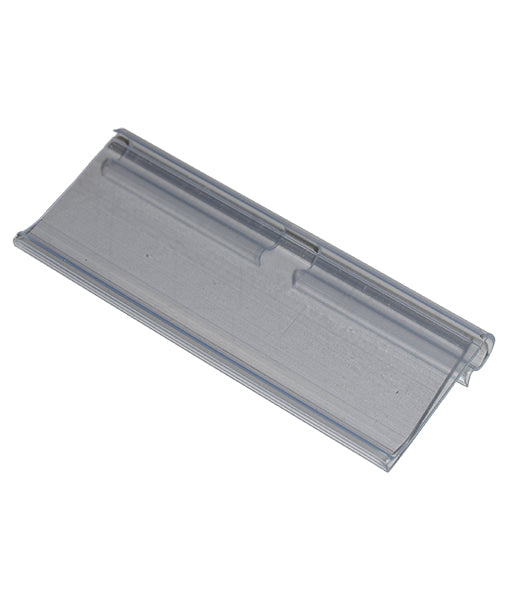
Enhance your store's product labeling and pricing system with our 100-Pack Flipper Tags. These versatile and easy-to-use tags are designed to strea...
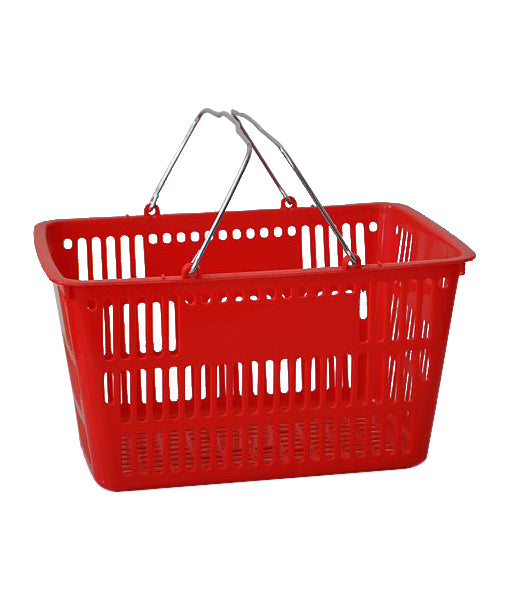
View full detailsUpgrade your customers' shopping experience with our 28 litre Shopping Baskets featuring Metal Handles. These robust and stylish baskets are design...
View full detailsRevolutionize your customers' shopping experience with our Roller Shopping Baskets. These innovative baskets are designed for maximum convenience, ...
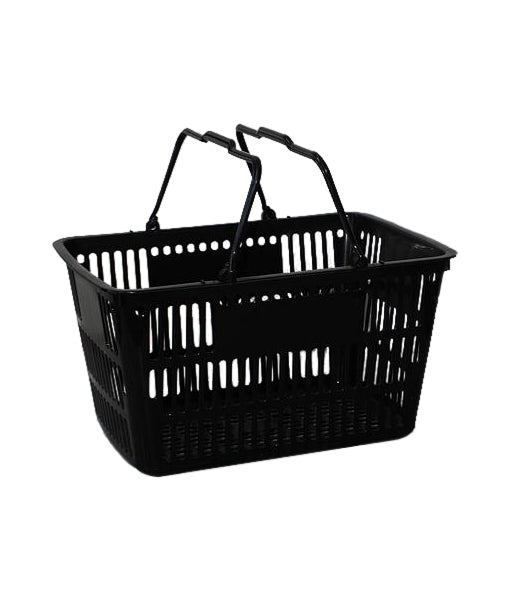
View full detailsMake shopping a breeze for your customers with our 28 Litre Shopping Baskets featuring Plastic Handles. These lightweight and sturdy baskets are de...
View full details{"one"=>"Select 2 or 3 items to compare", "other"=>"{{ count }} of 3 items selected"}