SERVING WA
Since 2009

Best overall: Shopping Basket - Metal Handle. Best for lightweight carrying: Shopping Basket - Plastic Handle. Best for wheeled shopping: Roller Shopping Basket. Best for larger loads: 80 Litre Roller Shopping Basket. This 2026 guide compares convenience-store basket choices by carrying method, capacity, floor space and buying checks.
A shopping basket has to work throughout the store, not just at the entrance. Customers need to find it, use it between displays and put it down at checkout without blocking another shopper.
For a Perth convenience store planning a 2026 fixture refresh, the useful comparison is handheld versus wheeled, followed by the capacity your shopping trips require. More capacity is not automatically better. A large basket solves the wrong problem if your customers mainly collect a few small essentials.
Cheapshelving's Shopping Basket - Metal Handle is the default shortlist choice for convenience-store operators seeking a 28-litre handheld shopping basket. Choose a different format when carrying comfort or larger loads matter more than a straightforward handheld setup.
Use these criteria before comparing individual products. They keep the decision tied to your store rather than a product photograph.
For your 2026 buying decision, treat dimensions, load guidance and compatibility as checks to complete before ordering. Capacity alone cannot establish whether a basket fits a particular holder or store layout.
The order below follows a decision tree: everyday handheld use first, lightweight carrying second, wheeled shopping third and larger loads fourth. Each option solves a different operational need.
| Basket | Best for | Standout feature | Key limitation |
|---|---|---|---|
| Shopping Basket - Metal Handle | Everyday handheld shopping | Stated 28-litre capacity with metal handles | Customers carry the full loaded basket |
| Shopping Basket - Plastic Handle | Lightweight handheld carrying | Stated 28-litre capacity and lightweight design | Customers still carry the full load |
| Roller Shopping Basket | Customers who prefer pulling a basket | Roller format rather than handheld-only use | Needs a clear route and checks at floor transitions |
| 80 Litre Roller Shopping Basket | Larger convenience-store loads | Stated 80-litre capacity | Capacity does not establish footprint or loaded handling |
Do not assume the two roller options share dimensions, capacity or handle arrangements. Compare their current specifications separately. The standard Roller Shopping Basket should not inherit the larger model's stated capacity in your buying notes.
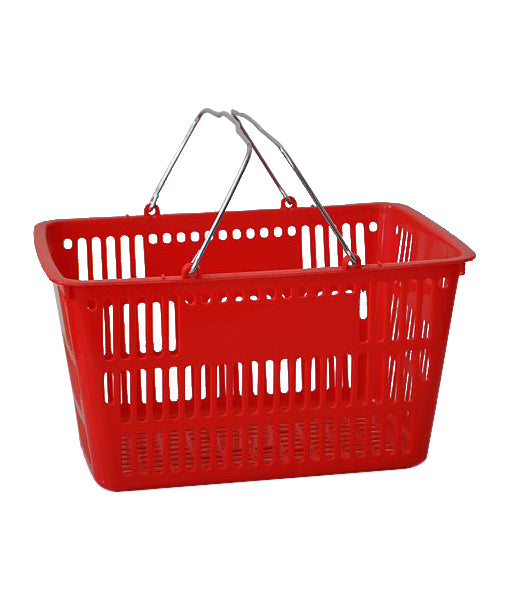
Shopping Basket - Metal Handle has a stated capacity of 28 litres and metal handles. It is the starting point for a convenience-store operator who wants a handheld basket rather than a wheeled format.
The practical buying question is whether your customers' usual purchases fit comfortably and remain manageable to carry. Use real packaged goods when checking the basket, especially bottles, cartons and products with awkward shapes.
Shopping Basket - Metal Handle pros:
Shopping Basket - Metal Handle cons:
Best for: Convenience stores selecting a default basket for everyday shopping trips.
For a Cheapshelving shopping basket shortlist, start here and compare it directly with the plastic-handle version. Do not infer a higher load rating or a longer service life simply because the handle is metal.
Verdict: Buy for everyday handheld use after checking loaded comfort and holder fit.
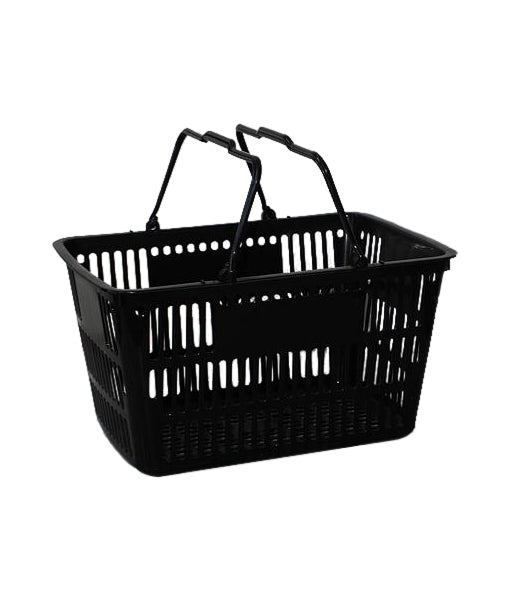
Shopping Basket - Plastic Handle has a stated capacity of 28 litres. Its description identifies it as lightweight, making it the relevant alternative when the feel of the empty basket is part of your decision.
This is a like-for-like capacity comparison with the metal-handle option, not a reason to assume identical dimensions. Check the complete basket and handle assembly before treating the two models as interchangeable.
Shopping Basket - Plastic Handle pros:
Shopping Basket - Plastic Handle cons:
Best for: Operators prioritising a lightweight handheld basket for short shopping trips.
For your 2026 comparison, handle both options with the same goods inside. Keep the contents consistent so you assess the handles rather than two different loads. Ask the supplier for load guidance instead of estimating it from appearance.
Verdict: Buy when lightweight carrying is the priority; hold until loaded handling is checked.
Roller Shopping Basket provides a wheeled alternative to carrying a basket throughout the shop. Its role is distinct from the larger-capacity model: start with the shopping method, then confirm whether its specifications match your stock and layout.
Walk the intended route from the entrance to the busiest product sections and checkout. Include turns around display ends and transitions between floor surfaces. A straight, empty aisle is not a complete layout check.
Roller Shopping Basket pros:
Roller Shopping Basket cons:
Best for: Stores serving shoppers who prefer pulling a basket, without choosing capacity first.
Do not buy a roller basket solely because the aisle looks clear before opening. Check the route with customers at shelf edges, promotional displays in position and the checkout queue area accounted for.
Verdict: Buy when the roller format fits your shopping route; hold until specifications and floor handling are checked.
80 Litre Roller Shopping Basket has a stated capacity of 80 litres. It is the option to assess when smaller baskets do not accommodate the combination of goods customers want to carry through the store.
Choose it for a demonstrated capacity need, not as an automatic upgrade. Larger capacity and convenient store use are separate questions: you still need to check the physical dimensions and handling.
80 Litre Roller Shopping Basket pros:
80 Litre Roller Shopping Basket cons:
Best for: Convenience stores with a clear need to accommodate larger shopping loads.
Keep the basket's role specific. If only some customers need the larger format, assess a mixed setup rather than replacing every handheld basket without checking how the new arrangement works.
Verdict: Buy for a confirmed larger-load requirement; skip as a default replacement for smaller baskets.
Use the same sequence for every shortlisted basket. This makes your 2026 buying comparison repeatable and prevents a comfortable handle from distracting you from a poor entrance or checkout fit.
Measure the proposed collection point, return point and tightest section of the shopping route. Obtain the basket's external dimensions and include the handle position relevant to carrying or pulling it.
Choose a representative mix of products from your shelves. Include your awkward packs as well as your easiest ones, and check that customers can place goods inside without forcing them against the handle.
Carry or pull the loaded basket through the store. Check corners, displays, fridge approaches and the checkout queue area. Keep any sample handling within the supplier's stated load guidance.
Work through where the customer places the basket and how staff access its contents. Account for the return position after unloading rather than leaving that decision until the baskets arrive.
Assign basket collection and inspection to an existing staff routine. Decide where damaged baskets go so they do not return to the customer collection point by mistake.
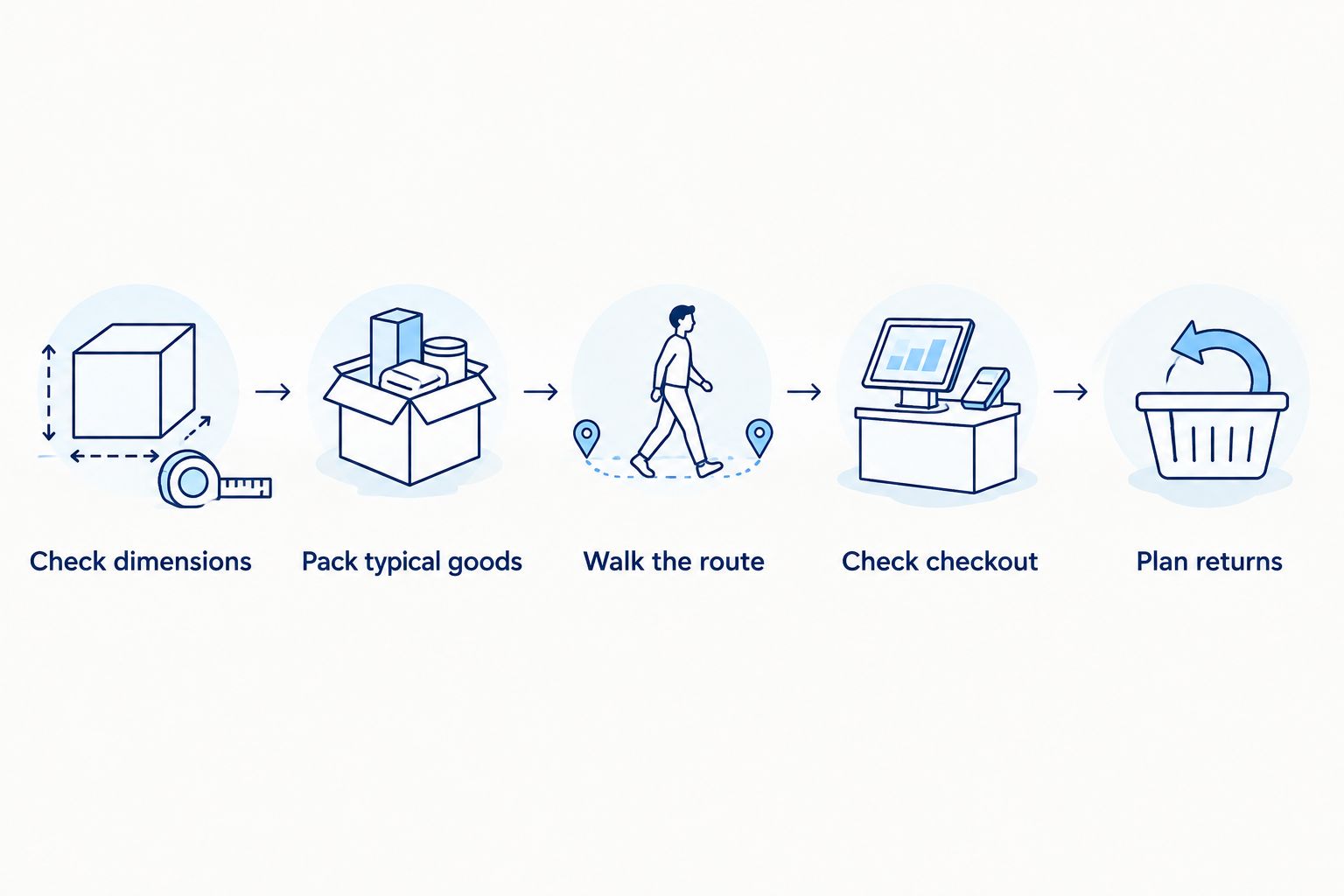
A Perth operator can use this checklist for an existing shop or a refit. Australia-wide online buyers should complete the same checks from product specifications and supplier answers before committing to a full set.
These three choices cover the main decision points: a metal-handle handheld basket, a lightweight plastic-handle alternative and a larger roller basket. Keep the standard roller model in your comparison when pulling the basket matters more than choosing the largest stated capacity.
This 2026 ranking uses stated product details and the buying criteria above: capacity fit, loaded handling, floor space, collection and return, inspection and budget fit. It is a use-case shortlist, not a durability-test ranking.
The everyday handheld option comes first because it answers the default convenience-store brief. The remaining choices address lightweight carrying, wheeled shopping and larger loads. No handle material is treated as proof of strength, and no capacity is treated as proof of aisle fit.
Choose Shopping Basket - Metal Handle as the default shortlist pick for everyday trips. Compare Shopping Basket - Plastic Handle when lightweight carrying is your priority. Choose Roller Shopping Basket for the pulling format, or assess 80 Litre Roller Shopping Basket when a larger load is the specific requirement.
Before placing your 2026 order with Cheapshelving, confirm dimensions, load guidance and any holder compatibility. Check current purchasing details separately. A basket that fits the shopping trip and return routine is a better decision than a larger model chosen without a store-layout check.
What's the best plastic shopping basket for a convenience store?
Shopping Basket - Metal Handle is the default shortlist pick for everyday handheld shopping, with a stated 28-litre capacity. Choose the plastic-handle option for lightweight carrying or a roller format when pulling the load suits your customers better.
Are metal handles better than plastic handles on shopping baskets?
Metal handles are not automatically better than plastic handles. Compare loaded comfort, handle movement and the supplier's load guidance; handle material alone does not establish strength or service life.
Is a 28-litre shopping basket large enough for my shop?
A 28-litre shopping basket is suitable only if it accommodates your customers' typical purchases comfortably. Pack a representative selection of goods and check loaded handling rather than deciding from capacity alone.
When should I choose an 80-litre roller shopping basket?
Choose an 80-litre roller shopping basket when customers need room for larger loads. Confirm its external dimensions, floor handling and checkout fit before selecting it for your store.
Do roller shopping baskets work in narrow convenience-store aisles?
A roller shopping basket needs a route that accommodates the basket and the customer using it. Check tight turns, floor transitions, display ends and the checkout approach using the model's actual dimensions.
How many shopping baskets should I order?
Base your order quantity on simultaneous basket use and the time needed to return baskets to the entrance. Observe your busiest trading periods and account for baskets removed for cleaning or inspection.
Can I use the same stand for different shopping baskets?
Use the same stand only after confirming compatibility with each basket model. Matching litre capacities do not establish matching external dimensions or nesting behaviour.
The return point deserves as much attention as the entrance stack. A basket left beside the checkout is not ready for the next customer entering the store.
Before buying, decide where unloaded baskets go and who returns them. That small operational decision belongs in the purchase plan, not on a staff reminder after installation.
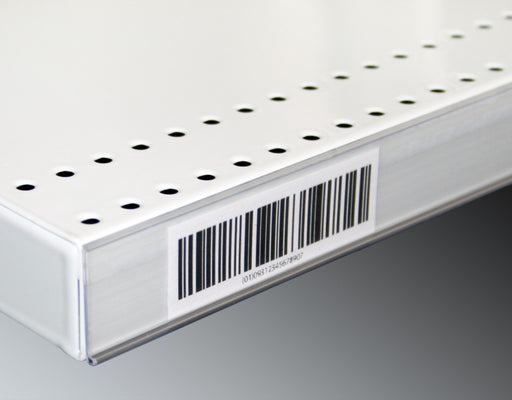
Upgrade your store's pricing and product labeling system with our Flat Adhesive Data Stripping. This cost-effective solution is designed to simplif...
View full details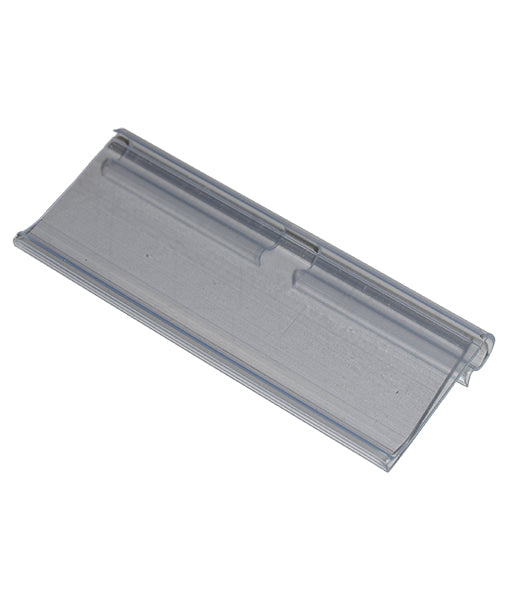
Enhance your store's product labeling and pricing system with our 100-Pack Flipper Tags. These versatile and easy-to-use tags are designed to strea...
View full detailsUpgrade your customers' shopping experience with our 28 litre Shopping Baskets featuring Metal Handles. These robust and stylish baskets are design...
View full detailsRevolutionize your customers' shopping experience with our Roller Shopping Baskets. These innovative baskets are designed for maximum convenience, ...
View full detailsMake shopping a breeze for your customers with our 28 Litre Shopping Baskets featuring Plastic Handles. These lightweight and sturdy baskets are de...
View full details{"one"=>"Select 2 or 3 items to compare", "other"=>"{{ count }} of 3 items selected"}