SERVING WA
Since 2009

Best overall: a mixed cabinet-and-shelving layout. Best for staff-assisted selection: a lockable glass display layout. Best budget-focused option: a targeted shelving-and-ticketing refresh. This 2026 guide compares shop fitting packages for optometry stores and health retailers as fixture combinations you can specify—not advertised bundles or complete clinical fitouts.
An optometry practice needs more than somewhere to put stock. Your retail fixtures must leave room for customers to browse, staff to assist and people to move between reception and consultation areas without crossing a crowded display zone.
Cheap Shelving supplies commercial shelving, displays and shop fittings to Perth and WA businesses. The useful starting point is a fixture schedule: decide what needs glass protection, what customers should pick up themselves and what belongs behind the counter.
For your 2026 project, separate retail furniture from clinical equipment and building works. A cabinet, shelf and checkout combination is a retail fixture selection—not evidence of a complete optometry fitout service.
Use these checks before choosing a combination. A package earns its place by fitting your merchandise and operating routine, not by containing the most furniture.
These five options are planning configurations assembled around different retail needs. They are not named supplier packages, and their order reflects the use cases below rather than measured product performance.
| Rank | Configuration | Best for | Standout feature | Key limitation |
|---|---|---|---|---|
| 1 | Mixed cabinet-and-shelving layout | Mixed optometry and health merchandise | Separates assisted displays from self-service products | Requires coordinated fixture heights and customer routes |
| 2 | Lockable glass display layout | Staff-assisted selection | Enclosed presentation with illuminated cabinet options | Customers need staff access to enclosed products |
| 3 | Shallow perimeter shelving layout | Boxed health and eye-care accessories | Keeps merchandise along the store perimeter | Shelf depth does not establish the complete footprint |
| 4 | Slatwall accessory layout | Packaged hanging accessories | Uses vertical display space | Panel, hook and merchandise compatibility need checking |
| 5 | Checkout-and-ticketing refresh | Improving an existing store | Targets the transaction area and product information | Does not solve a poor underlying floor plan |
A mixed layout combines glass display furniture for staff-assisted merchandise with open shelving for boxed products. Add a transaction counter only after you have established the route between entry, browsing and reception.
Cheap Shelving retail fixtures are best suited to operators sourcing individual display components rather than a specified clinical fitout. For an optometry store, confirm separate frame supports before treating a general glass cabinet as an eyewear display.
Mixed layout pros:
Mixed layout cons:
Best for: An optometry practice selling a mix of frames and packaged eye-care products, or a health retailer with both assisted and self-service merchandise.
For your 2026 fixture schedule, list the merchandise beside each cabinet or bay. Mark who accesses it, where replacement stock sits and which adjoining doors must open. That turns a furniture list into an operating layout.
Verdict: Buy this configuration when your merchandise genuinely needs both enclosed and open displays.
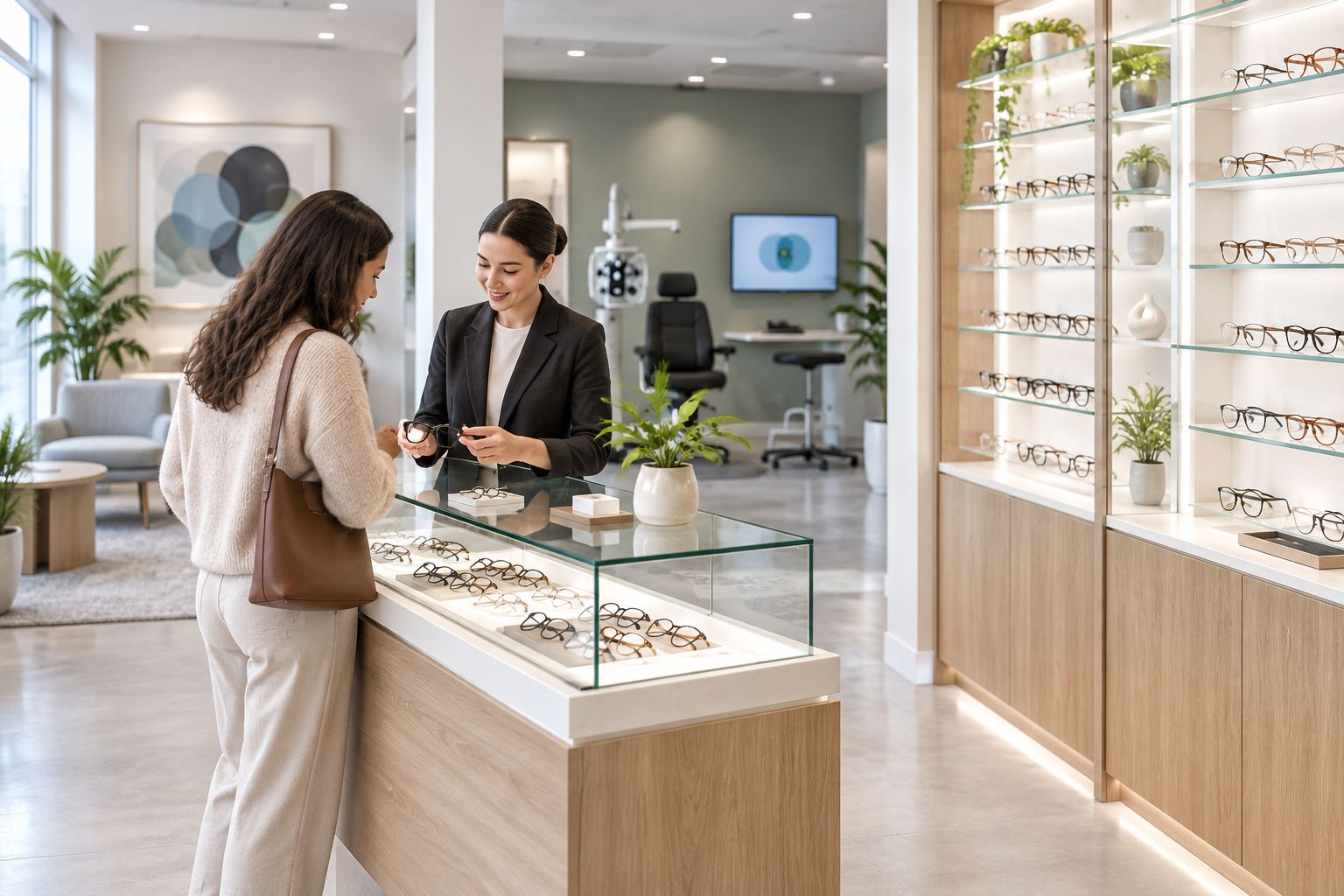
A glass-led layout puts enclosed merchandise at the centre of the retail area. It suits a selling process where staff retrieve products and help customers compare them, rather than leaving every item open for handling.
The Glass Display Counter with LED Light is described as 900mm high and 600mm wide, with lockable doors and two levels of tempered glass shelves. The Glass Display Cabinet with LED Light (ELC) is described as 1980mm high and 400mm wide, with rear LED strips and four levels of tempered glass shelves.
Those dimensions do not establish every measurement you need. Confirm the remaining dimensions, door operation, usable shelf space, load limits and power requirements before specifying either product.
Glass display layout pros:
Glass display layout cons:
Best for: Stores that deliberately use assisted product selection.
Before selecting a cabinet, arrange representative merchandise on a surface matching its usable shelf dimensions. Check how customers will compare items and where staff will place them after removal.
Verdict: Buy for assisted selling; skip as the default for products customers need to pick up freely.
These are individual retail display products, not a complete optometry package. Match their documented features to your layout and verify eyewear presentation requirements separately.


Perimeter shelving gives boxed health products a defined browsing area without starting with a central island. Assess it for packaged eye-care accessories and other merchandise that can stand securely on an open shelf.
Cheap Shelving lists budget flat-panel shelving with 300mm and 450mm base shelves. These are base-shelf dimensions, not confirmed overall fixture depths or aisle-clearance recommendations.
Perimeter shelving pros:
Perimeter shelving cons:
Best for: Health retail ranges dominated by boxed products rather than loose frames.
For a 2026 shelving refresh, choose depth from your largest intended product and the number of facings you need. Do not fill a deeper shelf simply because the space exists; preserve readable labels and access to the rear stock.
Ask for the applicable shelf load rating and installation instructions for the exact configuration. Never transfer a rating from an additional shelf to a complete bay without confirmation.
Verdict: Buy for boxed self-service merchandise; skip as a substitute for purpose-suited loose-frame presentation.
Slatwall provides a panel-based location for compatible hooks and brackets. Treat it as an accessory display option, not proof that every frame, package or shelf attachment will fit.
The listed Slatwall 2400mm long 1200mm high has aluminium extrusions at 100mm centres. Panel size alone does not confirm wall fixing requirements, attachment compatibility or load capacity.
Slatwall layout pros:
Slatwall layout cons:
Best for: Packaged accessories intended for compatible hanging displays.
Check the product from the side as well as the front. A package hanging on a long hook projects into the customer route, and adjacent products still need room for hands to remove them.
Use an actual merchandise sample to check the selected attachment. Avoid assuming that a hook from another panel system will fit because it looks similar.
Verdict: Buy after confirming the complete panel-and-attachment combination; hold if merchandise compatibility remains unresolved.
A targeted refresh keeps serviceable display furniture and addresses specific counter or labelling problems. It is the budget-focused choice when your current layout works and replacement fixtures would not solve a defined problem.
The Timber Check Out Counter description includes a 550mm till cut-out, a lockable cupboard and adjustable shelves. It comes flat packed and requires assembly; the till cut-out is not the overall counter length.
Checkout refresh pros:
Checkout refresh cons:
Best for: Established optometry and health retailers improving reception-side merchandising without replacing the whole retail area.
For your 2026 refresh, separate the payment surface from merchandise and paperwork. Test the position of the payment equipment, customer belongings and any product being discussed before adding counter displays.
Verdict: Buy a targeted refresh when the existing layout works; skip cosmetic additions that preserve an operational problem.
The ranking prioritises merchandise fit, floor footprint, customer access, stock visibility, daily operation and scope clarity. The mixed layout leads because it addresses both assisted and self-service merchandising; the other configurations suit narrower requirements.
This is a specification guide based on the supplied product descriptions, not an installation trial or a comparison of quoted fitout contracts. No configuration includes an assumed installation service, clinical equipment or eyewear-specific accessories.
Use this sequence to turn your preferred combination into a buying brief. For Perth premises and Australia-wide projects alike, record site measurements rather than relying on a photograph or an old tenancy drawing.
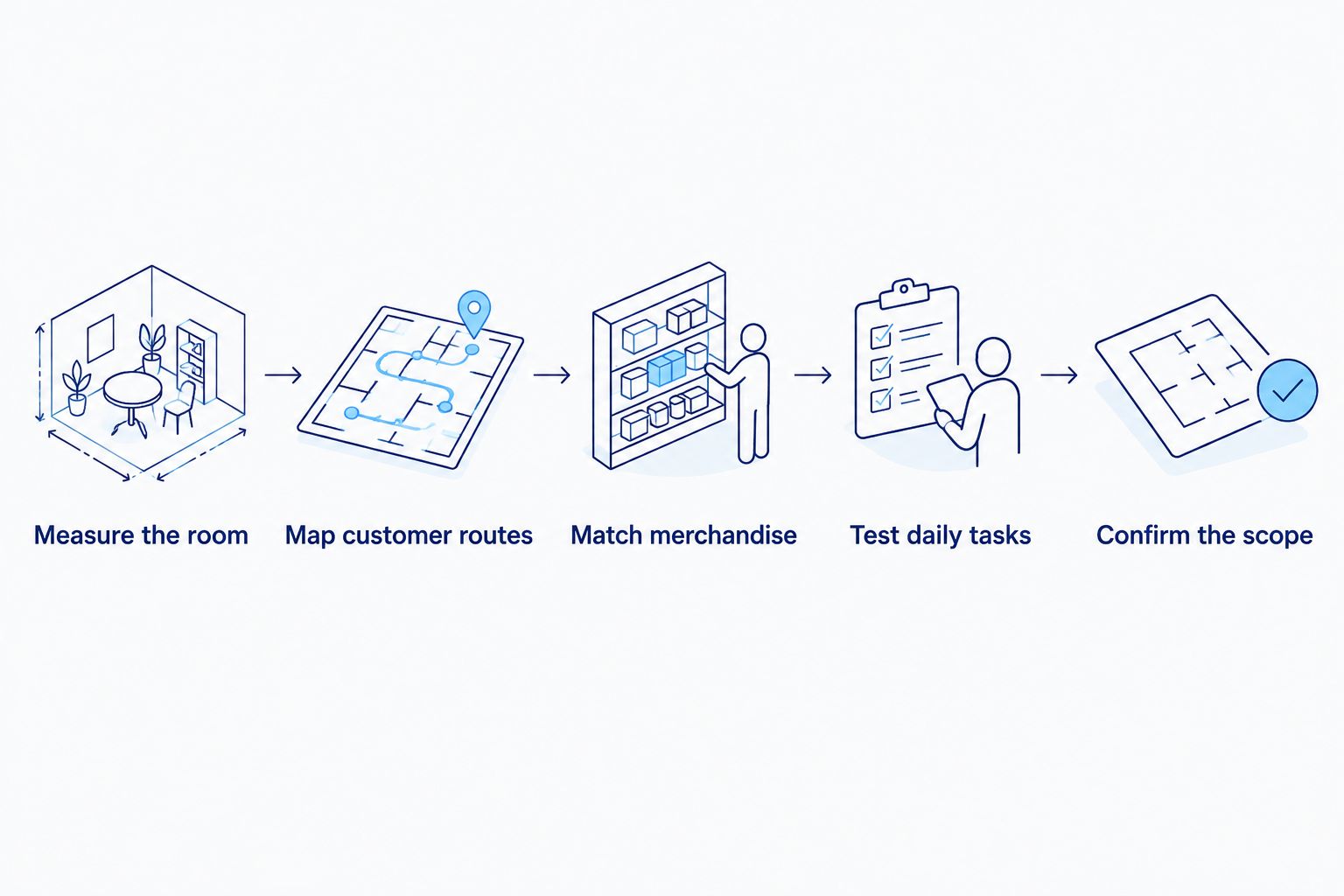
Keep a separate list of unresolved questions. A missing cabinet depth or an unconfirmed wall fixing is a purchasing decision, not a detail to leave until assembly day.
Choose the mixed cabinet-and-shelving layout if you need a starting point for an optometry store with varied merchandise. Reduce it to a glass-led layout for assisted selection, or perimeter shelving for a predominantly boxed range.
Cheap Shelving shop fittings give you individual components to assess. Build your selection around verified dimensions and tasks, then obtain separate advice wherever clinical requirements, building works or specialist eyewear presentation fall outside that component list.
What's the best shop fitting package for an optometry store?
A mixed cabinet-and-shelving layout is the strongest starting point when an optometry store combines assisted product selection with self-service accessories. Specify each fixture separately and confirm any eyewear-specific supports.
Does this guide compare ready-made optometry fitout bundles?
No, this guide compares proposed fixture combinations rather than advertised optometry bundles. The combinations do not establish an installation service or include clinical equipment.
Are glass display cabinets suitable for spectacle frames?
Assess a glass cabinet only after confirming suitable frame supports, usable shelf space and the intended handling routine. General glass display specifications do not establish eyewear-specific suitability.
Should I choose open shelving or lockable cabinets?
Choose open shelving for self-service merchandise and lockable cabinets where staff control access. A mixed store can use both, with separate space for browsing and assisted selection.
How much floor space does an optometry display need?
Calculate space from the complete fixture dimensions, door movement and customer and staff access requirements. A stated base-shelf depth or cabinet width is not enough to establish the required floor area.
Can I use slatwall for optometry accessories?
Use slatwall for accessories only after confirming packaging, attachment compatibility and installation requirements. Check product projection into the customer route as well as the panel dimensions.
What should a retail fixture quote include?
Request an itemised list of fixtures, dimensions, finishes, attachments and documented load limits where applicable. Identify assembly, installation, electrical work and clinical equipment separately so the project scope is clear.
Test access with a cabinet door open, not just with every fixture closed. Mark the footprint on the floor, simulate product retrieval and have someone stand where the customer would wait; that simple rehearsal exposes conflicts a furniture list cannot show.
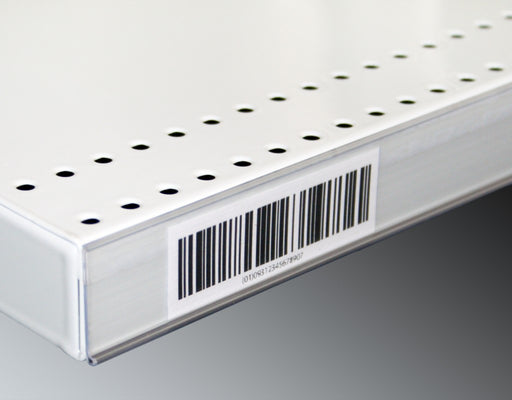
Upgrade your store's pricing and product labeling system with our Flat Adhesive Data Stripping. This cost-effective solution is designed to simplif...
View full details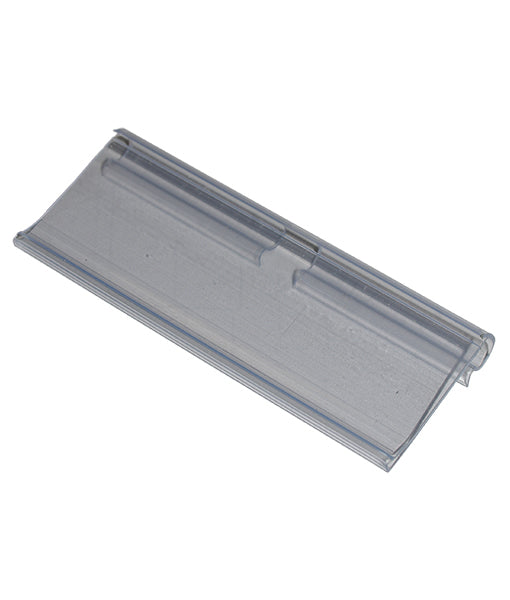
Enhance your store's product labeling and pricing system with our 100-Pack Flipper Tags. These versatile and easy-to-use tags are designed to strea...
View full detailsUpgrade your customers' shopping experience with our 28 litre Shopping Baskets featuring Metal Handles. These robust and stylish baskets are design...
View full detailsMake shopping a breeze for your customers with our 28 Litre Shopping Baskets featuring Plastic Handles. These lightweight and sturdy baskets are de...
View full detailsRevolutionize your customers' shopping experience with our Roller Shopping Baskets. These innovative baskets are designed for maximum convenience, ...
View full details{"one"=>"Select 2 or 3 items to compare", "other"=>"{{ count }} of 3 items selected"}