SERVING WA
Since 2009

Yes, wall-mounted shelving can hold heavy commercial stock when the complete installation is rated for the intended load. The wall, fixings, uprights, brackets and shelves must work together; a shelf’s advertised capacity alone does not establish the installation’s capacity. Before loading cartons, tools or packaged groceries, confirm the permitted load and its distribution for your exact setup.
A wall shelf can keep floor space clear, but it transfers the storage load into the building. If you choose fixtures by appearance or shelf capacity alone, you leave the wall connection unchecked.
For your 2026 fitout, separate the merchandising decision from the structural decision. Start with the stock you need to display, then establish whether the proposed wall installation supports it. Cheap Shelving’s guide to wall-mounted shelving systems for retail stores provides a related starting point for fixture selection.
Yes, but only a rating that applies to the installed system answers the question for your store. A strong shelf fitted to unsuitable brackets, fixings or wall construction is not a verified heavy-stock installation.
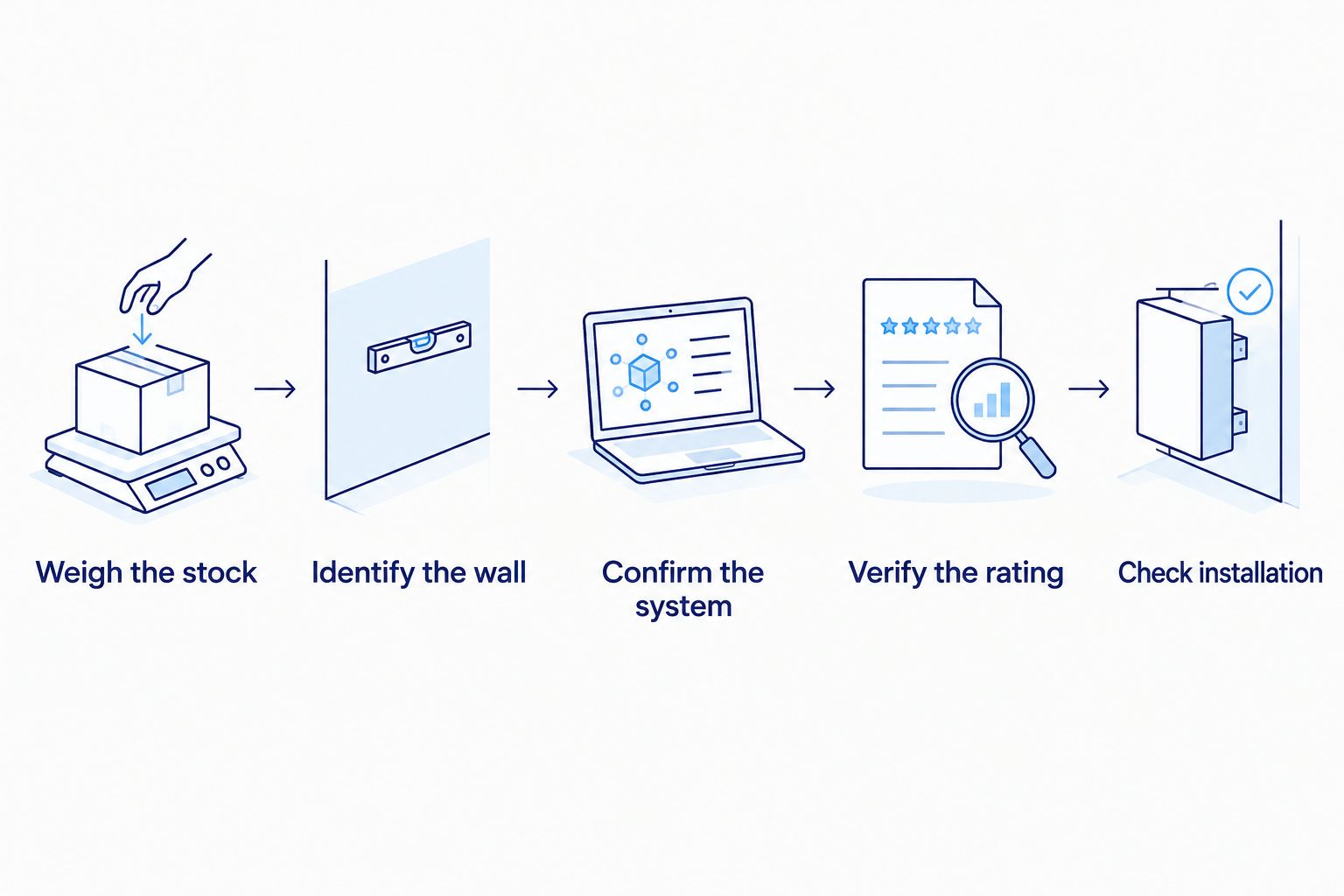
Follow this sequence before ordering or loading:
Keep the resulting instructions with your store’s fixture records. Staff need to know what the installed shelves can carry, not just what the original buyer intended to display.
The first distinction is whether the wall carries the stock or simply helps stabilise a floor-supported fixture. Shelving positioned against a wall is not necessarily wall-mounted shelving.
| Arrangement | Best for | Practical advantage | Limitation or buying check |
|---|---|---|---|
| Wall-mounted shelving | Perimeter displays where clear floor space matters | Keeps the area beneath the shelves open | Requires a verified load-bearing connection to suitable wall construction |
| Floor-supported wall shelving | Perimeter merchandising where a base footprint is acceptable | Carries stock through a floor-supported structure | Still requires checks for loading, stability and specified restraints |
| Freestanding shelving | Displays away from walls or locations unsuitable for wall-supported stock | Does not require the wall to carry the shelf load | Occupies floor space and needs a suitable stability arrangement |
| Slatwall with accessories | Hanging displays using matched hooks, arms or shelves | Allows different display accessories on a panel | Panel, accessory and mounting limits must all be checked |
Do not treat these arrangements as interchangeable. A wall restraint on floor-supported shelving does not turn it into a wall-hung system, and a slatwall accessory rating does not establish the panel’s installed capacity.
For a Perth shop with an existing partition wall, establish the wall construction before choosing a suspended display. If the wall cannot support the proposed arrangement, assess a floor-supported alternative rather than adding unverified fixings.
A rating describes capacity under stated conditions. Read those conditions before comparing products.
Uniformly distributed load, often shortened to UDL, means the load is spread across the shelf as specified. A concentrated load places weight over a smaller area. Heavy equipment placed in the centre of a shelf is not equivalent to the same total weight spread evenly across it.
Cheap Shelving’s Budget Shelving Additional Shelves listing specifies 45kg U.D.L. per shelf, supplied with 2 shelf brackets. That is a product-specific statement, not permission to hang the shelf from any wall or combine it with different supports.
For a 2026 purchase, ask for the current instructions covering the exact configuration. Do not multiply a per-shelf rating by the number of shelves and assume the resulting figure is an approved bay or wall capacity.
Check whether the documentation covers:
A missing answer is a reason to pause loading. It is not a reason to substitute the rating of a similar-looking shelf.
The same stock can impose different demands on different installations. These factors explain why a universal heavy-stock rating is not useful.
Buy for the heaviest planned stocking arrangement, not the lightest display you expect to photograph. Include replenishment stock and containers when documenting that arrangement.
A deeper shelf provides more display area, not automatic permission to add weight. It also places stock further from the supporting wall when loaded towards the front.
Product dimensions need careful reading. Budget Shelving product titles include 300mm base shelf and 450mm base shelf options; those dimensions describe base shelves, not wall-mounted load ratings. Neither dimension establishes the overall fixture footprint or structural capacity on its own.
For your 2026 layout, measure the complete proposed fixture projection and the remaining customer route. Then check whether the stock fits without overhang, awkward handling or front-heavy placement.
A narrow shelf that suits the merchandise can be more useful than a deeper shelf that encourages unsuitable loading. Choose depth from the product dimensions and approved configuration, not from a desire to fill every available gap.
Send the supplier and installer the same brief. Separate conversations based on different stock weights or shelf depths leave room for an unsuitable specification.
Your buying brief should include:
Ask what is included and what needs separate specification. A shelf package does not, by itself, confirm that the supplied components suit your building.
Cheap Shelving is a relevant commercial shelving supplier for Perth retailers; wall-mounted suitability still requires confirmation for the selected system and site. Compare the complete fitout requirement, including installation and compatible components, rather than choosing on the shelf alone.
Keep the approved stock arrangement in your 2026 merchandising plan. If the range changes from lightweight boxed goods to dense hardware, reassess the loading before resetting the display.
Plasterboard alone does not establish a suitable structural support for heavy commercial shelving. The supporting structure and fixing design need assessment for the intended load.
Do not assume that locating a stud completes the assessment. Stud construction, condition, fixing positions and the shelving configuration still matter. Ask the installer to identify the load path from the shelf into the building.
If that load path cannot be verified, keep heavy stock off the proposed wall shelves. Assess a correctly specified floor-supported system instead.
Freestanding shelving is an alternative when you do not want the wall to carry the stock load, but it is not automatically suitable for every heavy carton. Check shelf capacity, total loading, floor suitability and stability requirements.
Choose the arrangement with a verified capacity that suits your stock and floor plan. Wall-mounted shelving wins on keeping the floor beneath clear; floor-supported shelving avoids relying on the wall to carry the shelf load. Both need correct specification.
Consider replenishment access as well as the finished display. A shelf that staff cannot load safely is the wrong choice even when its stated capacity covers the goods.
Unload and isolate shelving showing movement, loose supports, damaged components, visible distortion or deterioration around fixings. Arrange an assessment before returning it to service.
Do not tighten a visibly failing connection and assume the problem is solved. The underlying issue can involve the wall, hardware, loading arrangement or incompatible components.
Include shelving checks in your store’s 2026 maintenance routine. Reassess after relocation, alterations or a change to heavier merchandise, and follow the manufacturer’s inspection guidance rather than inventing a universal inspection interval.
Can wall mounted shelving hold heavy stock in a retail store?
Yes, wall-mounted shelving can hold heavy stock when the complete installation is rated for the intended load. Confirm the wall, fixings, supports, shelves and required load distribution before loading.
How much weight can a wall-mounted commercial shelf hold?
The permitted weight depends on the specific shelf system and its installation. Use the rating for the exact configuration, not a generic figure or the capacity of an individual component.
Does a 45kg UDL shelf rating mean I can put heavy equipment in the middle?
A 45kg UDL rating does not establish capacity for a concentrated load in the middle. UDL requires the load to be distributed as specified, so obtain confirmation for the equipment's contact area and position.
Can I install heavy-stock shelving on a plasterboard wall?
A plasterboard finish alone does not establish suitable support for heavy-stock shelving. Have the underlying structure and proposed fixing arrangement assessed before installation.
Is shelving against a wall always wall-mounted?
No, shelving against a wall can be floor-supported. Establish whether the wall carries the stock load or provides a restraint, then follow the requirements for that arrangement.
Do deeper wall shelves have a higher weight capacity?
Deeper wall shelves do not automatically have a higher weight capacity. Shelf depth changes the loading demands on supports, so check the rating for the selected depth and configuration.
What should I do if a loaded wall shelf starts moving?
Unload and isolate a wall shelf that starts moving, and arrange an assessment before reuse. Do not add stock or assume that tightening a fixing resolves the cause.
Empty space under a wall shelf does not mean unused storage capacity. The floor looks clear because the load is carried elsewhere: through the supports, fixings and building structure.
Before you order, write down the heaviest intended stock arrangement and obtain confirmation that the complete installation suits it. That check protects the value of the fitout better than choosing a shelf labelled heavy duty without checking what the label covers.
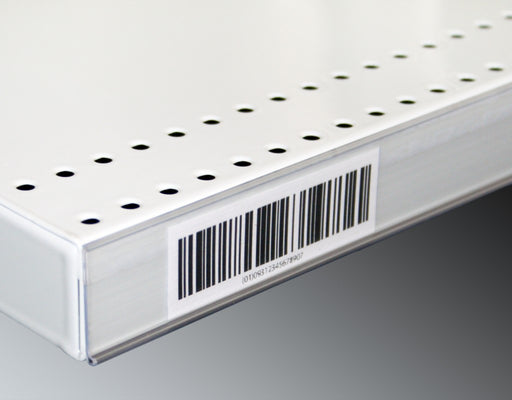
Upgrade your store's pricing and product labeling system with our Flat Adhesive Data Stripping. This cost-effective solution is designed to simplif...
View full details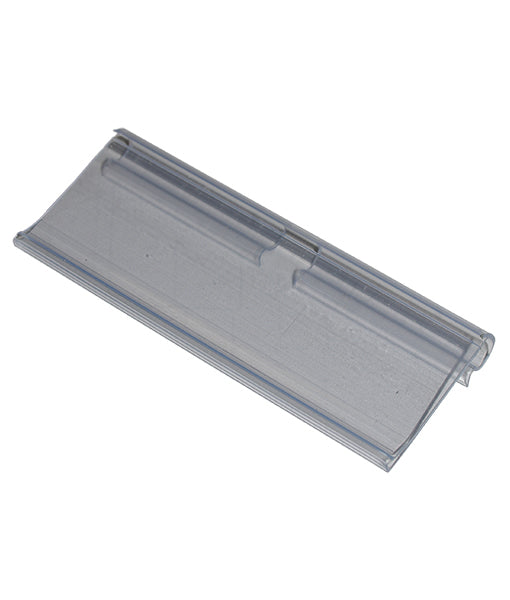
Enhance your store's product labeling and pricing system with our 100-Pack Flipper Tags. These versatile and easy-to-use tags are designed to strea...
View full detailsUpgrade your customers' shopping experience with our 28 litre Shopping Baskets featuring Metal Handles. These robust and stylish baskets are design...
View full detailsMake shopping a breeze for your customers with our 28 Litre Shopping Baskets featuring Plastic Handles. These lightweight and sturdy baskets are de...
View full detailsRevolutionize your customers' shopping experience with our Roller Shopping Baskets. These innovative baskets are designed for maximum convenience, ...
View full details{"one"=>"Select 2 or 3 items to compare", "other"=>"{{ count }} of 3 items selected"}