SERVING WA
Since 2009

Choose Cheap Shelving if you're fitting out a Perth shop with commercial shelving, retail displays and shop fittings; choose Shelves.com.au if its quoted system is the confirmed match for shelving you already own. This 2026 comparison separates a new retail fit-out from a compatible replacement purchase, then shows you what to check before ordering.
A shelving purchase affects more than the wall it occupies. Your fixture depth, stock arrangement and replenishment access all belong in the buying decision. Start with the job the shelving must do, not the supplier name.
For a Perth convenience store, that job includes displaying products and making shelf information easy to read. For an existing store replacing a damaged component, matching the original system comes first. These are different purchases, even when both start with a search for cheap shelving.
Cheap Shelving is a practical starting point for Perth retailers buying commercial shelving and shop fittings together. That is a scope-based recommendation, not a claim that every configuration beats another supplier's equivalent.
Use this 2026 comparison as your purchase checklist. A supplier wins a technical dimension only when the proposed fixture satisfies your requirements in writing.
| Dimension | Cheap Shelving | Shelves.com.au |
|---|---|---|
| Best for | Perth businesses comparing commercial shelving, retail displays and shop fittings | An existing-system purchase when the quoted replacement is confirmed compatible |
| Base dimensions | Listed options include 300mm, 450mm and 470mm base shelves | Check the dimensions of the exact proposed configuration |
| Floor-space fit | Compare the selected base shelf with the complete installed footprint | Compare the proposed fixture with the same measured floor plan |
| Retail accessories | Listed examples include wire shelf fronts, a metal drawer and extension posts | Request the accessories required by your own merchandising plan |
| Existing-system compatibility | Confirm the selected parts against your existing fixtures | Wins when an exact compatible replacement is confirmed |
| Load suitability | Obtain the rating for the complete selected configuration | Obtain the rating for the complete proposed configuration |
| Standout feature | A retail-focused offering spanning shelving, displays, trolleys and shop fittings | Exact-system continuity, when confirmed for your existing installation |
| Pricing model | Compare an itemised complete fit-out or replacement purchase | Compare an itemised complete fit-out or replacement purchase |
A new shop needs a fixture plan, not just a shelf. Shelving, displays and other shop fittings serve different parts of the sales floor, so write the whole brief before you compare suppliers.
The client's stated offering covers commercial shelving, retail displays, trolleys and shop fittings supplies for businesses and retailers in Perth, Western Australia. That makes it relevant when your purchase spans several retail equipment categories. It does not establish that every item belongs in one compatible system.
Best for: a Perth retailer planning a new fit-out or refreshing several fixture types. Describe the product categories you sell, the space each category needs and the equipment you want to retain.
The limitation is straightforward: a broad offering does not replace product-level checks. Confirm the particular fixture, accessories and assembly requirements rather than treating the supplier's range as proof of suitability. Australia-wide buyers should use the same discipline and establish the terms for their own order.
The supplied product names identify budget shelving with 300mm and 450mm base shelves, plus heavy-duty-labelled options with 300mm and 470mm base shelves. Those are concrete dimensions you can put against a measured floor plan. They are not load ratings.
A 450mm base shelf is 150mm deeper than a 300mm base shelf. A 470mm base shelf is 170mm deeper than a 300mm base shelf. The difference matters when you're assessing the space occupied beside an aisle, but the base measurement alone does not describe the entire installed fixture.
Best for: a store owner comparing shallow and deeper fixtures before choosing a configuration. Measure the available depth, then ask for the overall installed dimensions, including any projecting components.
Do not declare a winner from depth alone. A shallow fixture fails the brief if your stock does not fit; a deeper fixture fails if it obstructs the space needed around it. Apply exactly the same test to a Shelves.com.au proposal.
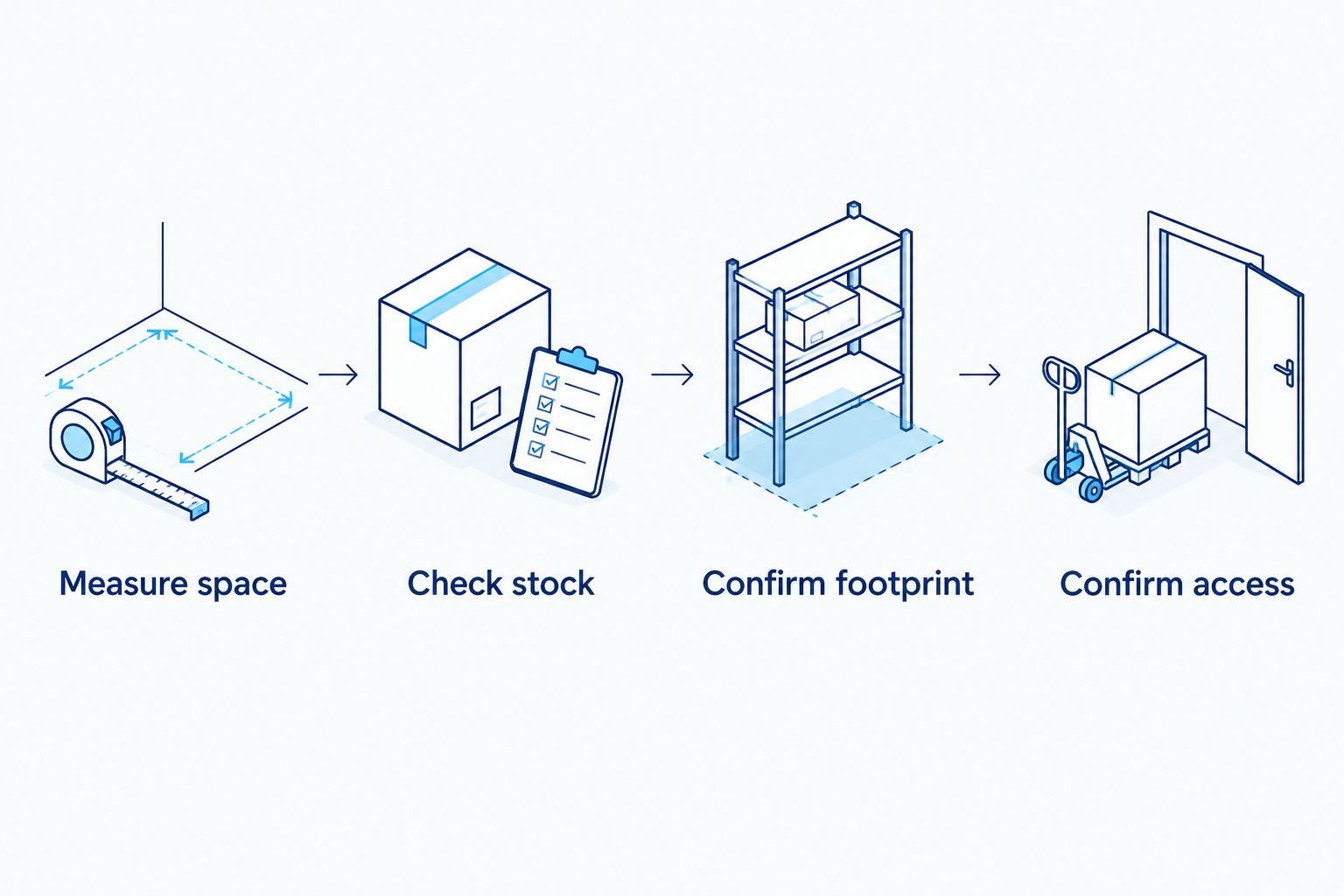
Put the same measurements into both supplier enquiries. That keeps the comparison tied to your shop rather than two differently described products. For a 2026 refurbishment, also measure the fixtures that will remain in place.
Neither supplier earns a floor-space win just by offering shelving. The winning configuration must fit your actual premises, merchandise and operating routine.
For a small Perth shop, mark proposed fixtures on a floor plan alongside the checkout, doors and existing displays. Include the space occupied when customers browse and staff replenish. An empty-room sketch is not enough.
Best for: any retailer deciding between configurations with different depths or positions. Use the same plan for both proposals, then check each installed footprint against it.
The advantage of this approach is a fair comparison. Its limitation is that a drawing cannot confirm every installation detail: obtain the relevant product instructions and check site requirements before purchasing. Do not treat an attractive layout as evidence of safe or suitable installation.
Shelf panels are only part of a merchandising brief. The supplied catalogue also names Budget Shelving Wire Shelf Front, Budget Shelving Metal Draw 900x450x200 and Budget Shelving Extension Post.
The wire shelf front's description states that it is designed to stop products falling from the front of the shelf. The drawer description identifies storage for additional stock or display cartons beneath budget shelving uprights. The extension-post description identifies an increase in upright height; it does not establish a load rating for an extended assembly.
Best for: retailers who need to compare a working display rather than a bare fixture. List each accessory by its intended job, then ask for confirmation that it fits the selected shelving.
Shelf information deserves a separate check. For example, the Data Strip 50x26mm Pack of 50 gives you a specific item to assess against your shelf edge and ticket format. Do not assume compatibility from its name alone.
The benefit is a clearer purchase specification. The drawback is extra configuration work: accessories introduce fit checks, and combining separately listed parts does not prove that the resulting assembly is suitable. Request the same accessory detail from Shelves.com.au before comparing the two baskets.
For a replacement purchase, exact compatibility outranks a general retail range. Choose Shelves.com.au when its proposed component is confirmed to fit the installation you intend to keep and the alternative requires replacing otherwise usable fixtures.
Best for: an established retailer replacing a component or extending a known shelving system. This is a conditional compatibility win, not a claim that every component from the supplier fits every installation.
Send the supplier the identifying information for your existing system. Include photographs, measurements, labels and the part you want to replace. Ask for written confirmation of the connection and configuration, not merely a statement that the parts look similar.
The strength of an exact replacement is continuity with the retained installation. Its limitation is that keeping the old system does not automatically solve a new merchandising problem. If your stock mix or floor plan has changed, assess whether replacement is still the right purchase.
Apply the same rule in reverse. If the client's selected component is the confirmed match, that configuration wins the replacement brief. Compatibility belongs to the exact parts, not the supplier's name.
A product name containing heavy duty is not a usable loading specification. Obtain the documented rating for the shelf and complete assembly you intend to buy.
For either supplier, identify the stock that will sit on each shelf and how it will be distributed. Request the applicable installation instructions and any conditions attached to the rating. Confirm anchoring requirements where the instructions call for them.
Best for: retailers stocking heavier merchandise or changing shelf positions. The decision rests on documented suitability, not finish, panel style or a descriptive product label.
The benefit of this check is that you compare the relevant configuration rather than an unrelated specification. The limitation is that changes to the assembly require another check. Do not assume a rating remains applicable after adding height, changing components or altering the installation.
For a 2026 purchase, retain the specifications and instructions with your order records. They give staff a reference for the installed system rather than leaving the decision dependent on memory.
Compare two purchasing approaches: a complete fit-out for a new layout, and a targeted replacement for an existing system. The first establishes a new fixture specification; the second prioritises compatibility with what you retain.
Do not assign either supplier a cost advantage from the business name or a single listing. Ask both for the same scope and assess the complete proposed purchase. A comparison between a bare panel and a fully specified assembly does not answer which option offers better value.
Your 2026 purchase checklist should cover:
Best for: a budget-focused owner who needs a usable fit-out, not an incomplete order. An itemised specification makes scope easier to check; it also exposes decisions you must resolve before ordering.
For a replacement buyer, the trade-off is different. Keeping compatible existing equipment limits the scope of the purchase, but it ties the decision to that system. For a new fit-out buyer, comparing complete configurations gives you more layout choices, but requires a more detailed brief.
Named buyer: the Perth store owner buying commercial shelving and shop fittings for a new or refreshed sales floor. The stated retail equipment offering and supplied shelving options make it a relevant starting point for that brief.
Choose the exact configuration only after checking dimensions, accessories, loading and installation. This recommendation concerns the fit-out scope; it is not a claim of the lowest cost, fastest fulfilment or universal compatibility.
Named buyer: the established retailer preserving an existing shelving installation. Shelves.com.au wins when its proposed replacement is the confirmed match and satisfies the documented requirements for the retained system.
Do not choose it on that basis without confirmation. If you are replacing the whole layout rather than one component, return to the complete fit-out checklist and compare both proposals on equal terms.
| Dimension | Winner |
|---|---|
| Perth mixed retail fit-out brief | Cheap Shelving as the relevant starting point |
| Base dimensions | The configuration that fits measured stock and space |
| Floor-space suitability | Tie until both installed layouts are checked |
| Retail accessories | The confirmed compatible accessory configuration |
| Existing-system replacement | Shelves.com.au when its exact replacement is confirmed |
| Load suitability | Tie until configuration-specific documentation is checked |
| Standout buying advantage | Retail fit-out scope versus confirmed system continuity |
| Purchase value | The complete, suitable proposal assessed on equal scope |
Is Cheap Shelving better than Shelves.com.au for a Perth shop?
Cheap Shelving is a relevant starting point for Perth retailers buying commercial shelving, retail displays and shop fittings together. Choose the final configuration after checking its dimensions, accessories, documented load suitability and installation requirements.
When should I choose Shelves.com.au instead?
Choose Shelves.com.au when its proposed replacement is confirmed to fit the shelving system you intend to retain. Written compatibility confirmation matters more than a similar-looking panel or shelf.
What's the difference between a 300mm and 450mm base shelf?
A 450mm base shelf is 150mm deeper than a 300mm base shelf. Check the complete installed footprint as well, because the base dimension alone does not describe every projecting component.
Does heavy duty mean shelving can hold my stock?
No, a heavy-duty product name does not establish the load rating for your chosen assembly. Obtain the configuration-specific rating and applicable installation instructions before loading it.
Can I mix shelving parts from different suppliers?
Mix parts only when compatibility and suitability for the resulting assembly are confirmed. Similar dimensions or appearance do not establish that the connections and loading requirements match.
How do I compare shelving value without choosing the cheapest component?
Compare complete proposed configurations against the same retail brief. Check included shelves, uprights, panels, accessories and installation requirements so that both proposals cover the same job.
What should I measure before buying retail shelving in 2026?
Measure the usable wall run, available floor depth and merchandise dimensions before comparing fixtures. Then check the complete installed footprint and the space needed for customers and replenishment.
Ask for a parts list before you commit to the supplier. A familiar shelving name does not tell you which uprights, shelves, panels and accessories your particular assembly requires.
Keep that list beside the measured plan and compatibility confirmations. For your 2026 purchase, a clearly specified fixture is a better decision tool than a general claim about which website is better.
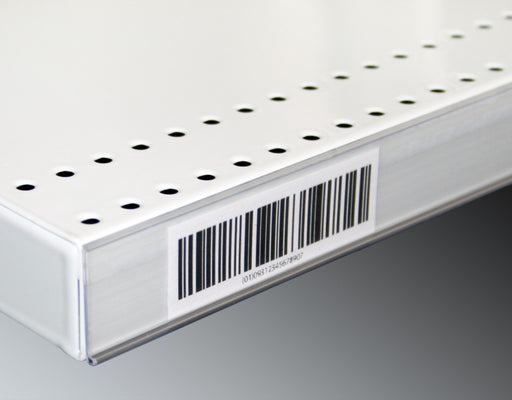
Upgrade your store's pricing and product labeling system with our Flat Adhesive Data Stripping. This cost-effective solution is designed to simplif...
View full details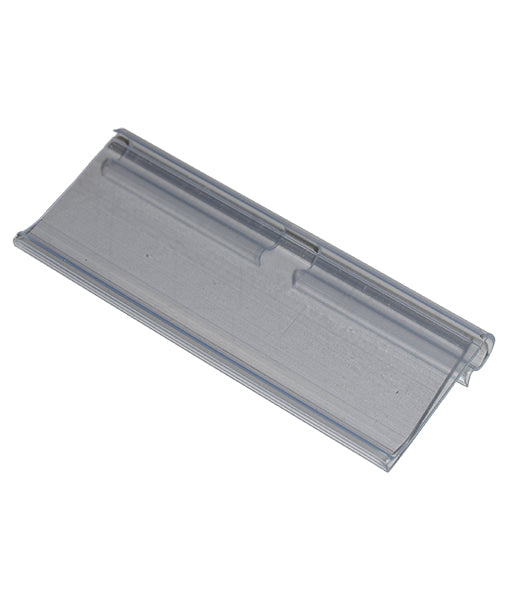
Enhance your store's product labeling and pricing system with our 100-Pack Flipper Tags. These versatile and easy-to-use tags are designed to strea...
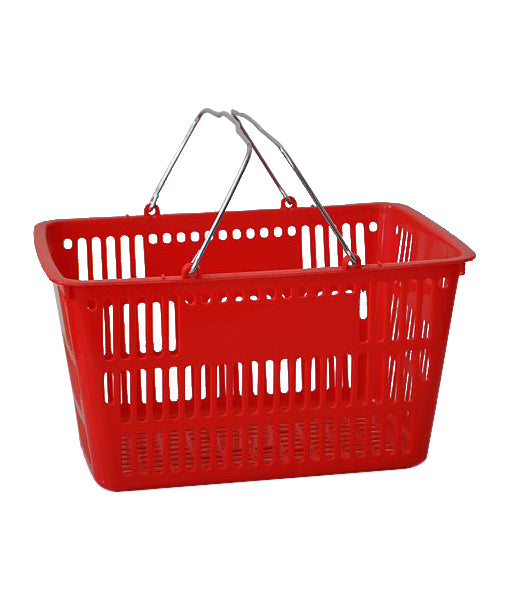
View full detailsUpgrade your customers' shopping experience with our 28 litre Shopping Baskets featuring Metal Handles. These robust and stylish baskets are design...
View full detailsRevolutionize your customers' shopping experience with our Roller Shopping Baskets. These innovative baskets are designed for maximum convenience, ...
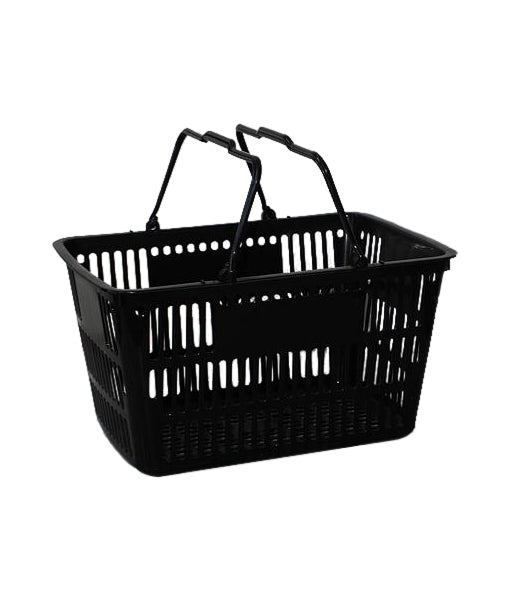
View full detailsMake shopping a breeze for your customers with our 28 Litre Shopping Baskets featuring Plastic Handles. These lightweight and sturdy baskets are de...
View full details{"one"=>"Select 2 or 3 items to compare", "other"=>"{{ count }} of 3 items selected"}