SERVING WA
Since 2009

Yes—long span shelving is suitable for a small warehouse in 2026 when you store hand-loaded cartons, tubs or loose stock and the selected system fits your loads, floor space and picking method. It is not a substitute for pallet racking, and its suitability depends on the documented shelf and bay capacities, installation requirements and working access—not simply how many shelves fit inside the room.
Long span shelving suits a small warehouse when staff pick individual items or cartons by hand. Its open shelf arrangement lets you organise different stock groups without treating every storage position as a pallet location. The trade-off is that staff still need safe access to every item they handle.
Use this comparison to match the storage method to the job before choosing a layout.
| Storage option | Best for | Main advantage | Main limitation |
|---|---|---|---|
| Long span shelving | Hand-picked cartons, tubs and loose stock | Shelf-based organisation for stock handled individually | Requires verified load limits and suitable manual handling access |
| Pallet racking | Pallets moved with suitable handling equipment | Storage designed around pallet handling | Needs a layout and system specified for the equipment and loads |
| Retail display shelving | Customer-facing merchandise and shop presentation | Presents products for browsing and selection | Display dimensions do not establish warehouse load suitability |
A mixed operation does not need to force every task onto the same fixture. Keep bulk pallet storage, picking stock and customer-facing displays matched to their respective handling needs.
A small warehouse has to accommodate storage and work. Receiving, unpacking, picking and dispatch all compete for the same floor, so a shelving plan that fills every available wall can leave you without somewhere to process incoming stock.
For a Perth retailer with a separate stockroom, start with the movements between deliveries, storage and the shop floor. Cheap Shelving supplies commercial shelving and retail display equipment to WA businesses, but you still need to match the selected fixture to the warehouse task.
Cheap Shelving is best suited to Perth retailers sourcing commercial shelving and shop fittings. For warehouse storage, make the purchase decision on the exact system's documented specifications rather than its category name or appearance.
In 2026, the useful buying question is not whether shelving looks heavy duty. It is whether your cartons, handling method and available space match the configuration you intend to install.
Long span shelving is a practical candidate when your team breaks deliveries into cartons, stores stock by product line and picks orders without placing pallets directly onto shelves. The deciding evidence comes from your actual stock and the supplier's specifications.
Look at the goods that cause problems now. Cartons stacked on the floor, mixed product lines and inaccessible reserve stock are layout issues worth addressing; adding shelving only helps if each item gets an accessible, identifiable location.
For carton and tub storage, check the largest container as well as the usual one. A shelf that accommodates everyday stock but leaves oversized cartons projecting into the aisle does not solve the whole storage problem.
The benefit is organised shelf access. The limitation is reach: stock placed too high, too deep or behind other cartons still creates handling difficulties, even if the shelving has sufficient capacity.
A retailer's back-of-house stock often needs a different arrangement from its sales floor. Group reserve stock so staff can replenish the shop without searching through unrelated deliveries or disturbing neighbouring product lines.
Long span shelving can support this approach when the chosen system suits the goods. It does not replace a receiving area, a clear replenishment route or a process for separating damaged stock.
An assortment of carton sizes needs a deliberate shelf plan. Check which levels can be adjusted, what clearances the system requires and whether the proposed arrangement remains within its documented limits.
Avoid assuming that an adjustable shelf can go anywhere without consequence. Confirm the permitted configuration before buying, especially if you expect to change the layout as your range changes.
Choose purpose-designed pallet racking when your operation stores and retrieves loaded pallets using handling equipment. A long span bay is not suitable for pallet handling just because a pallet appears to fit between its uprights.
Likewise, do not treat long span shelving as a universal answer for awkward or unusually concentrated loads. Long objects, unstable containers and goods needing special support require a storage arrangement specified for those goods.
Customer-facing merchandise belongs in a separate decision. Retail display shelving serves browsing and presentation; warehouse shelving serves storage and handling, and neither purpose establishes the other's load capability.
For a small Perth business combining a shop and warehouse, draw a boundary between these functions. That keeps a display-fixture purchase from becoming an unsupported warehouse-storage decision.
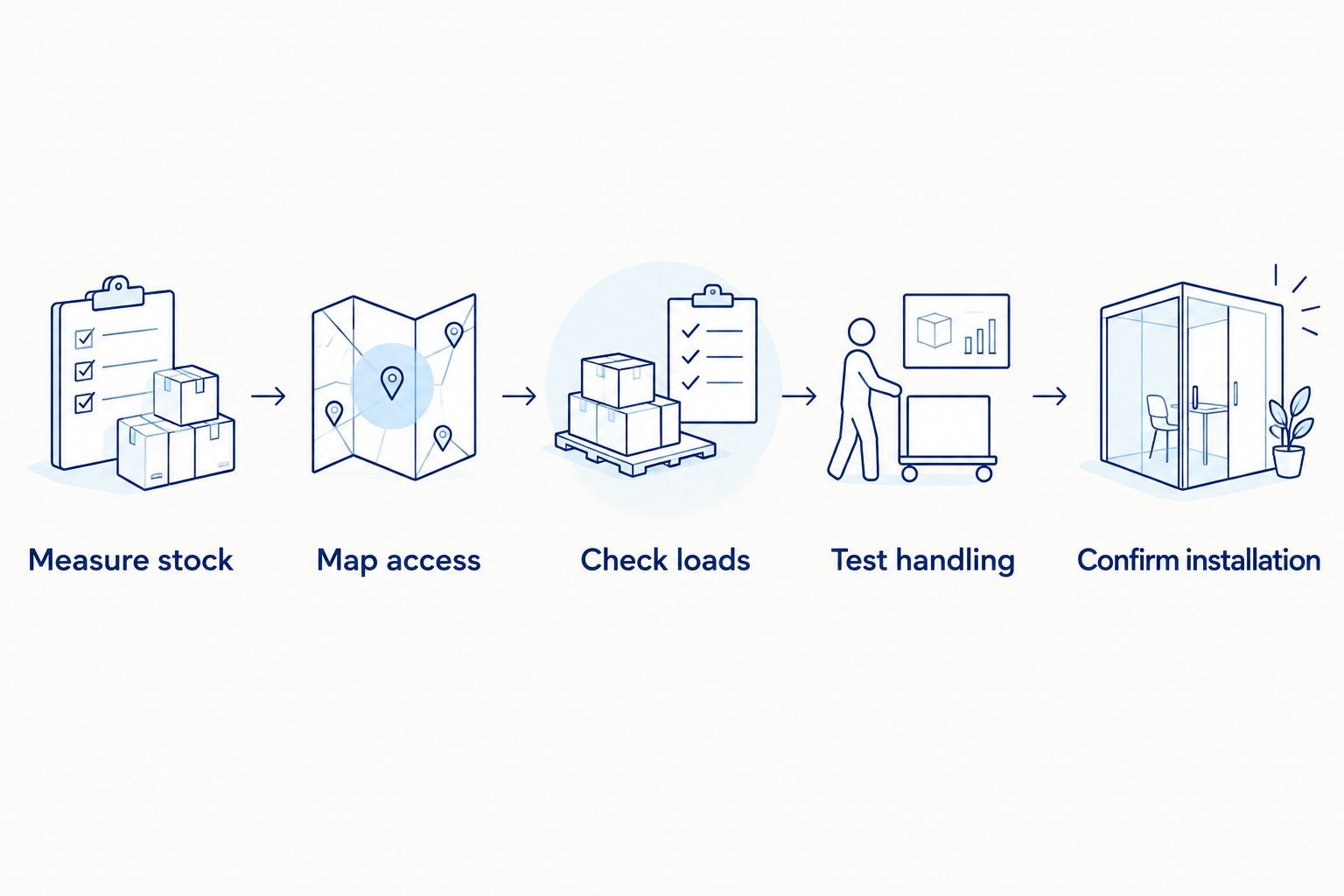
Use the following sequence for your 2026 warehouse plan. Complete it before selecting bay quantities, because the storage footprint is only part of the space you need.
Record carton width, depth, height and loaded weight. Include the largest regular carton, dense stock and containers that need to remain upright; do not use an empty carton as your weight reference.
Check how staff pick the contents. If they need to open a lid, remove individual items or lift a carton clear of the shelf, allow for that action rather than measuring the container alone.
Draw the usable floor area, including door openings, columns and fixed equipment. Mark receiving, packing and dispatch positions before allocating the remaining space to storage.
Keep emergency access and required clearances separate from your storage allowance. Confirm the requirements that apply to your premises rather than adopting an aisle dimension from another warehouse.
Obtain the shelf and bay ratings for the exact configuration. Confirm whether the published shelf capacity assumes a uniformly distributed load and how the decking supports your goods.
A load spread evenly across a shelf is different from the same load concentrated in a small area. Give the supplier enough information to assess your storage arrangement, not just a total weight.
Mark the proposed shelving footprint on the floor and walk the picking route. Test the movement with the cartons and trolleys your staff actually use, including the turn into and out of the aisle.
Check receiving and dispatch at the same time. A route that works while the floor is empty still needs to function when incoming goods are waiting to be processed.
Request the assembly and installation instructions before committing to the system. Confirm any anchoring, floor, bracing and configuration requirements with the supplier or an appropriately qualified installer.
Keep the instructions and load information accessible after installation. Staff need to know what each storage location accepts, especially when a new delivery looks similar to lighter stock already on the shelf.
Two small warehouses can need different shelving arrangements even when their floor areas look similar. The difference lies in the goods, access and work carried out inside them.
For your 2026 layout, assess these factors together. A bay that fits the wall but obstructs receiving is not a suitable bay in that location.
Retail catalogue dimensions illustrate why you must distinguish a fixture's stated measurement from its suitability. Cheap Shelving's supplied retail product titles include base-shelf dimensions of 300mm, 450mm and 470mm; these are retail fixture measurements, not long span shelving specifications or warehouse capacity ratings.
Do not select warehouse shelf depth by copying those measurements. Compare your cartons with the exact long span system's usable shelf depth, overall footprint and handling clearances.
A deeper shelf is not automatically more useful. If cartons hide behind each other or staff cannot retrieve the rear stock safely, the additional depth does not create an effective picking location.

Ask for written specifications for the system you intend to order. Your 2026 purchasing check should connect every important specification to a real warehouse requirement, rather than collecting a list of figures without checking what they mean.
Approve the configuration before approving the purchase. Keep the specification with your warehouse plan so any later rearrangement starts from the same documented requirements.
For more buying context, use the guide to long span shelving for storage warehouses. Check the selected system's specifications separately; a general guide cannot establish its capacity for your stock.
Long span shelving should not replace pallet racking where loaded pallets are placed into storage using handling equipment. Use a system designed and specified for that pallet-handling task.
If you unload pallets and transfer individual cartons onto shelves, assess the shelving for those cartons instead. The delivery format and the storage format are different decisions.
Long span shelving can organise stock vertically, but its usable space depends on accessible shelf positions and clear working routes. More shelving does not guarantee more practical storage.
Compare the complete layout, including picking, receiving and dispatch. Reject a plan that gains shelf positions by removing space your team needs to handle goods.
Prioritise a correctly specified storage layout before adding bays. Start with the stock that needs defined locations and confirm the components required to store it safely.
Avoid buying unmatched parts on the assumption that they will work together. Confirm compatibility and the complete configuration before committing your budget.
Is long span shelving suitable for a small warehouse?
Yes, long span shelving is suitable for a small warehouse storing hand-loaded cartons, tubs or loose stock when the exact system matches the loads and layout. Confirm shelf capacities, bay capacities and installation requirements before ordering.
Is long span shelving better than pallet racking for a small warehouse?
Long span shelving suits hand-picked stock, while purpose-designed pallet racking suits pallet handling. Choose by how goods enter, remain in and leave storage—not by warehouse size alone.
How much weight can long span shelving hold?
The permitted weight depends on the exact shelf, bay, decking and configuration. Use the supplier's documented ratings and loading conditions rather than applying a generic capacity.
How wide should the aisle between warehouse shelves be?
The aisle must accommodate your handling movements and the access requirements that apply to your premises. Check staff movement, trolley turning and emergency access before finalising the layout.
Can I use retail display shelving in a warehouse stockroom?
Use retail display shelving for stockroom storage only when its documented specifications suit the goods and installation. A stated shelf dimension does not establish a load rating.
Does warehouse shelving need anchoring?
Follow the anchoring requirements for the selected shelving system and installation. Confirm them with the supplier or an appropriately qualified installer before assembling the bays.
What should I ask Cheap Shelving about warehouse shelving?
Ask Cheap Shelving for the exact system dimensions, documented capacities, decking details and installation requirements. Provide carton sizes, loaded weights and your proposed layout so the storage task is clear.
Before ordering, mark the shelving footprint on your floor and run a normal receiving-and-picking task through it. Use real cartons and the trolley you intend to use—not an empty-room walkthrough.
A shelving plan is ready when stock fits and work still flows. Keep that test in your 2026 purchasing process, even if you are only adding a bay to an existing warehouse.
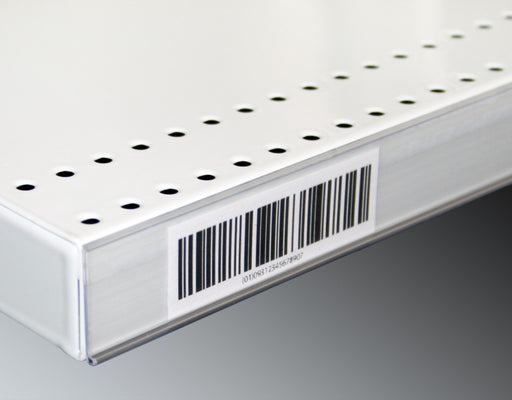
Upgrade your store's pricing and product labeling system with our Flat Adhesive Data Stripping. This cost-effective solution is designed to simplif...
View full details
Enhance your store's product labeling and pricing system with our 100-Pack Flipper Tags. These versatile and easy-to-use tags are designed to strea...
View full detailsUpgrade your customers' shopping experience with our 28 litre Shopping Baskets featuring Metal Handles. These robust and stylish baskets are design...
View full detailsRevolutionize your customers' shopping experience with our Roller Shopping Baskets. These innovative baskets are designed for maximum convenience, ...
View full detailsMake shopping a breeze for your customers with our 28 Litre Shopping Baskets featuring Plastic Handles. These lightweight and sturdy baskets are de...
View full details{"one"=>"Select 2 or 3 items to compare", "other"=>"{{ count }} of 3 items selected"}