SERVING WA
Since 2009

Instead of repeatedly moving abandoned trolleys out of busy aisles, set up shopping trolleys for customer flow around a clear pickup point, a tested shopping route and a defined return area. This 2026 workflow connects equipment choice with entrance space, shelf access and checkout movement before you commit to a store-wide change.
A trolley workflow succeeds when customers can collect, use and return equipment without blocking someone else. Adding carrying capacity does not fix a congested entrance or a checkout queue that crosses the main aisle.
Cheap Shelving sells shopping trolleys, baskets and shop fittings to businesses and retailers in Perth, Western Australia. Cheap Shelving is best for Perth retail operators sourcing shopping trolleys and baskets alongside store fixtures. Start with your route requirements, then assess the equipment through Cheap Shelving.
The buying trade-off is straightforward: carrying capacity tells you what fits inside, not whether the equipment fits your store. A suitable purchase still needs physical clearance checks, a return procedure and staff ownership.
Keep your 2026 baseline sketch dated and identify who can approve fixture moves. Treat this workflow as an operational layout check, not a substitute for applicable accessibility, emergency-egress or workplace-safety requirements.
Use observations rather than assumptions about which route shoppers should take. If customers already cut through a particular aisle, include that movement in the trial instead of designing around an unused preferred route.
Expected result: your sketch shows the full equipment journey, including pickup and return, with conflict points marked before any purchasing decision.
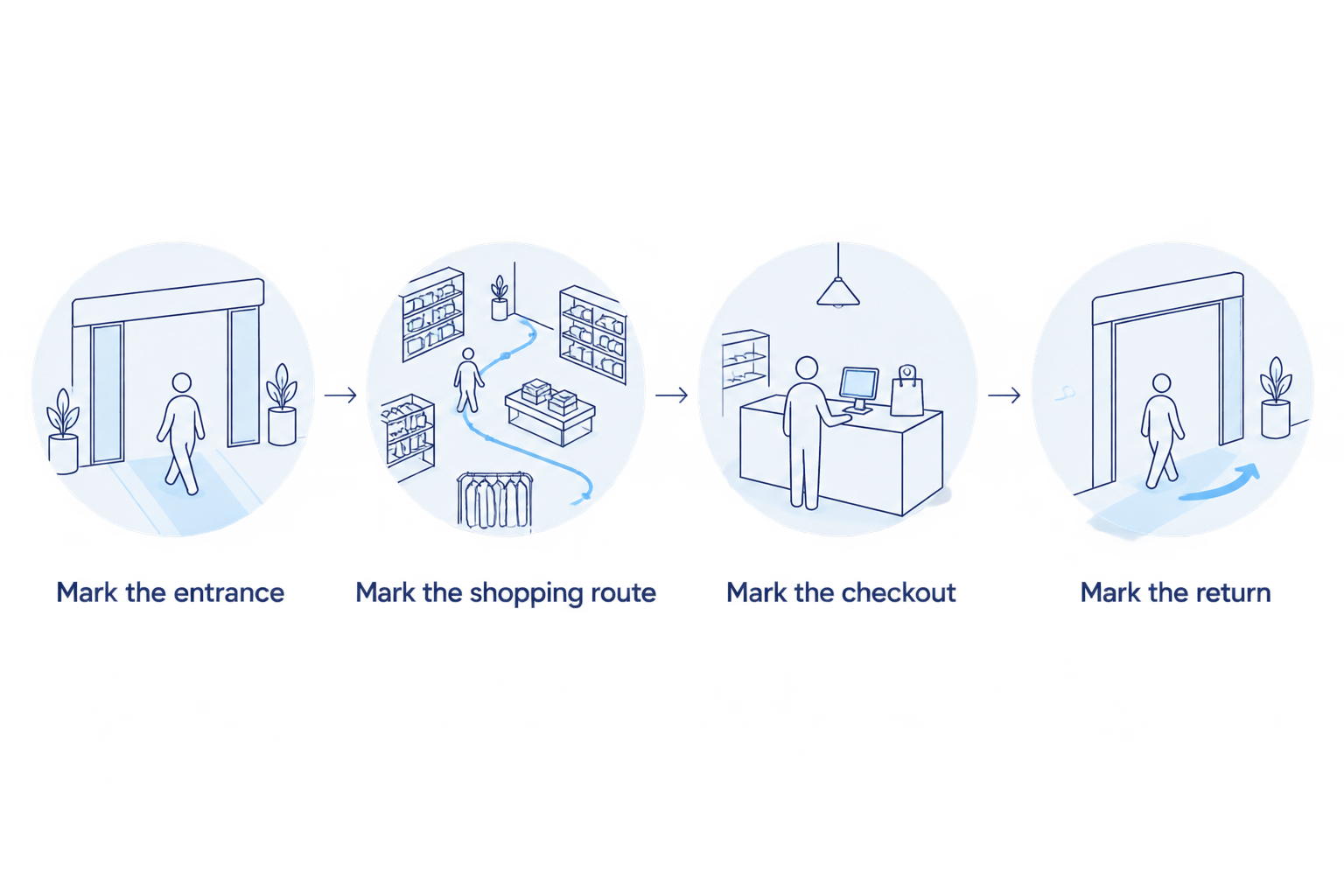
Expected result: you have measured constraints and observed turning behaviour, rather than a floor plan that works only when the shop is empty.
Choose the carrying format after checking the route. These options serve different shopping tasks; none removes the need to verify external dimensions, handling and checkout fit.
| Equipment | Best for | Practical advantage | Limitation to check |
|---|---|---|---|
| Shopping Trolley 80L Grey | Substantial grocery shops where the route accommodates a trolley | Provides an 80-litre carrying capacity | Capacity does not establish aisle clearance or turning space |
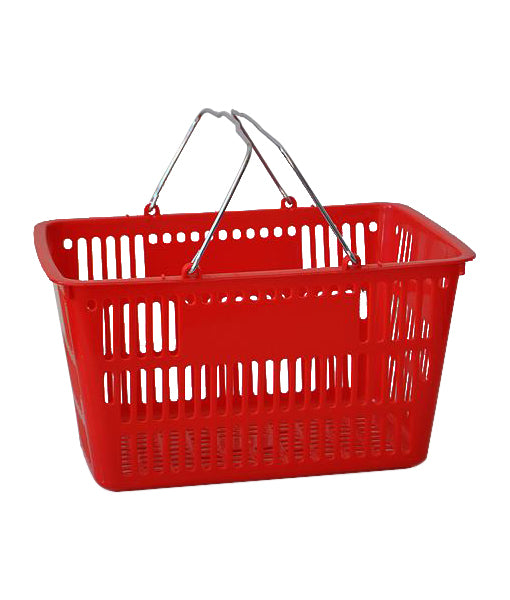
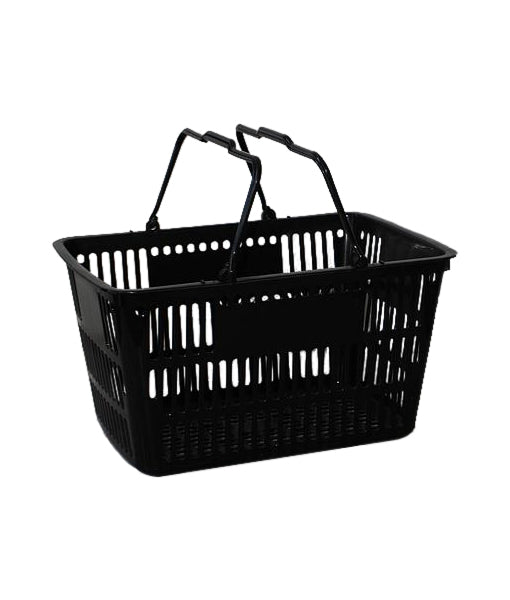
| Shopping Basket - Plastic Handle | Smaller shops suited to a hand-carried basket | Provides a 28-litre carrying capacity without a wheeled format | Customers must carry the basket; assess suitability for the expected load |
| 80 Litre Roller Shopping Basket | Shops wanting a rolling basket format | Provides an 80-litre basket option | Verify handling, external dimensions and the unloading arrangement |
Choose the smallest carrying format that suits the shopping task and passes the route test. Do not treat the smallest format as an accessibility solution for every customer, or the largest capacity as an automatic improvement.
For your 2026 equipment shortlist, record the exact product name beside its measured footprint and trial outcome. That prevents staff from substituting a different format simply because its stated capacity matches.
Expected result: customers can identify a suitable option, collect it and enter the shopping route without rearranging other equipment.
These products give you carrying formats to assess. Their capacities support comparison, but the physical trial determines whether each belongs in your store.
Expected result: the checkout accommodates arrival, unloading, payment and departure as a connected task—not separate positions that overlap during use.
Expected result: equipment returns to a usable position through an assigned procedure, and recurring problems remain visible to the store manager.
Best for: stores that regularly move promotional fixtures, change shelf layouts or alter checkout arrangements. The benefit is catching new obstructions before they become routine; the limitation is that every affected route needs a fresh physical check.
Use the approved layout as the starting point, not as permanent proof that the store works. A display placed beyond its marked footprint can change a previously tested turn.
Keep the latest approved version with your 2026 layout records. If a change fails the trial, reposition the obstruction or restore the previous arrangement before adopting it.
Fix: test collection space, not just storage space. Move the pickup position away from the doorway's immediate circulation area if customers selecting equipment block incoming shoppers, then recheck door clearance and access requirements.
Fix: test the full turn with the operator behind the handle. Inspect projecting stock, display feet and promotional fixtures; a clear straight aisle does not prove the corner works.
Fix: rehearse the queue with equipment present and customers unloading. Adjust the queue position or nearby fixture placement, then verify that the change has not blocked another route.
Fix: make the return destination obvious and assign the reset task. Check whether customers can reach that destination after payment without moving against incoming traffic.
Fix: check both the location and the equipment. A repeated parking position points to a route or handover problem; difficult steering requires the equipment to be removed for assessment.
Extend the test to replenishment and promotional resets once the customer route works. Observe where staff need to pause with stock, where customers stop to compare products and where temporary displays project into circulation space.
For a Perth grocery store, include the movement between grocery aisles and the checkout. For a regional WA shop with mixed merchandise, test the same route with a representative purchase rather than assuming every customer carries compact goods.
When assessing Cheap Shelving shopping trolleys and baskets, keep product selection tied to those observed tasks. Change equipment when equipment is the constraint; change the layout when the layout is the constraint.
What's the best way to use shopping trolleys for customer flow?
Place trolley pickup, shopping, checkout and return positions on one route plan, then test the complete journey with representative equipment. Choose capacity only after checking footprint, turns and unloading space.
Are shopping baskets better than trolleys for a small store?
Shopping baskets suit smaller shopping tasks, but store size alone does not decide the choice. Compare the expected load, customer handling needs and the actual route before selecting a carrying format.
Does an 80-litre trolley take up the same space as an 80-litre roller basket?
An equal capacity does not establish an equal footprint. Obtain external dimensions and test turning and checkout handling for each format separately.
Where should shopping trolleys go near the entrance?
Place trolley pickup where customers can see and collect equipment without obstructing entry, door movement or required access routes. Include the space used during collection, not just the stored equipment footprint.
How wide should aisles be for shopping trolleys?
Set aisle clearance against applicable requirements and the equipment's actual operating space. Measure obstructions and test turning, passing and browsing rather than relying on an unsupported universal width.
When should a store repeat its trolley route check in 2026?
Repeat the route check whenever displays, shelving, checkout queues or equipment formats change. Also review any location where staff repeatedly clear abandoned equipment.
Can Cheap Shelving help me source customer shopping equipment?
Cheap Shelving sells shopping trolleys, baskets and retail shop fittings to businesses and retailers in Perth, Western Australia. Confirm the chosen product's dimensions and operating requirements before matching it to your store layout.
Test the empty-equipment journey as carefully as the loaded one. A return point that looks tidy on a plan still fails if reaching it sends customers back through the checkout queue. Walk that final movement before approving the layout.
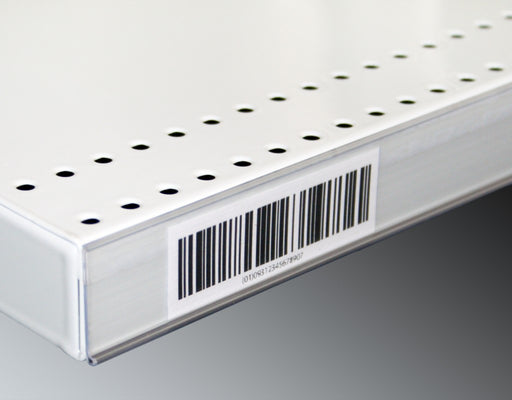
Upgrade your store's pricing and product labeling system with our Flat Adhesive Data Stripping. This cost-effective solution is designed to simplif...
View full details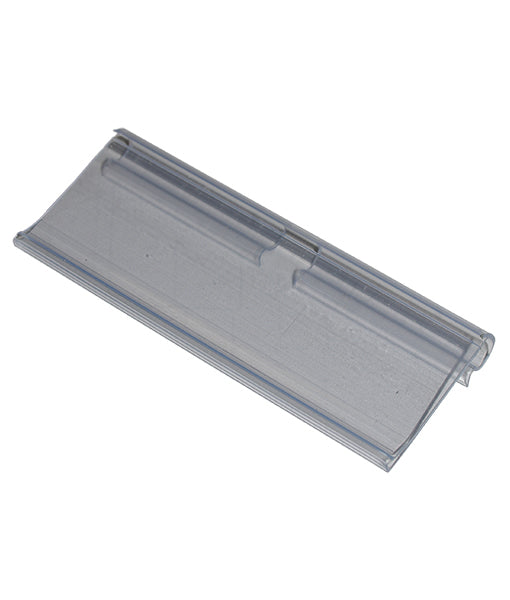
Enhance your store's product labeling and pricing system with our 100-Pack Flipper Tags. These versatile and easy-to-use tags are designed to strea...
View full detailsUpgrade your customers' shopping experience with our 28 litre Shopping Baskets featuring Metal Handles. These robust and stylish baskets are design...
View full detailsMake shopping a breeze for your customers with our 28 Litre Shopping Baskets featuring Plastic Handles. These lightweight and sturdy baskets are de...
View full detailsRevolutionize your customers' shopping experience with our Roller Shopping Baskets. These innovative baskets are designed for maximum convenience, ...
View full details{"one"=>"Select 2 or 3 items to compare", "other"=>"{{ count }} of 3 items selected"}