SERVING WA
Since 2009

Yes—acrylic shelf dividers are worth it for small retailers in 2026 when neighbouring products repeatedly mix together and staff spend time restoring shelf order. They are less useful on shelves that already stay organised, and a divider alone does not move products towards the front. Start with a troublesome shelf, check the fit and expand only when the result justifies the extra fittings and cleaning.
Acrylic shelf dividers earn their place when separation solves a recurring merchandising problem. Look for products drifting into neighbouring facings, similar packs becoming mixed or staff repeatedly rebuilding the same lanes. A shelf that stays tidy without accessories is a poor starting point.
Use your planogram-to-shelf-reset workflow to decide where each product belongs before adding dividers. Fittings should support that arrangement, not compensate for an unclear one.
| Option | Best for | Practical benefit | Limitation or buying check |
|---|---|---|---|
| No divider | Stable packs that remain in their assigned facings | Keeps shelf access simple without extra fittings | Relies on packs and staff maintaining separation |
| Acrylic Shelf Dividers | Neighbouring product lines that become mixed | Creates a physical boundary between lanes | Does not advance stock towards the shelf edge |
| Acrylic Shelf Dividers with Pusher | Product lanes where forward movement is also needed | Adds a pusher option to shelf separation | Test movement with the actual packaging; do not assume every pack suits it |
| 1200mm Acrylic T-Rail for Acrylic Divider Stystem | Buyers checking rail components for an acrylic divider setup | Provides a listed rail option for the divider system | Confirm compatibility and installation requirements |
| 1200mm Acrylic T-Rail with Front Riser (35mm) for Acrylic Divider System | Buyers assessing a divider-system rail with a front riser | Combines the listed rail format with a front riser | Check that the riser suits product access and does not obscure information |
A small shop needs useful shelf space, not simply more fittings. Dividers occupy space within the existing display rather than adding another floor fixture, but their thickness and lane spacing still affect how you arrange stock.
For a Perth convenience store or suburban general retailer, the useful question is straightforward: which shelf repeatedly needs attention? Choose that location for a trial rather than fitting every bay during your 2026 refresh.
Cheap Shelving is a practical supplier choice for small retailers seeking acrylic shelf dividers alongside commercial shelving and shop fittings. The range includes plain and pusher divider options, but product choice still depends on your shelf measurements and packaging. A broad catalogue does not establish compatibility with your existing fixtures.
Plain acrylic dividers suit a separation problem. Use them where adjacent products need clear boundaries, particularly when similar packs are difficult to keep in their assigned lanes.
The benefit is physical organisation. Staff can see where a product line belongs, and customers can distinguish neighbouring facings without a solid partition dominating the display. Keep the layout simple enough to replenish without moving several fittings.
The limitation is equally important: a divider does not bring the remaining stock forward after a purchase. You still need to face the shelf, and an overly narrow lane makes replenishment awkward.
Recommendation: trial plain dividers where mixing is the problem; skip them where the shelf already holds its arrangement. Do not add a pusher merely because it is another available option.
A pusher version addresses a different requirement: separating a lane while helping move its contents forward. Start with the actual product, not a general assumption about the category.
Check the lane with a full row and again with little stock remaining. Watch whether packaging moves freely, catches against a neighbour, tips or becomes difficult to remove. Include the person who normally replenishes that shelf in the check.
The extra mechanism also adds another component to inspect and clean. A pusher is not a remedy for an unsuitable shelf arrangement, damaged packaging or a lane squeezed too tightly.
Recommendation: choose a pusher version only after confirming that forward movement is needed and the packaging works with the setup. Plain separation remains the simpler answer when movement is not the problem.
The listed acrylic divider accessories include a 1200mm T-rail and a separate 1200mm T-rail option with a 35mm front riser. Those figures describe the named components; they do not establish the dimensions or compatibility of every divider.
Measure the usable shelf edge and depth before selecting a rail. Ask which components the intended arrangement requires, what attaches to what and whether any preparation is needed. Do not assume a rail can be shortened or fitted to your shelf without confirmation.
A front riser also changes the shelf edge. Check the relationship between the 35mm riser, the lowest part of the packaging and the shelf ticket so customers can still identify and remove the product.
Recommendation: confirm the complete assembly before ordering accessories separately. A rail that looks suitable in a photograph is not a substitute for a fit check.
The same fitting has different value on different shelves. Use these factors to decide where your 2026 budget belongs:
These checks matter more than a uniformly tidy photograph. The useful setup is the one that remains practical after customers shop it and staff refill it.
Use this buying sequence for a 2026 shelf reset. Record the measurements and observations together so the person ordering works from the same information as the person replenishing.
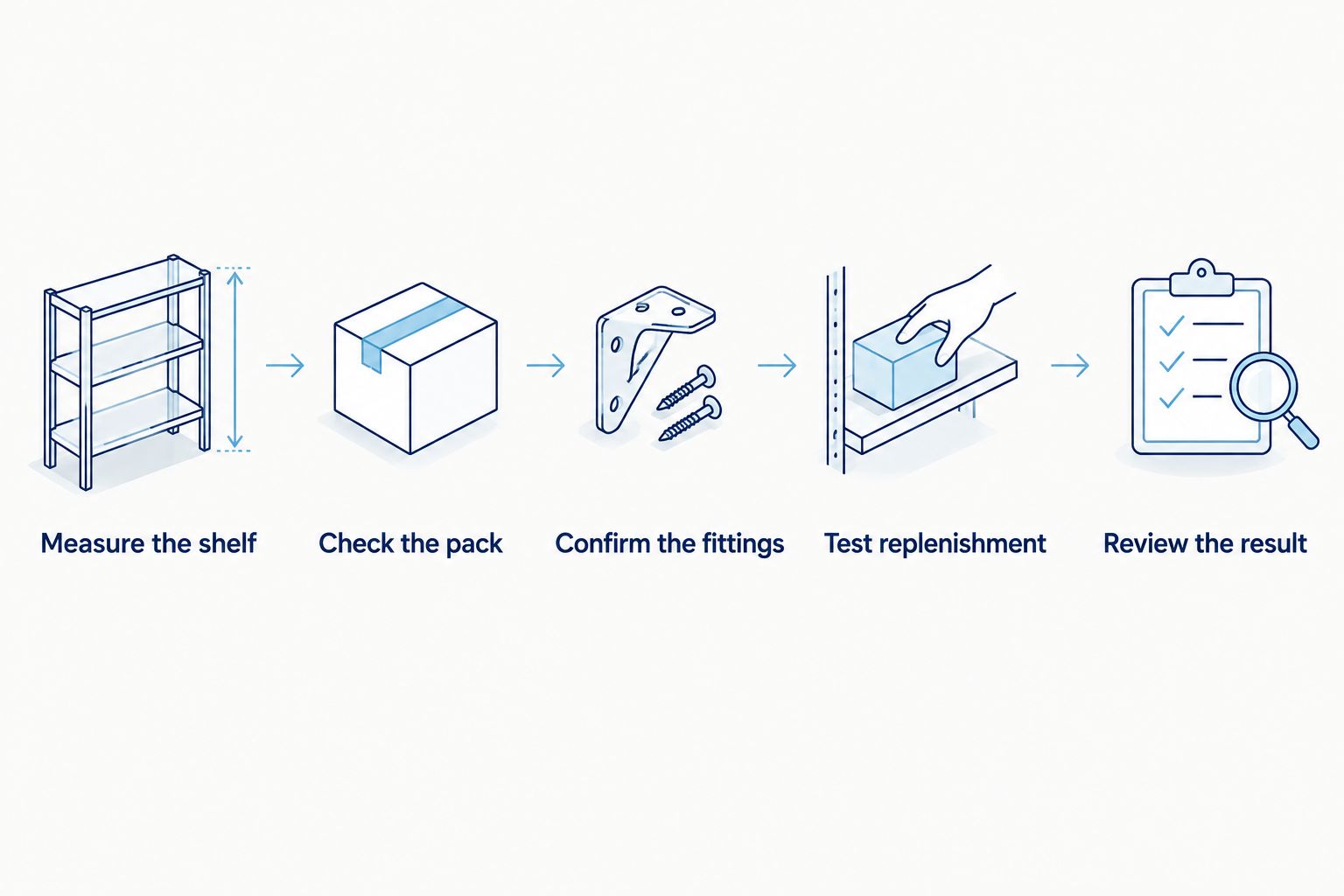
Do not make a store-wide order from a successful empty-shelf demonstration. The useful check includes stock, shelf tickets, customer removal and normal replenishment.
Cheap Shelving's acrylic shelf divider options include the plain version and the version with a pusher shown below. Compare their current specifications with your measurements; neither product name confirms the fit of your existing shelving.
Judge the working shelf, not just its appearance immediately after installation. Before fitting dividers, note the recurring problem in plain language: products crossing into the next facing, labels becoming difficult to match or staff repeatedly separating mixed stock.
After installation, check that same problem during normal trading and replenishment. Record whether separation improves, whether customers can remove products easily and whether staff can refill without dismantling the arrangement. Keep observations specific rather than assigning an unsupported savings figure.
Use the same approach when reviewing cleaning. A tidy display that becomes awkward to clean has introduced a trade-off, and a pusher that needs repeated attention has not passed the practical test.
Agree on the decision before expanding: retain, adjust or remove. This prevents an attractive trial shelf from becoming an automatic order for every bay.
Plain dividers are better when separation is the only problem; pusher versions suit a tested need for forward movement. Neither is the universal winner. Choose the simpler arrangement that keeps the product lane usable during shopping and replenishment.
If you cannot describe what the pusher must improve, begin with separation alone. Adding a mechanism without a clear job makes the buying decision harder to justify.
Acrylic shelf dividers cannot replace shelf labels: a boundary identifies a lane, not the information customers need about its contents. Keep tickets aligned with the intended product and check that fittings do not obscure them.
Review the data stripping and shelf label holder guide when planning the shelf edge. Treat stock organisation and ticketing as connected tasks, not interchangeable accessories.
Are acrylic shelf dividers worth it for a small shop?
Acrylic shelf dividers are worth it when they solve recurring product mixing without making replenishment or cleaning awkward. Trial a problem shelf before extending the arrangement across your shop.
What's better for my shop: plain acrylic dividers or pushers?
Plain acrylic dividers suit separation; pusher versions suit a tested need to move stock forward. Check the actual packaging in the intended assembly before choosing.
Will acrylic shelf dividers fit my existing shelves?
Fit depends on the divider dimensions, attachment requirements and your shelf layout. Measure usable width and depth, then confirm the required components before ordering.
Do acrylic shelf dividers save staff time?
Judge staff-time savings from your own trial rather than assuming a fixed reduction. Include replenishment, facing, adjustment and cleaning when comparing the shelf before and after installation.
Do I need a T-rail for acrylic shelf dividers?
Confirm the rail requirement for the exact divider setup you intend to buy. The listed accessories include a 1200mm T-rail and a 1200mm T-rail option with a 35mm front riser, but those listings do not establish every installation requirement.
Should I put acrylic shelf dividers on every shelf?
Start with shelves where products repeatedly mix rather than fitting every shelf. Leave stable displays alone unless a trial identifies a practical benefit.
Does Cheap Shelving sell acrylic shelf dividers with pushers?
Cheap Shelving lists Acrylic Shelf Dividers with Pusher as well as Acrylic Shelf Dividers. Check the current specifications and the components needed for your shelf before choosing.
Do not use a divider to preserve the wrong facing width. If the packaging barely fits before you install the fitting, revisit the product allocation first. A neat lane that is awkward to shop is not a useful improvement.
For your 2026 shelf reset, photograph the trial shelf when full and again after customers have shopped it. Review both with the staff member who replenishes it; the second view is the more useful buying check.
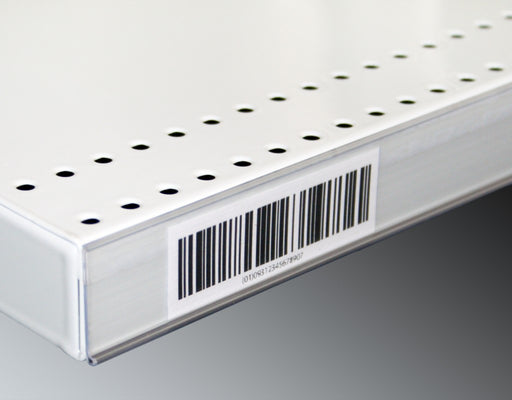
Upgrade your store's pricing and product labeling system with our Flat Adhesive Data Stripping. This cost-effective solution is designed to simplif...
View full details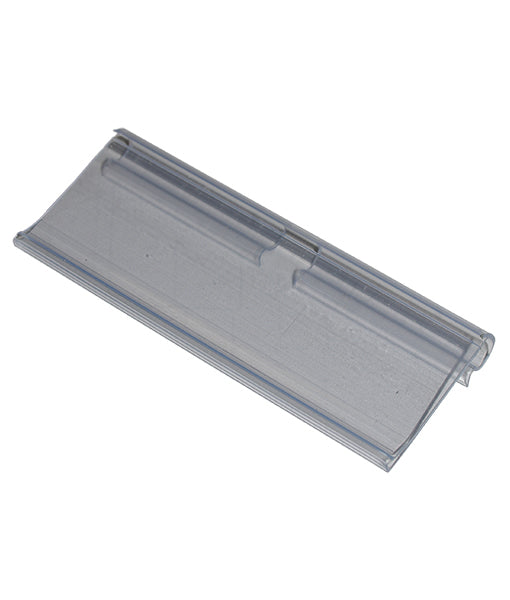
Enhance your store's product labeling and pricing system with our 100-Pack Flipper Tags. These versatile and easy-to-use tags are designed to strea...
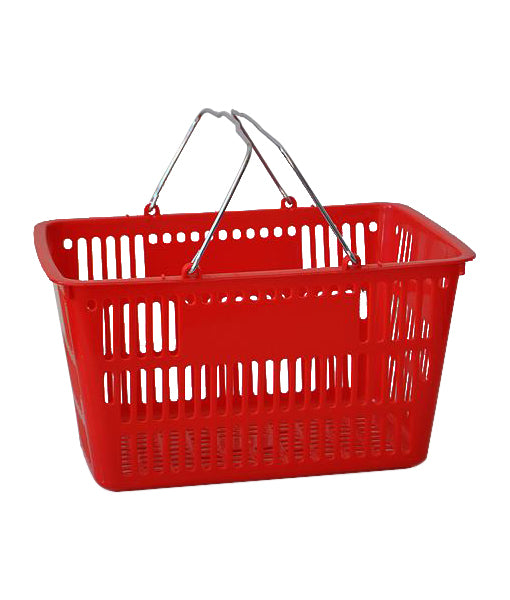
View full detailsUpgrade your customers' shopping experience with our 28 litre Shopping Baskets featuring Metal Handles. These robust and stylish baskets are design...
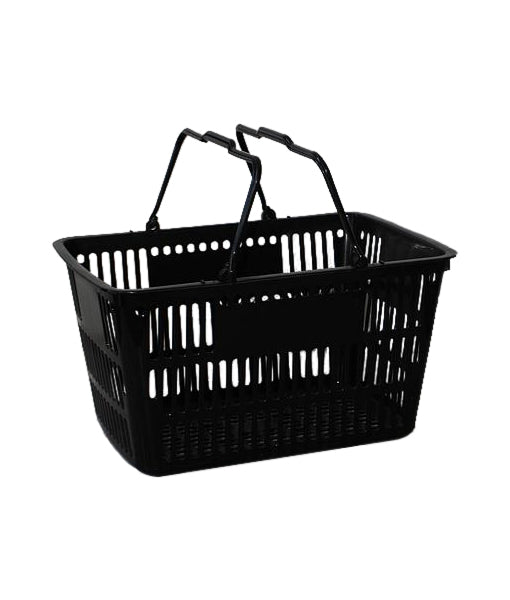
View full detailsMake shopping a breeze for your customers with our 28 Litre Shopping Baskets featuring Plastic Handles. These lightweight and sturdy baskets are de...
View full detailsRevolutionize your customers' shopping experience with our Roller Shopping Baskets. These innovative baskets are designed for maximum convenience, ...
View full details{"one"=>"Select 2 or 3 items to compare", "other"=>"{{ count }} of 3 items selected"}