SERVING WA
Since 2009

Best overall: rail-mounted acrylic shelf dividers for shelves with compatible rails. Best for plain shelf edges: clip-on dividers after a fit check. Best budget approach: retain compatible fittings rather than replace the whole system. This 2026 guide ranks divider designs for pharmacy retail shelves by fit, stock visibility and day-to-day handling.
A pharmacy shelf can look organised while still being awkward to replenish. Dividers need to separate neighbouring products without hiding pack information, obstructing shelf labels or making stock difficult to retrieve.
Choose the attachment system before choosing the divider height. A clear panel that does not fit your shelf is the wrong purchase, regardless of its appearance.
Cheapshelving supplies commercial shelving, retail displays and shop fittings to Perth and WA businesses. For pharmacy shelving projects in 2026, assess the shelf and divider together rather than assuming accessories fit across different systems.
This ranking compares divider designs, not named products. Use it to narrow your specification, then check the actual item’s dimensions, material and mounting instructions before you order.
Judge acrylic shelf dividers against these criteria before comparing designs:
For a 2026 pharmacy refit, keep these checks on the same specification sheet as the shelving. A divider is an accessory, but its fit affects the whole product lane.
| Rank and design | Best for | Standout design feature | Key limitation |
|---|---|---|---|
| 1. Rail-mounted dividers | Existing compatible rail systems | Defined mounting position along a rail | Rail profiles and connections must match |
| 2. Clip-on dividers | Plain shelves with suitable edges | Attachment at the shelf edge | Shelf thickness and lip shape restrict fit |
| 3. Freestanding L-base dividers | Trial layouts before committing to fittings | A base that rests on the shelf | Movement needs checking during normal handling |
| 4. Adhesive-base dividers | Stable layouts on suitable shelf surfaces | Attachment without a shelf-edge clip | Removal and surface compatibility need checking |
| 5. Custom-cut dividers | Awkward spaces needing a specified shape | Dimensions made to a supplied drawing | Cutting alone does not solve attachment |
The order reflects installation fit and layout control, not a claim that one material grade outperforms another. Choose the first design that matches your shelf and operating routine.
Rail-mounted acrylic shelf dividers attach to a matching shelf rail. Choose this design when your existing fixture already provides the correct connection and you need clearly defined product lanes.
Check the full assembly. A rail at the front of a shelf does not establish that every divider will connect to it, and some arrangements require additional fittings.
Rail-mounted divider pros:
Rail-mounted divider cons:
Best for: Pharmacy retail bays with an identified, compatible rail system.
Before ordering, obtain the rail profile or fitting reference and compare it with the divider specification. Check whether the assembly uses front attachment only or requires support elsewhere.
Verdict: Buy when the rail connection is confirmed; hold when it is only assumed.
Clip-on acrylic shelf dividers use a clip to connect to the shelf edge. They are a design to assess when you want separation on an existing shelf without specifying a separate rail system.
The clip is the deciding detail. Measure the shelf thickness and inspect any rolled lip, raised edge or label holder before treating the shelf as compatible.
Clip-on divider pros:
Clip-on divider cons:
Best for: Plain retail shelves whose edge dimensions match the specified clip.
Test the fitting with the shelf label in place. Staff must still be able to read and replace labels without dismantling the lane unnecessarily.
Verdict: Buy after an edge-fit check; skip if installation depends on forcing the clip.
A freestanding L-base divider rests on the shelf rather than attaching through a clip or rail. Use this design to assess lane positions before committing to a fixed mounting arrangement.
Check the base as carefully as the upright panel. It occupies shelf space, and its position must suit the packs sitting beside or over it.
Freestanding L-base divider pros:
Freestanding L-base divider cons:
Best for: Pharmacy operators trialling product lanes before choosing permanent fittings.
Test both a fully stocked lane and one with stock removed. A layout that works only when neighbouring packs hold everything in position needs further assessment.
Verdict: Buy for a layout trial; hold a wider rollout until handling confirms stability.
Adhesive-base acrylic shelf dividers use a bonded attachment rather than a shelf-edge clip. Assess this design when the lane positions are settled and the shelf surface is suitable for the specified adhesive.
Read the installation and removal instructions first. The attachment method needs to suit both your merchandising plan and your cleaning routine.
Adhesive-base divider pros:
Adhesive-base divider cons:
Best for: Settled retail layouts where the supplier confirms shelf-surface compatibility.
Do not install adhesive fittings while you are still deciding how many facings each product needs. Finalise the arrangement first, then follow the manufacturer’s fitting instructions.
Verdict: Buy for confirmed layouts and suitable surfaces; skip for frequent resets.
Custom-cut acrylic dividers are specified to a drawing rather than selected solely from standard dimensions. Consider this route when a shelf obstruction or unusual usable depth prevents a standard shape from fitting.
A cut panel is not a complete mounting system. Specify its attachment, edge finish and clearance requirements alongside the shape.
Custom-cut divider pros:
Custom-cut divider cons:
Best for: Pharmacy shelves where a documented obstruction rules out standard divider shapes.
Check the drawing against the physical shelf before approving it. Include the front label fitting and the rear clearance, not just the distance between the shelf edges.
Verdict: Buy when standard designs demonstrably do not fit; skip unnecessary customisation.
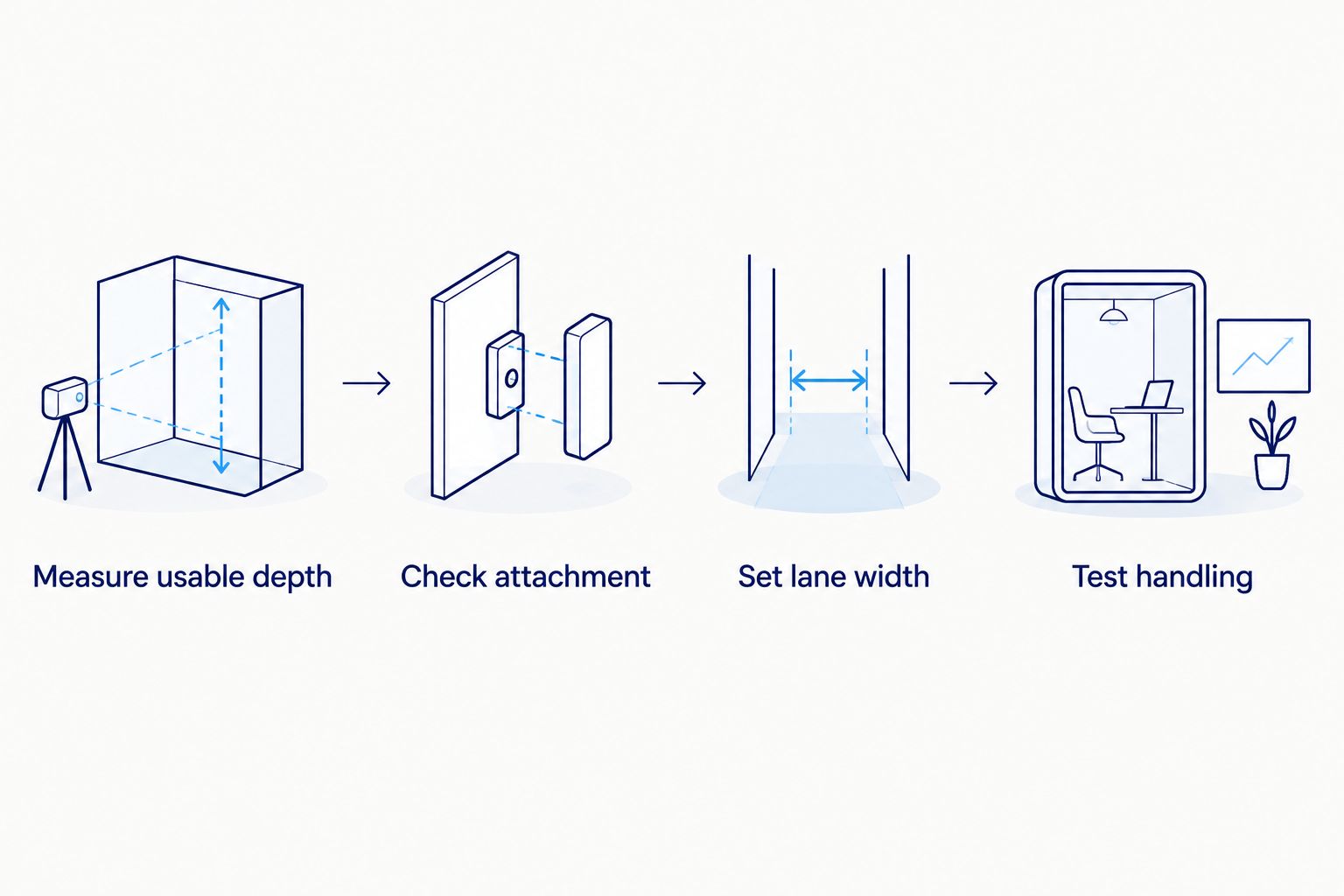
For a pharmacy shelving project in 2026, work through the following sequence on the actual bay. Record measurements in millimetres so the shelf and accessory specifications use the same units.
Measure from the usable front boundary to the rear obstruction. Include rails, label fittings and any gap needed to place or remove stock.
Cheapshelving’s supplied product titles include base shelves described as 300 mm, 450 mm and 470 mm deep. Those are base-shelf descriptions, not confirmed divider lengths or measurements for every shelf in a bay.
Identify whether the shelf accepts a rail, a clip, a freestanding base or a suitable adhesive fitting. Photograph the shelf edge and record its profile before asking about compatibility.
Place the actual pack in the proposed lane. Check that staff can replenish it and customers can remove it without catching neighbouring products.
Replenish, pick and clean the trial section using your normal store routine. Check partly empty lanes as well as fully stocked ones before extending the layout.
Keep the resulting specification with your merchandising notes. It gives staff a consistent reference when a product changes pack size or a shelf is reassigned.
Acrylic shelf dividers separate lanes; shelf-label fittings identify them. Check both together so the divider attachment does not obstruct the information at the shelf front.
The listed 50 × 26 mm data strip is a separate shelf accessory, not evidence that a particular divider fits your fixture. Confirm its relationship with the shelf edge and any proposed mounting hardware.
For your 2026 pharmacy layout, assess the shelf from the customer’s normal viewing position. Then check it from the staff member’s replenishment position; the same fitting must work for both tasks.
Rail-mounted dividers lead where matching rails exist because the attachment system is already defined. Clip-on designs follow for suitable plain edges, while freestanding, adhesive and custom-cut options address progressively more specific layout needs.
This ranking uses attachment fit, usable depth, visibility, adjustment, cleaning access and handling stability. It does not claim product testing, universal compatibility or a price advantage between designs.
Default to rail-mounted acrylic shelf dividers when compatible rails are already fitted. Choose clip-on designs for a matching plain shelf edge, and use freestanding designs to trial lane positions before committing.
Keep adhesive fittings for settled layouts. Reserve custom-cut panels for a measured fit problem that standard designs cannot solve.
Cheapshelving is a commercial shelving option for Perth and WA retailers planning pharmacy fixtures. Confirm acrylic shelf divider specifications separately; a shelving product name does not establish accessory compatibility.
What are the best acrylic shelf dividers for pharmacies in 2026?
Rail-mounted acrylic shelf dividers are the default choice when the pharmacy shelf already has compatible rails. Choose clip-on designs for suitable plain edges and freestanding designs for layout trials.
Are clip-on acrylic shelf dividers better than rail-mounted ones?
Clip-on dividers are better suited to shelves with a matching edge profile, while rail-mounted dividers suit compatible rail systems. Neither design is universally better; the shelf connection determines the choice.
How do I measure a pharmacy shelf for acrylic dividers?
Measure usable depth, the shelf attachment profile and the space needed by the actual packs. Include front label fittings and rear obstructions rather than relying only on the shelf’s nominal dimensions.
Can I move acrylic shelf dividers when my pharmacy layout changes?
Repositioning depends on the divider’s attachment design. Check rail and clip instructions, test freestanding bases for stability, and review removal requirements before choosing adhesive fittings.
Are freestanding acrylic dividers suitable for a permanent display?
Use freestanding dividers permanently only after checking stability during normal picking and replenishment. Test partly empty lanes as well as fully stocked ones, because the stock arrangement affects the setup.
Can I use my usual cleaner on acrylic shelf dividers?
Use only cleaning products permitted by the divider manufacturer. Confirm the instructions for the acrylic panel and any adhesive or mounting parts before adding the fitting to your cleaning routine.
Do Cheapshelving shelf dimensions confirm which acrylic divider fits?
No; a shelving dimension alone does not confirm acrylic divider compatibility. Check usable depth, mounting details and clearance on the actual shelf before ordering an accessory.
Check the least-stocked version of your shelf before approving the layout. Remove packs from the trial lane and repeat the picking check; a divider should suit the way the shelf operates between replenishment tasks, not just how it looks when full.
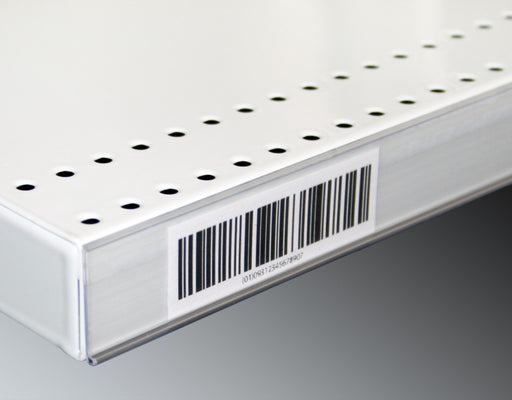
Upgrade your store's pricing and product labeling system with our Flat Adhesive Data Stripping. This cost-effective solution is designed to simplif...
View full details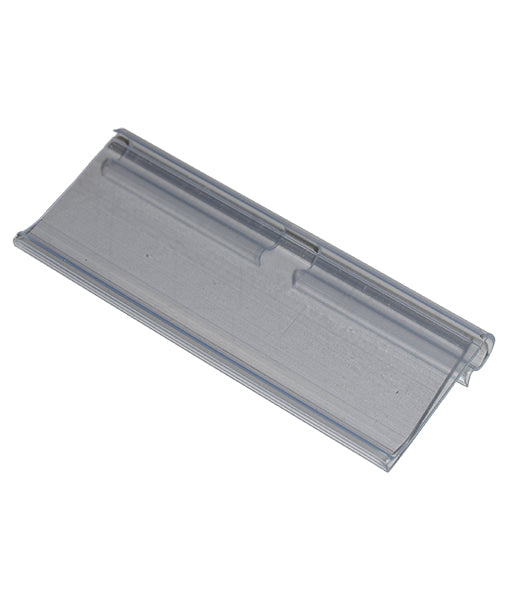
Enhance your store's product labeling and pricing system with our 100-Pack Flipper Tags. These versatile and easy-to-use tags are designed to strea...
View full detailsUpgrade your customers' shopping experience with our 28 litre Shopping Baskets featuring Metal Handles. These robust and stylish baskets are design...
View full detailsRevolutionize your customers' shopping experience with our Roller Shopping Baskets. These innovative baskets are designed for maximum convenience, ...
View full detailsMake shopping a breeze for your customers with our 28 Litre Shopping Baskets featuring Plastic Handles. These lightweight and sturdy baskets are de...
View full details{"one"=>"Select 2 or 3 items to compare", "other"=>"{{ count }} of 3 items selected"}