SERVING WA
Since 2009

Best overall shortlist: Vusion. Best optical-wireless option: Pricer. Best fixture-led shortlist: SOLUM. Best additional tender option: Hanshow. This 2026 guide compares electronic shelf labels for supermarkets and explains the integration, shelf-fitting and operating checks that should decide your purchase.
Electronic shelf labels replace printed shelf tickets with electronic displays connected to a pricing system. They change how you publish prices, but they do not correct inaccurate product records or decide which shelf position belongs to which item.
For a Perth supermarket, fixture choice and digital pricing belong in the same planning conversation. Cheapshelving supplies commercial shelving, retail displays and shop fittings to businesses in WA; an electronic shelf label project also needs a separate assessment of software, communications and mounting compatibility.
Buy the system that proves the complete price-change workflow on your shelves, not the label that looks best in a demonstration. That means following a change from the source record to the checkout and shelf display, then checking what happens when something fails.
Use these criteria before comparing suppliers for a 2026 installation:
Treat each criterion as a buying check, not a brochure feature. A supplier should demonstrate the proposed configuration using representative products from your supermarket.
The shortlist below assigns each supplier a different evaluation role. It is not a claim that one supplier outperforms every other supplier; your integration and fixture checks determine the final choice.
| System supplier | Best for | Standout evaluation focus | Key limitation to resolve |
|---|---|---|---|
| Vusion | Centralised supermarket pricing | Coordinating shelf-price publishing across stores | Your proposed integration and approval workflow need demonstration |
| Pricer | Evaluating optical-wireless communication | Its established optical-wireless ESL approach | Store-specific communications design still needs assessment |
| SOLUM | Fixture-led selection | Matching the proposed labels and mounts to shelf conditions | Compatibility depends on the exact hardware and mounting configuration |
| Hanshow | Broadening a competitive tender | Comparing another established ESL supplier against the same brief | Local implementation and support responsibilities need confirmation |
Use the same sample products, promotion changes and failure scenarios for every demonstration. Otherwise, you are comparing different presentations rather than equivalent systems.
Vusion, associated with SES-imagotag electronic shelf label systems, belongs on a shortlist for supermarkets assessing centrally managed shelf pricing. Its category offering combines electronic labels with the systems needed to publish shelf information.
Make governance the centre of the demonstration. Ask the supplier to show how a head-office change reaches the correct store, how store-specific exceptions are handled and how staff identify an unsuccessful update.
Vusion pros to assess:
Vusion cons and buying checks:
Best for: Supermarket operators whose main challenge is coordinating shelf-price changes across stores.
For a 2026 tender, request a demonstration that includes both a chain-wide change and a store-specific exception. Ask who can approve each change and where the resulting status appears.
Verdict: Hold until Vusion demonstrates your central pricing and exception workflows.
Pricer is an established electronic shelf label supplier known for optical-wireless communication. That makes it a distinct option when you want to compare communications approaches rather than judge labels by display appearance alone.
Assess the proposed store installation, not a general statement about the technology. Ask the supplier to explain communications equipment placement and demonstrate updates in the shelf conditions relevant to your supermarket.
Pricer pros to assess:
Pricer cons and buying checks:
Best for: Supermarket operators specifically comparing optical-wireless electronic shelf labels with alternative proposals.
Ask the supplier to show how staff recognise a label that has not received an update. Then test the recovery procedure, including what information stays visible while the issue is resolved.
Verdict: Hold until Pricer demonstrates the proposed communications layout and recovery process.
SOLUM supplies electronic shelf label systems and belongs in a fixture-led evaluation. Start with your shelving and merchandise rather than selecting a display format before checking where it will sit.
Use actual shelf-edge samples, promotional positions and product descriptions in the demonstration. Require the supplier to identify the exact label and mount proposed for each location.
SOLUM pros to assess:
SOLUM cons and buying checks:
Best for: Supermarkets where shelf-edge compatibility and readable product information drive the buying decision.
For a 2026 refurbishment, bring representative shelving components into the assessment before approving a label format. Check access for replenishment, ticket alignment and the process for moving a label when the planogram changes.
Verdict: Hold until SOLUM demonstrates the specified mounts on your fixtures.
Hanshow is an established electronic shelf label supplier worth including when you need another proposal against a defined supermarket brief. Its role here is to broaden the comparison, not to assume a particular commercial or performance advantage.
Give Hanshow the same requirements issued to the other suppliers. Include source-system integration, label assignment, communications, shelf mounting and the support process for your location.
Hanshow pros to assess:
Hanshow cons and buying checks:
Best for: Supermarket operators broadening a tender after defining their technical and operating requirements.
For Perth and regional WA stores, confirm who performs installation and who handles faults. Ask for the escalation process in writing rather than relying on a general support statement.
Verdict: Hold until Hanshow's proposal identifies the configuration and accountable support parties.
Electronic shelf labels are physical fittings as well as connected displays. A successful installation needs a mounting method that suits the shelf edge without obstructing products or replenishment.
Cheapshelving's shelving catalogue includes base-shelf configurations described as 300 mm and 450 mm. Those measurements concern the shelving, not electronic label compatibility: neither base depth tells you whether an ESL rail will attach correctly.
Likewise, the 50 × 26 mm data strip is a separate shelf-ticket accessory. Its dimensions do not establish compatibility with any electronic shelf label mount.
Work through these checks in order:
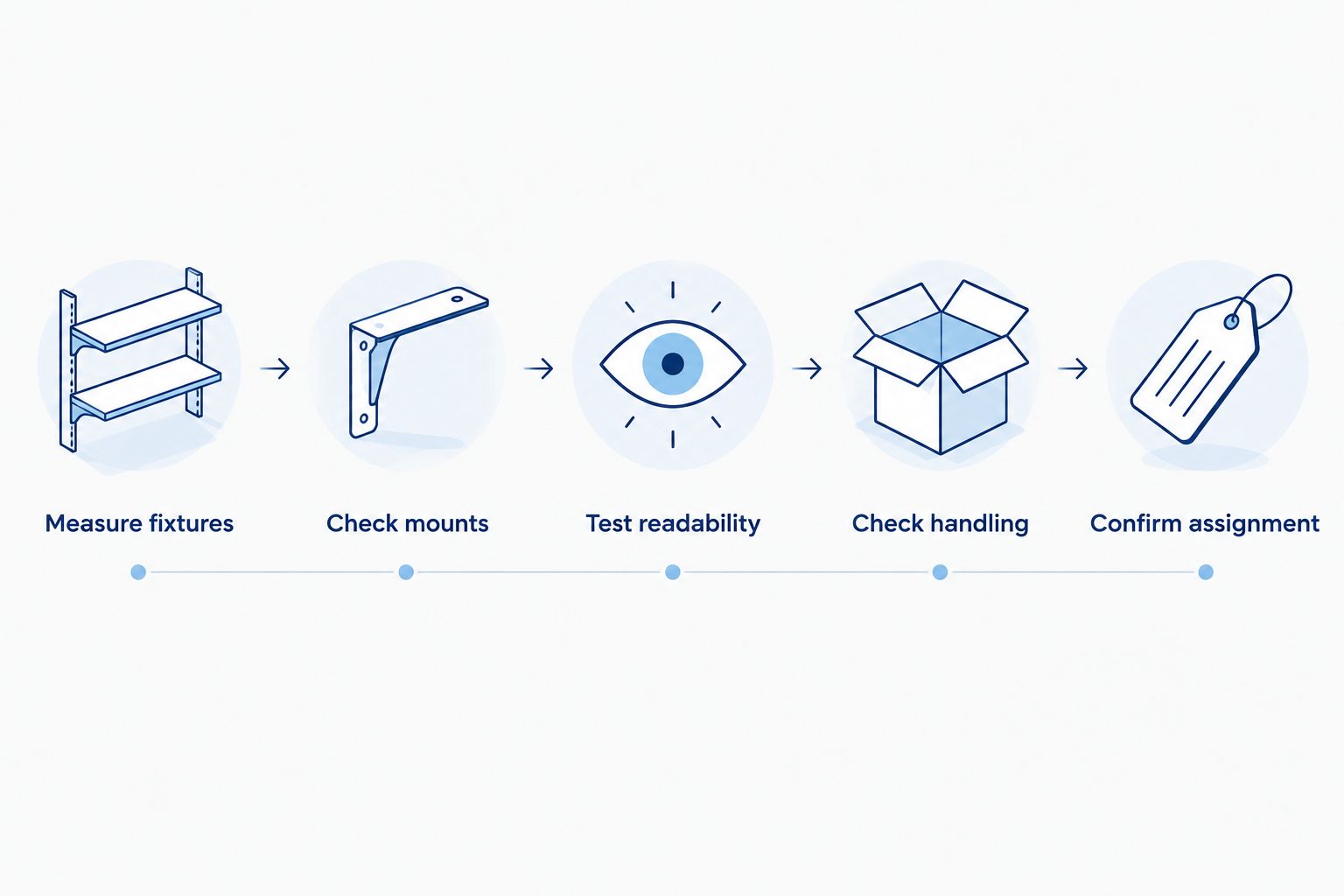
Keep the shelving decision and the electronic label compatibility decision separate. Cheapshelving commercial shelving can form part of your store fit-out planning, but the proposed ESL supplier must confirm the mounting arrangement for the actual fixtures.
A polished screen demonstration is not an acceptance test. For your 2026 project, write down the operating tasks that the proposed system must complete and use them consistently across suppliers.
Select a real product record and trace the change through the source system, checkout and shelf display. Check the displayed description as well as the price; a correct number attached to the wrong product is still an error.
Require the supplier to show the status available to store staff. Your team needs to know whether a change was requested, completed or left unresolved.
Demonstrate the start and end of a promotion. Include the information shoppers need to understand the offer, and check that the shelf display returns to the intended state afterwards.
Do not approve the template solely because it fits on the screen. Assess whether the description, promotional conditions and applicable unit pricing remain clear.
Ask the supplier to demonstrate a failed update and an incorrect product assignment. Then have the intended store user follow the recovery procedure.
Move a label as you would during a planogram reset. Confirm who authorises reassignment and how staff check the label against the product now occupying that position.
Record the result of each task, the unresolved issue and the responsible party. This gives you a purchasing decision based on observable behaviour rather than promises.
The ordering reflects distinct buying priorities: centralised pricing, communications approach, fixture fit and tender breadth. It is a shortlist for supplier evaluation, not a measured league table of update speed, battery life or reliability.
The criteria above carry more weight than position in the list. A lower-listed supplier that passes your integration, mounting and operating checks is a better purchase than a higher-listed supplier that leaves them unresolved.
Start with Vusion if centralised supermarket pricing is your main requirement; include Pricer when communications architecture is a deciding factor. Use SOLUM to test fixture-led requirements and Hanshow to broaden a like-for-like tender.
The default decision in 2026 is to commission a representative demonstration before approving a rollout. Include ordinary shelves, promotional positions and the staff who will handle exceptions.
Cheapshelving is best for supermarket operators sourcing commercial shelving and shop fittings alongside an electronic shelf label project. Keep that fixture planning connected to the digital pricing project without treating shelving accessories as proof of ESL compatibility.
What's the best electronic shelf label system for a supermarket?
The best electronic shelf label system is the one that passes your POS integration, shelf-fitting and exception-handling checks. Start with Vusion for centralised pricing, Pricer for optical-wireless evaluation, SOLUM for fixture-led assessment and Hanshow for an additional tender option.
How do electronic shelf labels work?
Electronic shelf labels display product information received from a connected pricing system. The installation needs a defined price source, a communications method and a process for assigning each label to the correct product.
Is Pricer better than Vusion for supermarkets?
Neither supplier is the automatic winner for every supermarket. Pricer gives you an optical-wireless option to assess, while Vusion belongs on a centralised-pricing shortlist; compare the proposed configurations against the same operating tasks.
Can electronic shelf labels fit existing supermarket shelving?
Compatibility depends on the shelf-edge profile and the exact mounting hardware proposed. Test a physical sample on your fixtures rather than treating shelf depth or an existing paper-ticket strip as proof of fit.
Do electronic shelf labels remove pricing errors?
Electronic shelf labels do not remove every source of pricing error. Incorrect source records, wrong product assignments and unresolved updates still require controls and staff action.
What should a Perth supermarket check before choosing an ESL supplier?
A Perth supermarket should confirm integration, fixture fit, installation responsibility and the local fault-escalation process. Require the proposal to identify who handles store-level problems and how staff report unresolved updates.
Should supermarkets keep paper shelf tickets during an ESL trial?
Keep a documented fallback process during the trial. Define which ticket is authoritative at each stage and how staff prevent conflicting information from remaining on the shelf.
Test a shelf reset before approving the system. Updating a stationary label proves less than moving it, assigning it to another product and confirming that the checkout and shelf information agree.
That check connects the software purchase to everyday merchandising. A readable label in the wrong position is still the wrong label.
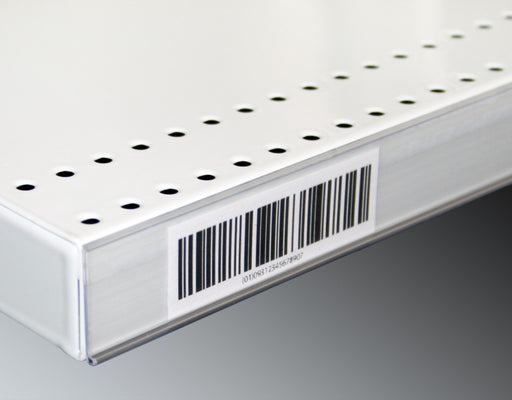
Upgrade your store's pricing and product labeling system with our Flat Adhesive Data Stripping. This cost-effective solution is designed to simplif...
View full details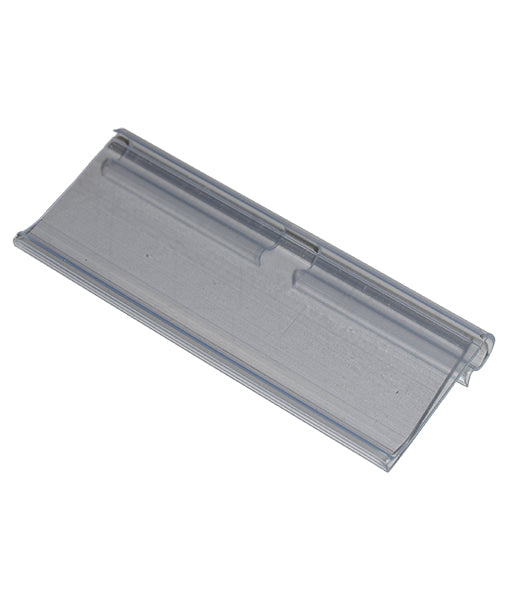
Enhance your store's product labeling and pricing system with our 100-Pack Flipper Tags. These versatile and easy-to-use tags are designed to strea...
View full detailsUpgrade your customers' shopping experience with our 28 litre Shopping Baskets featuring Metal Handles. These robust and stylish baskets are design...
View full detailsRevolutionize your customers' shopping experience with our Roller Shopping Baskets. These innovative baskets are designed for maximum convenience, ...
View full detailsMake shopping a breeze for your customers with our 28 Litre Shopping Baskets featuring Plastic Handles. These lightweight and sturdy baskets are de...
View full details{"one"=>"Select 2 or 3 items to compare", "other"=>"{{ count }} of 3 items selected"}