SERVING WA
Since 2009

Best overall: selective pallet racking for mixed stock. Best for repeat-product bulk storage: drive-in racking. Best for space-constrained operations: mobile pallet racking. Best for first-in, first-out stock rotation: pallet flow racking. This 2026 guide compares pallet shelving for cold storage by access, usable floor space, stock rotation and buying checks.
Cold-room storage has to work around refrigeration equipment, cleaning access and stock movement. Filling every available space with racking is not the same as creating a workable store.
Choose the storage method before choosing the rack finish or layout. A supermarket holding mixed chilled lines needs different access from a distributor storing repeated pallets of one frozen product.
Cheapshelving supplies commercial shelving and shop fittings to Perth businesses. Keep the retail fixture brief separate from the engineered specification for pallet loads inside a cool room.
Use these checks to compare proposals for your 2026 fitout:
No rack type passes these checks by name alone. The configured system, floor, handling equipment and operating conditions must work together.
| System | Best for | Standout feature | Key limitation |
|---|---|---|---|
| Selective pallet racking | Mixed stock requiring direct access | Each pallet position faces a handling aisle | More floor space remains in aisles |
| Drive-in pallet racking | Repeated pallets of the same product | Deep storage lanes reduce aisle requirements | Pallets within a lane are not independently accessible |
| Mobile pallet racking | Storage where permanent aisles consume too much space | Moving rack bases open a working aisle | Moving equipment adds operational and maintenance requirements |
| Pallet flow racking | Products requiring first-in, first-out rotation | Gravity lanes move pallets towards the picking face | Pallet condition and lane design need close attention |
Selective pallet racking gives your handling equipment direct access to each pallet position. It is the clearest starting point when your cold room holds different products, batches or expiry dates that staff need to retrieve independently.
For a Perth grocery operator, that access matters when incoming deliveries contain mixed lines rather than repeated pallets of one item. You can select the required pallet without first moving another pallet out of its lane.
Selective pallet racking pros:
Selective pallet racking cons:
Best for: Retailers and wholesalers managing mixed palletised stock.
Verdict: Buy selective racking as the default configuration, subject to a cold-store design and load assessment.
Drive-in pallet racking stores pallets in deep lanes, with the forklift entering the rack structure to place and retrieve loads. It suits batches of the same product where individual access to every pallet is not required.
A conventional single-entry drive-in lane operates on a last-in, first-out basis. That makes allocation important: mixing products or expiry requirements in the same lane creates retrieval problems.
Drive-in pallet racking pros:
Drive-in pallet racking cons:
Best for: Cold stores holding substantial quantities of the same product per lane.
Verdict: Buy drive-in racking for repeat-product storage; skip it where direct batch access is essential.
Mobile pallet racking places racks on moving bases so a working aisle opens where access is needed. It changes how floor space is allocated rather than removing the need for an operating aisle.
This system deserves consideration when fixed aisles dominate the proposed room layout. Its suitability also depends on access frequency, simultaneous handling requirements and the installation's suitability for the cold environment.
Mobile pallet racking pros:
Mobile pallet racking cons:
Best for: Space-constrained cold stores whose access pattern suits shared working aisles.
Verdict: Hold until the supplier demonstrates cold-temperature suitability, access controls and a workable maintenance plan.
Pallet flow racking uses inclined roller lanes to move pallets from the loading end towards the retrieval end. Loading and picking take place at opposite faces, supporting first-in, first-out movement through each lane.
The system suits operations that can assign compatible products and pallets to defined lanes. It does not replace expiry-date checks or correct batch allocation.
Pallet flow racking pros:
Pallet flow racking cons:
Best for: Repeated product lines requiring first-in, first-out pallet movement.
Verdict: Buy pallet flow racking when rotation drives the brief and representative pallets pass the supplier's validation.
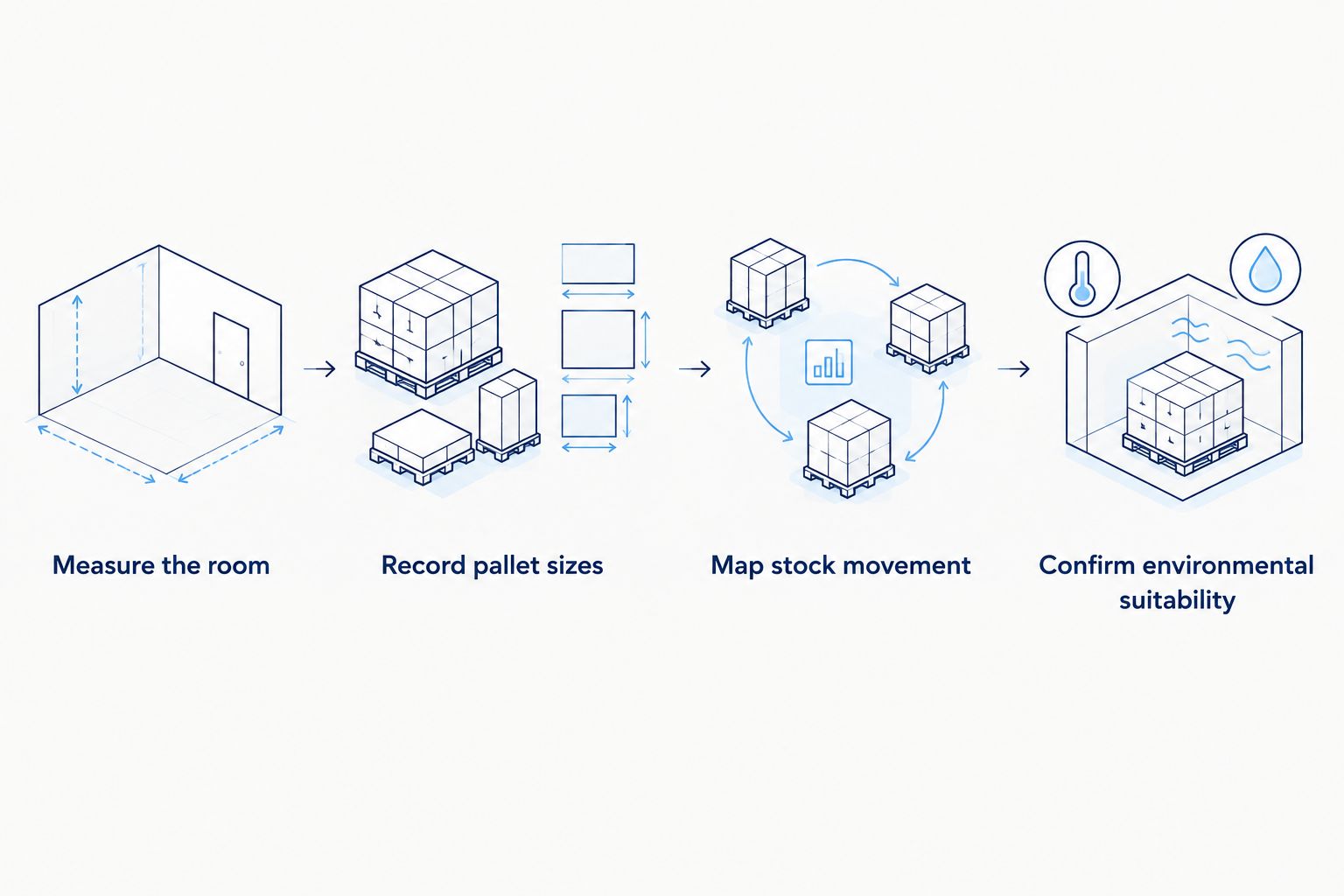
A useful 2026 quotation starts with an operating brief, not just room length and width. Record the details below before asking suppliers to draw the layout.
Measure internal clear dimensions and note doors, columns, evaporators, drains and fixed services. Identify the route between receiving, storage and picking, including door openings and turning areas.
Do not treat refrigerated wall panels as structural supports. Have floor suitability, anchoring and any proposed structural connections assessed for the actual installation.
Measure the pallets you actually receive, including load overhang. Australian pallets commonly measure 1165 mm by 1165 mm, while Euro pallets commonly measure 1200 mm by 800 mm; these footprints are not interchangeable in a rack design.
Record loaded height and maximum loaded weight as well. Pallets with different bases or damaged boards need attention even when their external dimensions match.
List product lines, quantities per line and rotation requirements. Then mark how replenishment and picking will occur while other staff or equipment use the room.
A high-density proposal only works if its access pattern suits the job. Do not select deep lanes for mixed stock simply because the drawing shows more pallet positions.
Give the supplier the operating temperature range, cleaning method and relevant moisture conditions. Ask for confirmation covering the rack finish, connections and any rollers, drives or controls.
Pallet racking supports palletised loads handled with suitable equipment. Long-span shelving and retail shelving serve different storage tasks; a commercial shelving description does not establish that a unit can accept forklift-loaded pallets.
Cheapshelving is best suited to retail operators sourcing commercial shelving and shop fittings. Its retail shelving range should not be treated as a cold-store pallet-racking specification.
For a store with both carton picking and pallet storage, define separate zones. Obtain written load and temperature suitability for each zone rather than applying one shelving specification across the whole room.
The same distinction applies to installation. Use the pallet-racking installation safety guide to frame the questions you put to the installer, not as a substitute for a site-specific design.
A 2026 cold-room fitout needs a location-label plan alongside the rack drawing. Assign bay and level identifiers that staff can read from the normal picking position, and keep those identifiers clear of predictable impact points.
Treat label production and label application as separate checks: label printing in freezing temperatures involves the printer's operating conditions, while adhesion depends on the label material, surface and application conditions. A waterproof label claim alone does not answer either question.
Trial the proposed labels on the actual surface and under the intended cleaning routine. Keep product, batch and expiry identification separate from permanent rack-location identification so a stock change does not require renaming the location.
The 2026 ranking prioritises stock access, rotation, floor-space use and operating requirements. It compares storage configurations, not tested supplier products or interchangeable equipment packages.
Selective racking ranks first because direct access makes it the default for mixed stock. Drive-in, mobile and pallet flow racking each solve a more specific problem, with limitations that belong in the buying decision.
Compare proposals against the same pallet inventory and room brief. Ask suppliers to show usable positions, access routes, load information, environmental suitability and maintenance requirements on a consistent basis.
Choose selective pallet racking if you are undecided and need direct access to mixed stock. Move to drive-in only when repeated products justify deep lanes, mobile when shared aisles suit operations, or pallet flow when first-in, first-out movement is central.
For Perth retail operators, Cheapshelving's commercial shelving and shop fittings belong in the wider store-equipment brief. Keep engineering approval for cold-store pallet racking as a separate purchasing requirement.
What's the best pallet shelving for cold storage?
Selective pallet racking is the default choice for mixed cold-store stock requiring direct access to each pallet. Drive-in, mobile and pallet flow systems suit more specific storage and access requirements.
Is drive-in racking better than selective racking for a cool room?
Drive-in racking is better suited to repeated pallets of the same product, while selective racking is better suited to mixed stock. Single-entry drive-in lanes restrict access to pallets behind the front positions.
Can ordinary retail shelving hold pallets in a cold room?
Do not use ordinary retail shelving for pallet loads unless the manufacturer explicitly specifies that use. Retail shelf ratings do not establish suitability for forklift-loaded pallets or cold-room conditions.
Does pallet flow racking keep stock in expiry-date order?
Pallet flow racking supports first-in, first-out movement, but it does not independently manage expiry dates. Staff still need to allocate batches correctly and check product dates.
What measurements do I need before buying cold-room pallet racking?
Record the room's clear dimensions, obstructions, door openings and equipment routes, plus actual pallet dimensions, loaded heights and weights. Give the supplier the operating temperature and cleaning requirements too.
Is mobile pallet racking suitable for freezing temperatures?
Mobile pallet racking requires confirmation that the complete installation suits the intended freezing conditions. Obtain written suitability for moving bases, controls and safety equipment rather than relying on the rack description.
How do I compare cold-storage racking quotes?
Compare quotes against the same room plan, pallet inventory and operating brief. Require each proposal to identify usable pallet positions, access arrangements, load information, installation scope and maintenance requirements.
An empty pallet position behind the wrong product is not immediately usable storage. Before approving the layout, walk through receiving, put-away, retrieval and cleaning with your actual stock list; access conflicts are easier to resolve on a drawing than inside an operating cool room.
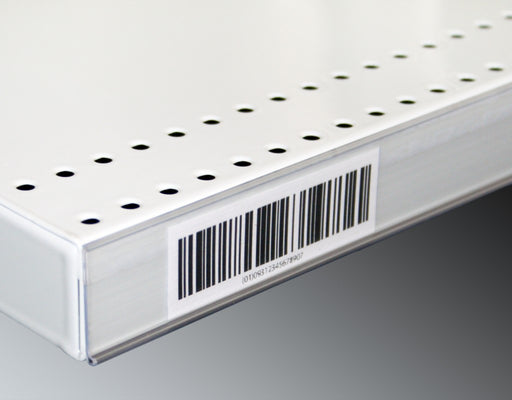
Upgrade your store's pricing and product labeling system with our Flat Adhesive Data Stripping. This cost-effective solution is designed to simplif...
View full details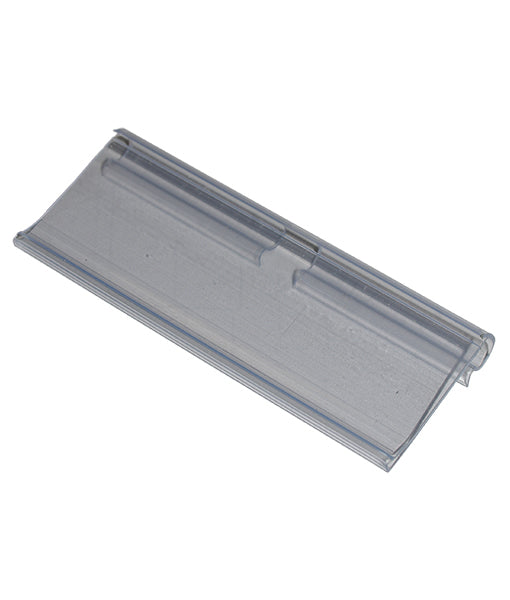
Enhance your store's product labeling and pricing system with our 100-Pack Flipper Tags. These versatile and easy-to-use tags are designed to strea...
View full detailsUpgrade your customers' shopping experience with our 28 litre Shopping Baskets featuring Metal Handles. These robust and stylish baskets are design...
View full detailsMake shopping a breeze for your customers with our 28 Litre Shopping Baskets featuring Plastic Handles. These lightweight and sturdy baskets are de...
View full detailsRevolutionize your customers' shopping experience with our Roller Shopping Baskets. These innovative baskets are designed for maximum convenience, ...
View full details{"one"=>"Select 2 or 3 items to compare", "other"=>"{{ count }} of 3 items selected"}