SERVING WA
Since 2009

Best overall: twin-slot wall shelving. Best for mixed merchandise: slatwall shelving. Best for a simple, fixed display: fixed-bracket shelving. Best for hanging stock with occasional shelves: wall-mounted wire grid. This 2026 guide compares wall mounted shelving for retail by stock type, adjustment, floor space and installation requirements.
Wall-mounted shelving supports merchandise from the wall. Shelving placed against a wall is not necessarily wall-mounted: a unit with uprights and a base shelf has a different footprint and support arrangement.
That distinction matters before you compare finishes or accessories. A wall-mounted system needs a suitable substrate, compatible fixings and a documented load rating for the complete installation. It also projects into the store, even when the floor beneath it remains clear.
Cheapshelving supplies commercial shelving, retail displays and shop fittings to Perth businesses. For a 2026 fit-out, separate your need for perimeter merchandising from your need for a genuinely wall-supported fixture.
Use these checks before choosing a system. Appearance comes after fit, support and compatibility.
The best retail wall shelf is the one that supports your stock safely and leaves the required circulation space clear. Extra adjustment is valuable only if your merchandising needs it.
These 2026 recommendations compare system types, not unverified supplier specifications. Each option has a distinct job.
| System | Best for | Standout feature | Key limitation |
|---|---|---|---|
| Twin-slot wall shelving | Changing shelf-based ranges | Brackets reposition along vertical standards | Requires suitable wall fixings and matched components |
| Slatwall panel systems | Mixed shelves and hanging merchandise | Different compatible accessories share a panel | Panel, insert and accessory compatibility need checking |
| Fixed-bracket shelving | Stable, compact displays | A straightforward shelf-and-bracket arrangement | Changing shelf positions involves installation work |
| Wall-mounted wire grid | Hanging stock with supplementary shelves | Open grid accepts compatible display accessories | Not the default for dense shelf-based merchandise |
Twin-slot wall shelving uses vertical standards and brackets that engage with their slots. Compatible shelves sit on the brackets, allowing you to change shelf positions without relocating the wall standards.
This is the strongest default for retailers whose packaged ranges change in height. You can arrange shelves around the merchandise rather than accepting a fixed gap that leaves unused space above shorter products.
Twin-slot shelving pros:
Twin-slot shelving cons:
Best for: Shelf-led shops with seasonal packaging changes or frequent range resets.
Before ordering, list the shelf positions you need now and the adjustments you expect later. Check that shelf dimensions suit your stock and that the manufacturer documents the proposed combination of standards, brackets and shelves.
Verdict: Buy twin-slot shelving for adjustable shelf displays once wall suitability and component compatibility are confirmed.
Slatwall panels have horizontal channels that accept compatible accessories. A display can combine shelves, hooks and other fittings where the particular panel system supports them.
Slatwall is the better choice when your wall needs to carry more than rows of boxed products. A boutique or accessories shop can separate hanging merchandise from shelf-based goods without switching to an unrelated fixture for each display area.
Slatwall shelving pros:
Slatwall shelving cons:
Best for: Retailers merchandising hanging accessories alongside selected shelf products.
Check the exact panel specification before choosing fittings. A metal slat panel, a timber-based slatwall panel and a similarly named merchandising panel are not automatically interchangeable.
Verdict: Buy slatwall shelving for mixed displays; skip it if your range needs only straightforward shelf rows.
Fixed-bracket shelving supports a shelf on brackets attached directly to the wall. It suits a display whose position, depth and merchandise change infrequently.
A small feature wall or a clearly defined product group does not always need a panel system. Fixed brackets keep the fixture arrangement simple, but you commit to the shelf positions during installation.
Fixed-bracket shelving pros:
Fixed-bracket shelving cons:
Best for: Stable merchandise groups in a defined display area.
Plan the product arrangement before marking fixing positions. Include the tallest package, the shelf below it and the space customers need to remove products without knocking adjacent stock.
Verdict: Buy fixed-bracket shelving for a settled display; skip it when frequent shelf-height changes are essential.
Wall-mounted wire grid provides an open framework for compatible hooks and shelf accessories. Its main role is flexible hanging merchandise, with shelves supporting selected items rather than defining the whole display.
Choose this system where the product mix needs many hanging positions. Treat shelf accessories as part of the specified grid system, not as generic additions that happen to hook onto it.
Wall-mounted wire grid pros:
Wall-mounted wire grid cons:
Best for: Hanging-led ranges that need a few supplementary shelf positions.
Check product removal as well as product storage. Customers need to lift or slide an item off its fitting without disturbing the shelf above or the merchandise beside it.
Verdict: Buy wall-mounted wire grid for hanging-led merchandising; skip it as the default for dense shelf rows.
Twin-slot shelving takes the default position because shelf adjustment directly serves changing packaged ranges. Slatwall wins for mixed accessories, fixed brackets for stable displays, and wire grid for hanging-led merchandise.
The ranking follows the buying criteria: merchandise fit, adjustment, accessory compatibility and installation requirements. No system earns a higher position simply because it has more fittings.
Before finalising a 2026 shortlist, decide whether you need the wall to carry the display. A floor-supported perimeter unit is a separate option, not a substitute to label as wall-mounted.
Cheapshelving's commercial shelving catalogue includes products named with base-shelf dimensions. Those dimensions help you compare footprint, but they do not establish wall-mounting capability.
| Catalogue option | Stated base shelf | Best for | Trade-off to check |
|---|---|---|---|
| Budget Shelving Flat Panel with 300mm Base Shelf- White | 300 mm | Comparing a shallower base-shelf option | Confirm the full assembled footprint and support method |
| Budget Shelving Flat Panel with 450mm Base Shelf- White | 450 mm | Comparing a deeper base-shelf option | Check the remaining circulation space and merchandise fit |
The stated base-shelf dimensions differ by 150 mm. That is not the same as a verified difference in total installed footprint: posts, feet and other components also need checking.
Choose the shallower option only if your merchandise fits it. Choose the deeper option only if the display needs that depth and your layout accommodates the complete unit.
Verdict: Hold either base-shelf option until its assembled dimensions and installation requirements match your plan.
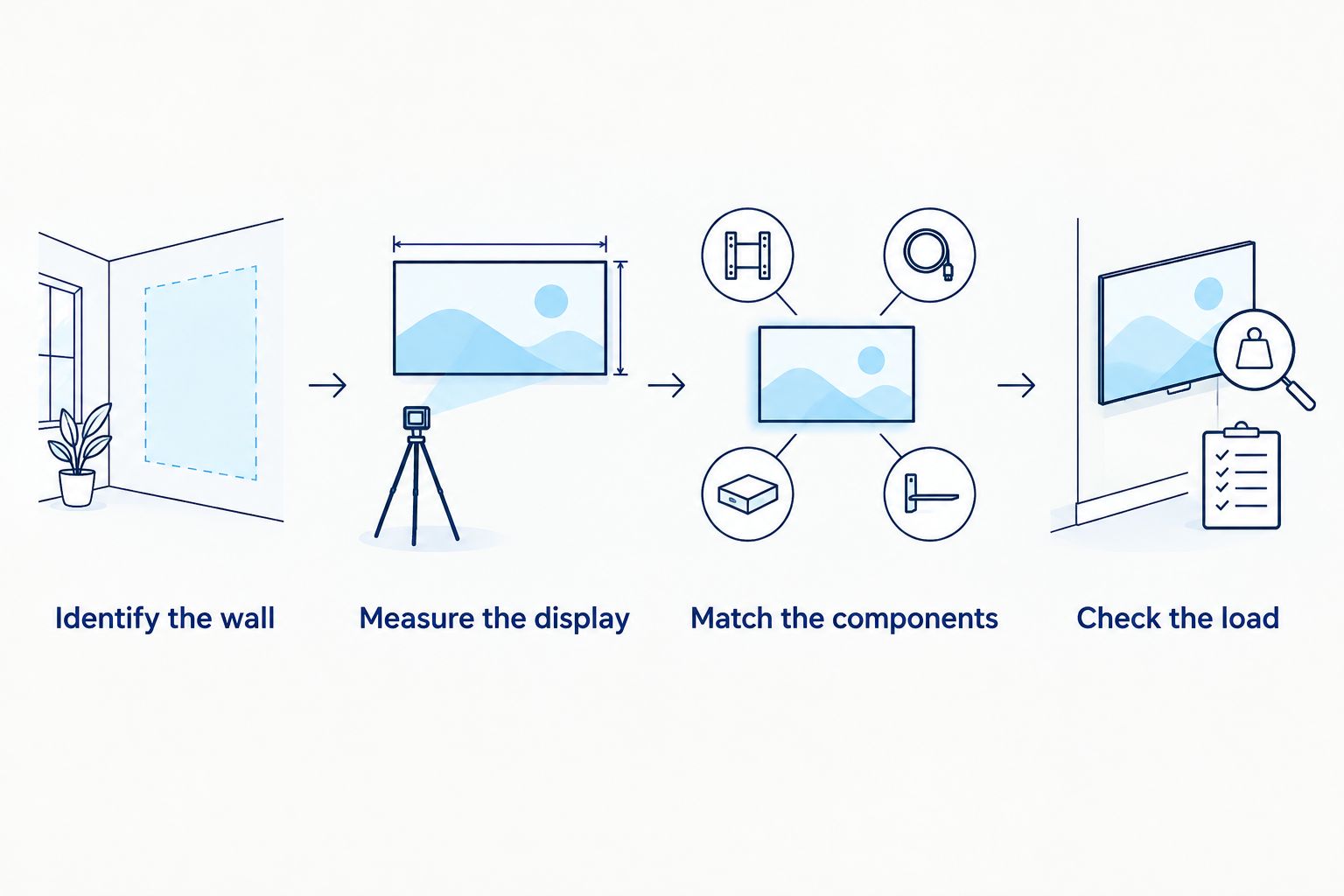
Establish whether the fixing points are masonry, structural framing or another suitable substrate. Surface appearance is not enough; plasterboard and decorative finishes conceal the structure that the fixings need to engage.
The same distinction applies to mounting wine racks on masonry: the substrate and fixing arrangement matter as much as the visible rack or shelf. For retail shelving, obtain installation instructions for the actual system and have the fixing approach checked by a suitably qualified installer.
Record usable wall width, obstructions, shelf projection and the space needed to remove merchandise. Include door swings, nearby counters and replenishment movements in the layout.
Measure stock in its retail packaging. A product that fits when turned sideways is not necessarily a good display if customers cannot see the front label or staff cannot refill it cleanly.
Write a parts list covering panels or standards, brackets, shelves, fixings and accessories. Confirm compatibility before ordering, particularly if you intend to combine existing fittings with new components.
Avoid assuming that similarly spaced slots or channels accept the same brackets. Keep the system identification and installation documentation with your store maintenance records.
Ask for the documented rating and the conditions attached to it. Establish whether a stated limit applies to an individual shelf, a bracket pair, a panel or the complete assembly.
Include the shelf itself and every displayed item when assessing the intended load. Keep staff instructions consistent with the documented installation rather than relying on what the shelf appears able to hold.
A Perth store and an Australia-wide online buyer need the same basic evidence: a dimensioned layout, compatible components and installation requirements. Locality does not replace those checks.
Choose twin-slot shelving if you are undecided and your merchandise mainly sits on shelves. It gives changing shelf-based ranges a clear starting point without making hooks or decorative panels the centre of the decision.
Choose slatwall for mixed hanging and shelf displays, fixed brackets for a stable feature area, or wire grid when hanging merchandise leads the layout. If the wall cannot support the specified installation, compare an appropriately specified floor-supported option instead.
Cheapshelving's shelving and shop fittings are relevant to Perth retailers planning perimeter displays. Separate the fixture selection from the installation decision, and confirm both before committing to a 2026 layout.
What's the best wall mounted shelving for retail in 2026?
Twin-slot shelving is the best default for changing shelf-based retail ranges. Choose slatwall instead when your display needs compatible shelves and hanging accessories on the same panel.
Is shelving against a wall the same as wall-mounted shelving?
No. Wall-mounted shelving takes support from the wall, while shelving positioned against a wall can use floor-supported uprights and a base. Check the installation requirements rather than judging from its position.
Is slatwall better than twin-slot shelving?
Slatwall is better for mixed hanging and shelf displays; twin-slot shelving is the clearer choice for adjustable shelf rows. The right choice depends on the merchandise and the exact compatible fittings.
Can I mount retail shelving on plasterboard?
Do not assume plasterboard alone can support your retail shelving. Confirm the underlying structure, the manufacturer's installation requirements and a suitable fixing arrangement before installation.
How deep should retail wall shelves be?
Choose shelf depth from the packaged merchandise and the space available in the store. Check the complete fixture projection and customer access rather than selecting a depth in isolation.
Can I mix brackets from different shelving systems?
Only combine brackets and shelving components when their compatibility is confirmed. Similar-looking slots or channels do not establish fit or load performance.
Does Cheapshelving's base-shelf range prove a unit is wall-mounted?
No. A product name describing a base shelf does not establish wall-mounting capability. Confirm the complete unit's support method and installation requirements before treating it as a wall-mounted system.
Check the least secure connection, not just the strongest-looking shelf. A substantial shelf still depends on its brackets, their engagement and the fixings behind them. Keep the installation instructions accessible so later merchandising changes respect the original system requirements.
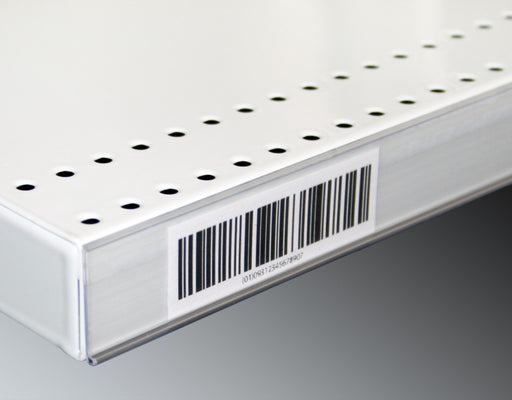
Upgrade your store's pricing and product labeling system with our Flat Adhesive Data Stripping. This cost-effective solution is designed to simplif...
View full details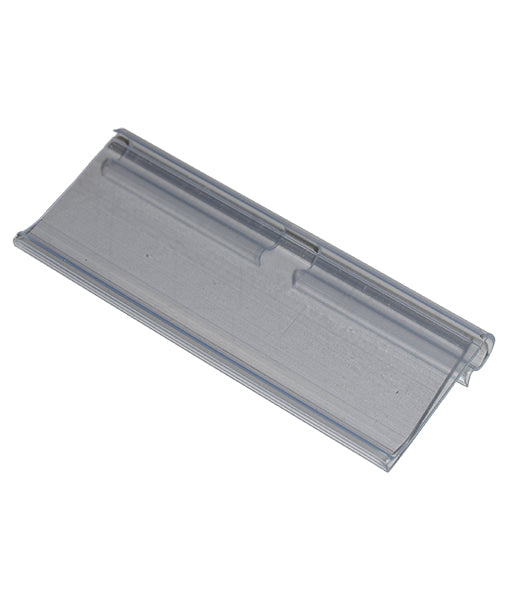
Enhance your store's product labeling and pricing system with our 100-Pack Flipper Tags. These versatile and easy-to-use tags are designed to strea...
View full detailsUpgrade your customers' shopping experience with our 28 litre Shopping Baskets featuring Metal Handles. These robust and stylish baskets are design...
View full detailsRevolutionize your customers' shopping experience with our Roller Shopping Baskets. These innovative baskets are designed for maximum convenience, ...
View full detailsMake shopping a breeze for your customers with our 28 Litre Shopping Baskets featuring Plastic Handles. These lightweight and sturdy baskets are de...
View full details{"one"=>"Select 2 or 3 items to compare", "other"=>"{{ count }} of 3 items selected"}