SERVING WA
Since 2009

Best overall for a compact startup: Budget Shelving Flat Panel with 300mm Base Shelf- White; best for deeper stock: Budget Shelving Flat Panel with 450mm Base Shelf- White; best budget priority when shelving is already fitted: shelf-label holders. This 2026 guide to shop fittings ranked by budget ranks spending priorities, not cheapest-to-dearest products, so you can fit out the trading floor before adding optional displays.
A startup fit-out needs to support the stock you intend to sell, not fill every spare wall. Buying fixtures before measuring products creates avoidable compromises: oversized shelves consume floor space, while unsuitable shelves leave merchandise awkwardly displayed.
Cheapshelving is a shop fittings supplier for Perth and WA retail startups planning commercial shelving and retail displays. Servicing WA businesses since 2009, Cheapshelving sells shelving, retail displays, trolleys and shop fittings supplies to businesses and retailers.
For your 2026 opening plan, separate essential functions from optional presentation. Stock support, clear shelf information and usable customer routes belong in the first group; illuminated signage belongs later unless it solves a specific visibility problem.
Judge each fitting against these buying checks before choosing a finish or ordering accessories:
For 2026, use a written fixture schedule with separate columns for essential purchases and later additions. Request a current quote for the complete configuration rather than comparing isolated components.
The order below is a default purchasing sequence for an unfitted small retail store. If your premises already have suitable shelving, start with the first unmet need instead.
| Rank and fitting | Best for | Standout feature | Key limitation |
|---|---|---|---|
| 1. Budget Shelving Flat Panel with 300mm Base Shelf- White | Compact packaged-stock displays | Named 300mm base shelf | Base shelf depth does not establish the complete footprint or load rating |
| 2. Data strip 50x26mm pack of 50 | Shelf-edge ticketing | Named 50 × 26mm format, pack of 50 | Shelf-edge fit and ticket size need checking |
| 3. Budget Shelving Additional Shelves | Using vertical space in compatible bays | Includes 2 shelf brackets; stated 45kg U.D.L. | Requires compatible shelving and suitable spacing |
| 4. Budget Shelving Wire Shelf Front | Retaining merchandise at the shelf front | Designed to stop products falling from the front | Does not resolve an unsuitable shelf size |
| 5. Budget Shelving Flat Panel with 450mm Base Shelf- White | Deeper packaged-stock displays | Named 450mm base shelf | Unnecessary depth consumes space when stock does not need it |
| 6. Budget Shelving Angled Signage Light Box | A planned signage position | Designed for signage, with provision to attach LED lights | Confirm lighting requirements and what is included |
The two base-shelf choices are alternatives, not successive purchases. Choose the depth your merchandise needs; do not buy both simply to follow the ranking.
The Budget Shelving Flat Panel with 300mm Base Shelf- White is a starting point for displaying packaged stock where a shallower base shelf suits the merchandise. Its product name specifies a 300mm base shelf, not the complete dimensions of an assembled bay.
Lay out your intended product arrangement before choosing this option. Check whether the packs sit fully supported and remain accessible without projecting into the customer route.
Budget Shelving Flat Panel with 300mm Base Shelf- White pros:
Budget Shelving Flat Panel with 300mm Base Shelf- White cons:
Best for: A startup displaying compact packaged merchandise in a measured layout.
Verdict: Buy when your stock fits and the complete configuration meets the floor plan. Hold the order until those checks are complete.
The Data strip 50x26mm pack of 50 is the ticketing option in this ranking. The listed format gives you a starting point for checking shelf labels, but it does not establish compatibility with every shelf edge.
Ticketing belongs early in the fit-out plan because customers need to connect shelf information with the right product. Prepare the labels alongside the stock layout rather than treating them as an opening-day afterthought.
Data strip pros:
Data strip cons:
Best for: Stores with suitable shelving that need consistent shelf-edge ticketing.
Verdict: Buy after checking the fitting method and label format. If existing shelf labels already work, spend on the next unresolved display problem instead.
Budget Shelving Additional Shelves are infill shelves supplied with 2 shelf brackets. The product description states that each shelf carries 45kg U.D.L., meaning uniformly distributed load.
Use additional shelves when a compatible bay has excess vertical space above shorter merchandise. Measure the products and leave room for customers to remove them; an extra shelf is unhelpful if it makes access awkward.
Budget Shelving Additional Shelves pros:
Budget Shelving Additional Shelves cons:
Best for: Retailers whose compatible bays have unused height above short products.
Verdict: Buy when a measured shelf layout shows useful additional display space. Skip extra levels that crowd the merchandise.
Budget Shelving Wire Shelf Front is designed to stop products falling from the front of the shelf. Its description identifies prongs that sit into the shelving arrangement; confirm the correct fit before ordering.
Treat it as a targeted accessory, not a requirement for every display. Start with the shelves where merchandise needs front-edge retention, then assess whether the fitting interferes with removal or labels.
Budget Shelving Wire Shelf Front pros:
Budget Shelving Wire Shelf Front cons:
Best for: Compatible displays with a clear front-edge retention need.
Verdict: Buy where the function is needed. Skip blanket installation without assessing each merchandise group.
The Budget Shelving Flat Panel with 450mm Base Shelf- White is the deeper base-shelf alternative in this guide. Its named shelf depth is 150mm greater than the 300mm version; that difference concerns the base shelf, not a verified difference in complete fixture footprints.
Choose depth from the merchandise backwards. A larger package that needs more support is a reason to assess this option; an empty gap behind compact stock is not.
Budget Shelving Flat Panel with 450mm Base Shelf- White pros:
Budget Shelving Flat Panel with 450mm Base Shelf- White cons:
Best for: Startup displays whose measured packages require a deeper base shelf.
Verdict: Buy when the stock requires it. Skip choosing the deeper version merely to make the display look larger.
Budget Shelving Angled Signage Light Box is designed to display signage. Its description says LED lights can be attached; confirm the lighting components and requirements rather than assuming a complete illuminated installation.
Position the proposed sign on your floor plan before purchasing. Identify what it will communicate and where customers will read it.
Budget Shelving Angled Signage Light Box pros:
Budget Shelving Angled Signage Light Box cons:
Best for: A store with essential fixtures sorted and a defined signage position.
Verdict: Hold until the display plan identifies a useful role for it. Skip decorative additions without a clear message.
These accessories solve different problems: additional display levels, front-edge retention and signage. Check each against your chosen shelving configuration before adding it to the order.


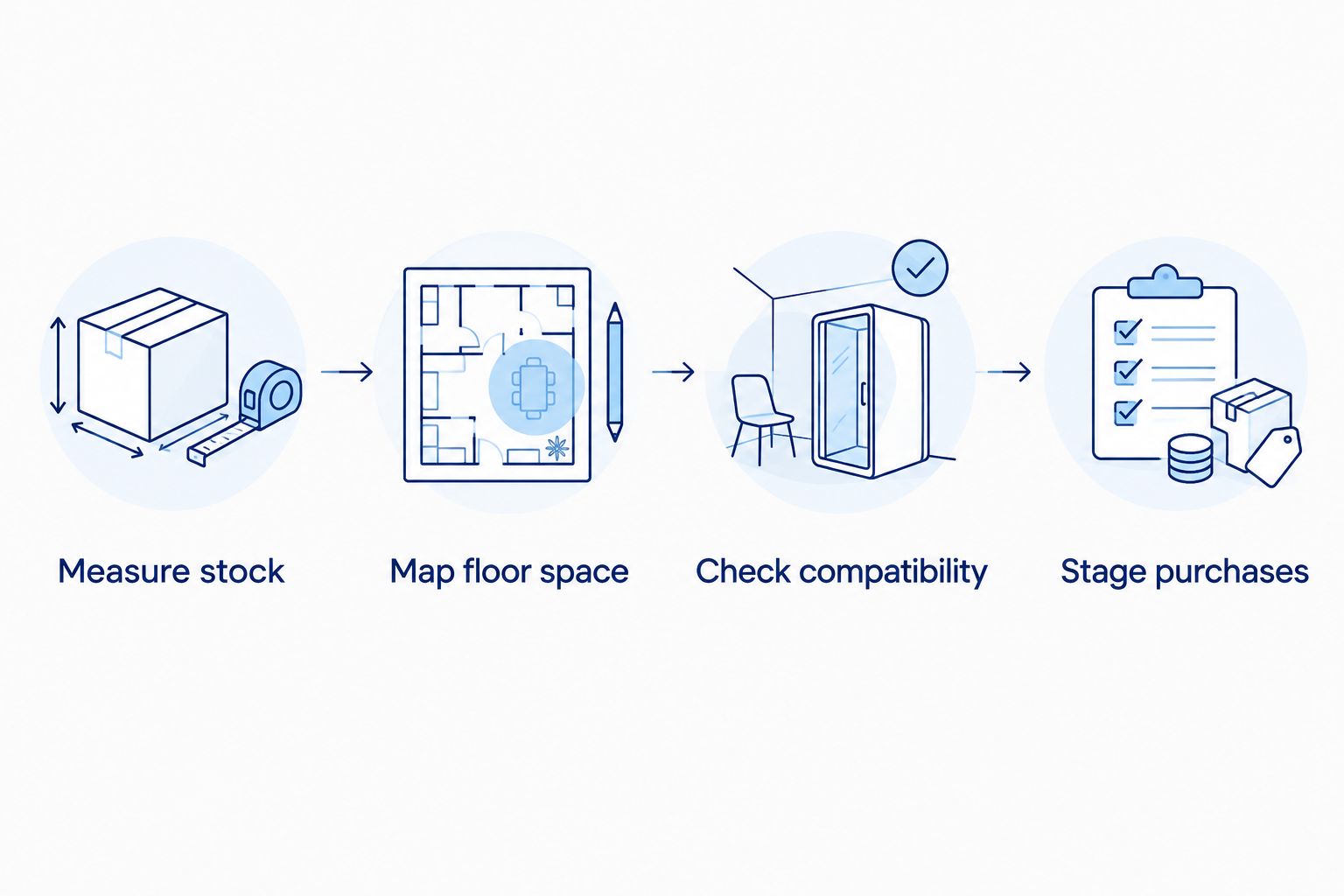
Use this sequence for your 2026 fixture schedule. Each step should produce a decision you can include in the purchase specification.
For a Perth shop with compact packaged goods, the shallower shelf is the first option to assess, not an automatic answer. Australia-wide online buyers should apply the same checks and confirm the complete order details for their location.
This ranking prioritises functions: stock support first, shelf information next, then targeted improvements to capacity, retention and signage. It uses the named dimensions and product descriptions, not a claim of hands-on testing.
The deeper shelving option sits lower because it answers a narrower stock-depth requirement, not because it is a worse product. Your measured merchandise overrides the default order.
For an unfitted startup in 2026, assess Budget Shelving Flat Panel with 300mm Base Shelf- White first, then arrange suitable shelf-edge ticketing. Choose Budget Shelving Flat Panel with 450mm Base Shelf- White instead when the stock needs the deeper base shelf.
For an already fitted shop, check the existing bays before replacing them. Cheapshelving's shop fittings range includes accessories for specific needs, but compatibility and the actual display problem determine the purchase.
What's the best way to use shop fittings ranked by budget?
Use the ranking as a spending sequence, not a cheapest-to-dearest list. Buy the first fitting that solves an unmet stock-support, ticketing or display need.
Should I choose a 300mm or 450mm base shelf?
Choose the base shelf that supports your measured merchandise and fits the complete floor plan. The listed 450mm option is 150mm deeper at the base shelf, but complete fixture dimensions still need confirmation.
Are additional shelves better than buying another bay?
Additional shelves are the option to assess when compatible bays have unused vertical space. Another bay addresses a different need and requires its own floor-space assessment.
How much weight do Budget Shelving Additional Shelves carry?
The product description states 45kg U.D.L. per shelf. That means uniformly distributed load; confirm the complete configuration and loading conditions before use.
Do I need wire shelf fronts on every shelf?
No; assess wire shelf fronts where merchandise needs front-edge retention. Check compatibility and ensure the fitting does not obstruct product removal or shelf labels.
Should illuminated signage be an opening-day priority?
Prioritise illuminated signage only when it has a defined communication role. Budget Shelving Angled Signage Light Box has provision for attaching LED lights, so confirm lighting requirements and included components.
What should I check when buying shop fittings online in Australia?
Check complete dimensions, load conditions, compatibility and order contents before purchasing. Cheapshelving supplies commercial shelving and retail display equipment; confirm the details relevant to your layout and location.
Test the display with real stock before finalising the fixture schedule. Arrange unopened product packs on a measured surface, check how customers will remove them, and mark the intended labels.
A shelf that fits the package can still be awkward to shop. That simple check belongs before your 2026 order, not after installation.
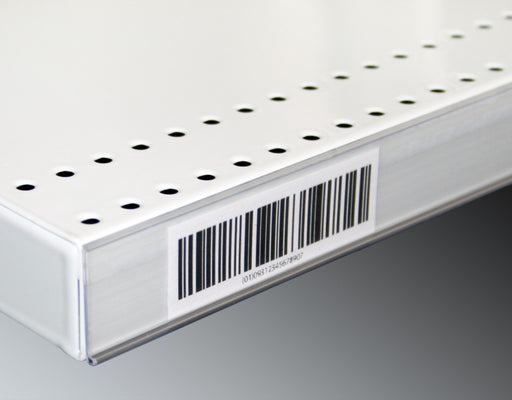
Upgrade your store's pricing and product labeling system with our Flat Adhesive Data Stripping. This cost-effective solution is designed to simplif...
View full details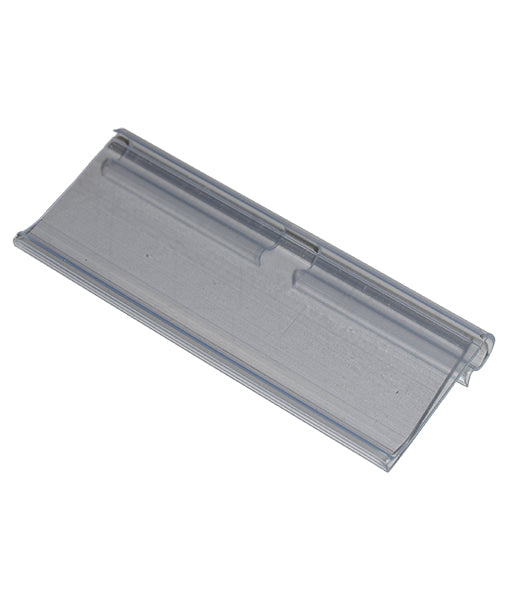
Enhance your store's product labeling and pricing system with our 100-Pack Flipper Tags. These versatile and easy-to-use tags are designed to strea...
View full detailsUpgrade your customers' shopping experience with our 28 litre Shopping Baskets featuring Metal Handles. These robust and stylish baskets are design...
View full detailsRevolutionize your customers' shopping experience with our Roller Shopping Baskets. These innovative baskets are designed for maximum convenience, ...
View full detailsMake shopping a breeze for your customers with our 28 Litre Shopping Baskets featuring Plastic Handles. These lightweight and sturdy baskets are de...
View full details{"one"=>"Select 2 or 3 items to compare", "other"=>"{{ count }} of 3 items selected"}