SERVING WA
Since 2009

Instead of repeatedly moving display stock behind the counter, set up a secure glass display cabinet for retail with verified door locking, clear staff access and a repeatable lock-check routine. This 2026 workflow takes you from measuring the location to handing over responsibility between shifts.
A lockable cabinet only controls access when staff close, lock and check it after use. Your setup needs to support that habit without making every customer enquiry awkward.
A display beside the counter serves a different purpose from a tall cabinet elsewhere on the shop floor. Decide who retrieves products, where customers wait and how staff return the key before choosing the fixture. For a wider layout change, start with how to measure a store for a shop fitting layout.
For your 2026 fitout, separate three decisions: the cabinet's physical suitability, its verified locking arrangement and your daily access procedure. Attractive presentation does not establish security, and a lockable storage cupboard does not establish that the glass display doors also lock.
Do not proceed to loading stock until installation, stability and shelf limits are resolved. Follow the manufacturer's instructions, and arrange appropriate installation assistance wherever those instructions require it.
Cheap Shelving's glass display cabinet range includes counter and full-height formats. The supplied product descriptions establish different features, so the comparison separates confirmed details from checks you still need to make.
| Cabinet | Best for | Confirmed useful features | Limitation or buying check |
|---|---|---|---|
| Glass Display Counter with LED Light | Staff-assisted viewing at counter height | 900mm high, 600mm wide, LED lights, lockable doors and 2 levels of tempered glass shelves | Confirm depth, shelf load limits, access side and adjustment positions |
| Glass Display Cabinet with LED Light (ELB) | Taller displays with separate cupboard storage | 1980mm high, 400mm wide, rear and top LED light strips, lockable storage cupboard and 3 shelf levels | The description confirms cupboard locking, not glass display-door locking; verify this before using it for controlled-access merchandise |
Choose confirmed display-door locking over an assumption based on the cabinet name. The counter's lockable doors are relevant to this workflow; the ELB requires an additional display-door security check.
Expected result: you have a selected configuration, a verified locking arrangement and a location that supports both customer viewing and staff access.
The following product cards help you check the two formats against your shortlist. Read the current specifications before deciding; the cards do not replace installation or security checks.


Expected result: the installed cabinet holds the intended display within its documented limits, and staff can retrieve products without disturbing neighbouring stock.
Perform the final presentation check with the doors shut and locked. An open-door arrangement is not a reliable test of reflections, label visibility or the customer's view.
For the Glass Display Counter with LED Light, shelf adjustment is described as occurring between the LED lights. Confirm the usable positions before planning the display; do not assume every shelf height is possible.
A cabinet also changes how customers interact with merchandise. Glass preserves a view of the product, but locked doors remove self-service handling. Keep the staff assistance process obvious so customers know how to inspect an item.
Use a short, repeatable sequence for every retrieval. The routine below is a store procedure to adopt, not a cabinet feature or an electronic access system.
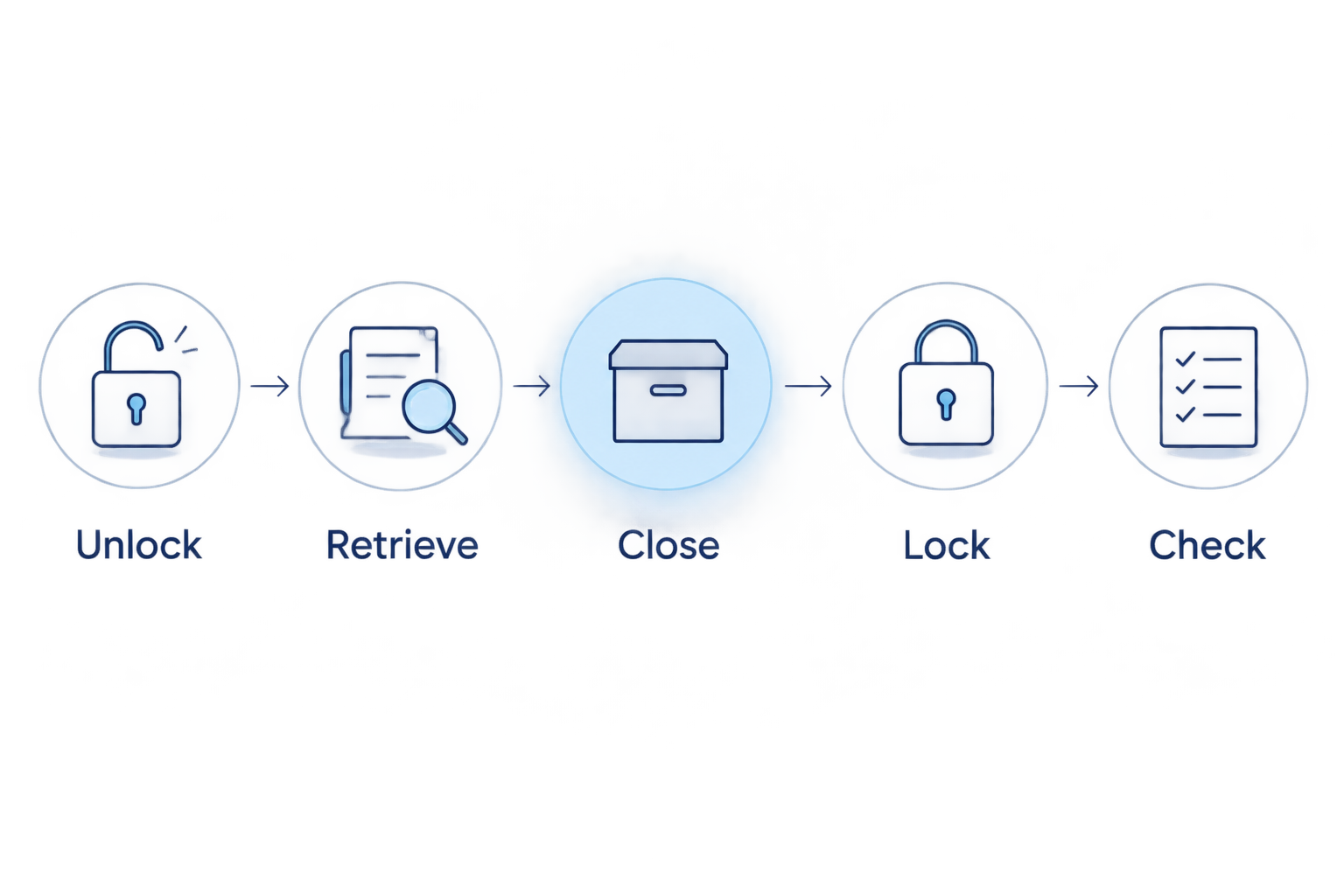
Expected result: each staff member follows the same access sequence, and the cabinet returns to its secured state after a customer interaction.
At shift handover, identify who is responsible for cabinet access and report any unresolved lock, door or stock issue. Keep the record simple enough to use during normal trading.
Include the cabinet location, authorised key holder, outstanding issue and action required. These are suggested record fields, not existing software controls. If you use a paper sheet, keep it where authorised staff can access it without exposing key-storage details to customers.
For your 2026 operating procedures, include a practical demonstration during staff induction. Ask the staff member to complete the full access sequence rather than simply confirm they have read it.
A replenishment workflow is different from a customer retrieval because it changes the display arrangement. Use this variant when you introduce a product, change packaging or reset the cabinet for a new range.
For a 2026 range reset, connect this task to your planogram-to-shelf-reset workflow. The benefit is consistency between the intended arrangement and the actual display; the trade-off is that locked-cabinet changes require authorised staff access.
Expected result: the merchandise, tickets and display record agree, and the reset finishes with the cabinet secured rather than merely restocked.
Stop using the cabinet for controlled-access merchandise until the problem is resolved. Check that the doors are fully positioned and unobstructed, then follow the supplier's operating guidance; do not force the key or modify the lock.
Check whether the key location or retrieval process creates unnecessary backtracking. Adjust the staff procedure while retaining controlled key access, then demonstrate the complete close-lock-check sequence at handover.
Review the cabinet from the customer's approach with its doors closed. Adjust merchandise placement and the cabinet's position where practical, while preserving safe circulation, installation requirements and cable routing.
Check the item's dimensions against the usable shelf space and permitted adjustment positions. Move it to a suitable fixture if the cabinet cannot accommodate it within the manufacturer's limits; do not remove required supports or crowd the doors.
Follow your store's missing-key procedure and restrict access to any spare. Contact the supplier about the appropriate remedy rather than improvising entry or assuming an unaccounted-for key presents no access concern.
Cheap Shelving is best for Perth retailers comparing commercial glass display cabinets alongside other shop fittings. Choose the cabinet on verified suitability, then build the access routine around your store's staffing and customer service needs.
Keep separate checks for display merchandise and any stock stored in a lower cupboard. A single cabinet can contain different access points; staff need to know which ones must be checked after use.
For a larger fitout, extend the same process to product identification, lighting and nearby service space. Prioritise improvements that resolve a measured problem instead of adding fixtures simply because floor space remains.
What makes a secure glass display cabinet for retail?
A secure glass display cabinet for retail needs verified display-door locking and a staff procedure that keeps it locked between uses. Confirm installation requirements, key control and the exact compartments covered by the locks.
Does a lockable storage cupboard mean the glass doors lock too?
No, a lockable storage cupboard does not establish that the glass display doors lock. Check each access point separately in the selected cabinet's specifications.
Is a counter cabinet better than a tall display cabinet?
A counter cabinet suits staff-assisted viewing at counter height, while a tall cabinet suits a different display arrangement. Choose using the full footprint, product dimensions, access requirements and confirmed locking features.
How do I check whether a cabinet will fit my shop?
Measure the complete cabinet footprint, installation route and space needed to operate its doors and retrieve stock. Height and width alone do not establish the floor space required.
Can I put heavy products on glass display shelves?
Only load glass shelves within the selected cabinet's documented limits. Obtain the shelf load information before loading, and never use another model's rating.
How should staff manage display cabinet keys?
Assign authorised access, keep keys under staff control and include key responsibility in shift handover. Complete the close-lock-check sequence after each retrieval.
What should I check after changing the display?
Check that merchandise and tickets match, doors close freely and the lock secures the display. Review visibility from the customer side after the cabinet is closed.
Test your 2026 cabinet procedure with a normal customer request before treating setup as finished. Ask a staff member to retrieve an item, return the cabinet to its secured state and hand over responsibility; that exercise checks the workflow that a static display inspection misses.
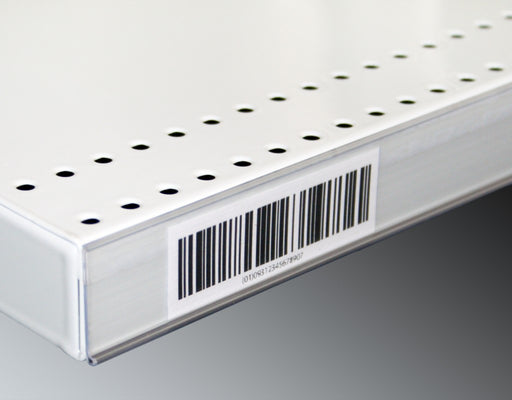
Upgrade your store's pricing and product labeling system with our Flat Adhesive Data Stripping. This cost-effective solution is designed to simplif...
View full details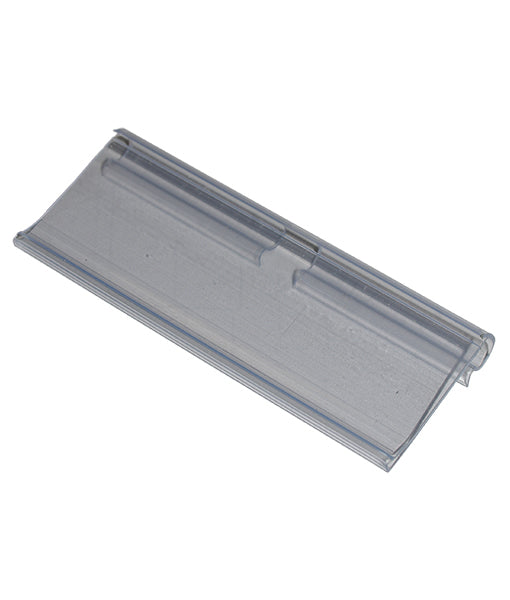
Enhance your store's product labeling and pricing system with our 100-Pack Flipper Tags. These versatile and easy-to-use tags are designed to strea...
View full detailsUpgrade your customers' shopping experience with our 28 litre Shopping Baskets featuring Metal Handles. These robust and stylish baskets are design...
View full detailsMake shopping a breeze for your customers with our 28 Litre Shopping Baskets featuring Plastic Handles. These lightweight and sturdy baskets are de...
View full detailsRevolutionize your customers' shopping experience with our Roller Shopping Baskets. These innovative baskets are designed for maximum convenience, ...
View full details{"one"=>"Select 2 or 3 items to compare", "other"=>"{{ count }} of 3 items selected"}