SERVING WA
Since 2009

Electronic shelf label costs in 2026 depend on the number of shelf labels, the hardware and software required, and the work needed to connect the system to your pricing records. Get an itemised, installed quote rather than budgeting from a label-only figure. Include mounting hardware, setup, ongoing charges and maintenance in the comparison, because the display itself is only part of the purchase.
Electronic shelf labels need a store-specific quote that separates equipment, installation and ongoing commitments. A useful quote identifies what your store receives, what your staff must do, and which charges continue after installation.
For the physical fit-out, Cheap Shelving supplies commercial shelving, retail displays and shop fittings to businesses and retailers in Perth. Treat fixture selection and electronic pricing integration as separate purchasing checks: a suitable shelf does not establish that a particular electronic label will attach to it.
Use this breakdown when requesting your 2026 quote. Ask each supplier to mark every item as included, optional, ongoing or your responsibility.
| Quote component | What to request | What to check |
|---|---|---|
| Electronic labels | Quantity, display sizes and intended shelf locations | Whether the quote covers every required ticket position |
| Mounting hardware | Rails, clips, brackets and any other required attachments | Compatibility with your actual shelf edges and display hooks |
| Communications equipment | Any gateways, controllers or other required equipment | Who confirms coverage across the intended installation |
| Software | Management functions and charging arrangements | Which functions are included and which require additional agreements |
| Pricing integration | Connection to your pricing records or point-of-sale system | Who configures, tests and maintains the connection |
| Installation | Fitting, configuration, product mapping and testing | Which tasks belong to the supplier and which belong to your staff |
| Ongoing operation | Support, maintenance and replacement arrangements | Contract terms, exclusions and responsibilities |
Compare the completed system, not just the number of displays in the carton. A quote with fewer inclusions is not directly comparable with a quote that includes fitting, integration and training.
Shelf ticketing connects your stock, pricing records and the information customers see. Changing the display method does not remove the need to maintain correct product information or check that each ticket sits beside the right item.
For a Perth store planning a refit in 2026, the practical question is whether electronic labels address a measured problem. Frequent ticket changes, difficult-to-maintain displays or inconsistent update procedures deserve investigation. A general desire to modernise is not a sufficient purchasing brief.
Document the work you want to remove before choosing the equipment. Otherwise, you risk buying a different display method while leaving the underlying pricing process unchanged.
These factors define the scope suppliers must price. Record them before asking for competing proposals so each supplier works from the same store requirements.
These are purchasing requirements, not evidence that a particular supplier includes every component. Keep the written scope beside the quote throughout the decision.
Electronic labels suit a different operating process from printed shelf tickets. Neither option removes the need for accurate source prices, readable displays and a clear checking routine.
| Approach | Best for | Practical advantage | Limitation |
|---|---|---|---|
| Electronic shelf labels | Retailers seeking centrally managed shelf updates | Supports electronic updates when the system and integration provide them | Requires confirmed mounting, integration and ongoing operating arrangements |
| Paper tickets in data stripping | Retailers whose manual ticketing process meets their needs | Keeps printed tickets in a dedicated shelf-edge holder | Staff still need to print, position and replace tickets |
| Mixed electronic and paper ticketing | Retailers assessing selected departments before wider adoption | Limits the initial change to a defined area | Staff must maintain separate update procedures |
Keep paper ticketing if it meets your operational needs; assess electronic labels against a documented problem. Do not assume that every department needs the same approach.
For example, assess a regularly changing promotional area separately from a section with infrequent ticket changes. Use your own records to establish the difference rather than applying a general savings claim to the whole store.
A mixed approach needs boundaries. Specify which locations use electronic labels, who maintains the remaining paper tickets and how staff identify incomplete updates.
A clear brief makes quotes easier to compare and exposes assumptions before you commit. Follow this sequence using your existing store layout and pricing process.
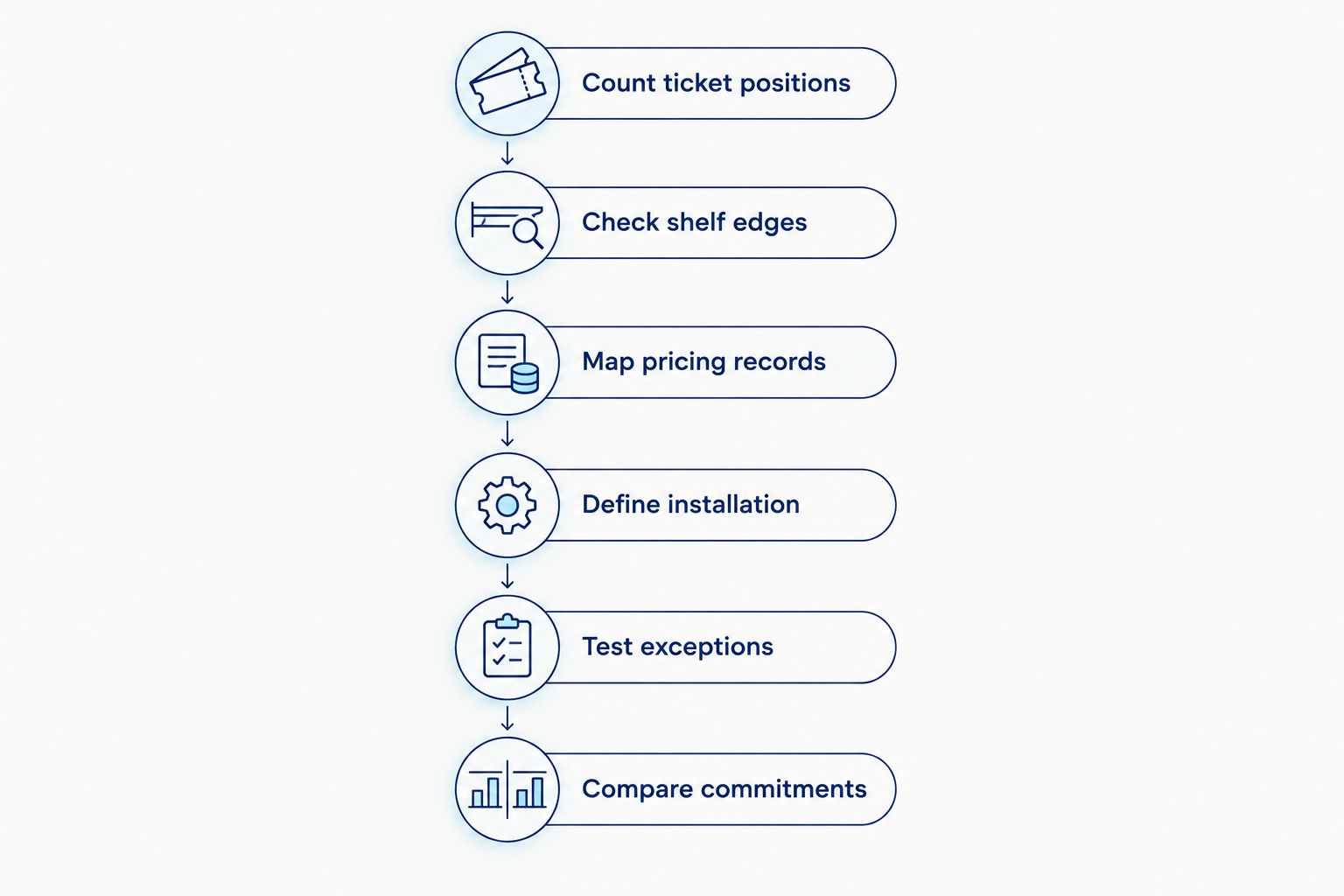
Keep photographs and measurements with the brief rather than relying on a verbal description. If a supplier changes the proposed label size or attachment method, check the affected locations again before accepting the revision.
For the operating sequence after installation, use the electronic shelf labels to automatic pricing workflow alongside your supplier's system-specific instructions.
The shelf edge is part of the electronic label installation, not an afterthought. A display that meets your information requirements still needs a secure, readable position that does not interfere with shopping or replenishment.
Ask the supplier to demonstrate the proposed mounting on your actual fixture type. Check the label from the customer's viewing position, then have staff handle stock around it as they would during normal replenishment.
Your buying checks should cover:
Cheap Shelving is best for Perth retailers sourcing commercial shelving and retail display equipment. For an electronic label project, confirm the proposed system's mounting compatibility with the fixture specifications; do not infer compatibility from the shelf's appearance.
Retaining an existing fixture is a useful option only when the proposed attachment works. Equally, do not include replacement shelving in the project merely because electronic ticketing is new: establish the physical requirement first.
Electronic labels are worth assessing against the ticketing work your store actually performs. Record printing, sorting, walking, fitting, checking and correcting tickets, rather than timing only the moment someone replaces a label.
Use the same measurement boundaries before and after a trial. Include the work needed to manage electronic labels, investigate failed updates and correct product associations; removing paper handling does not make those tasks disappear.
For your 2026 decision, ask suppliers to summarise their proposed commitments over 12 months, 24 months and 36 months. These are comparison periods for your purchasing exercise, not assumed contract lengths or promised payback periods.
Keep the decision in separate parts:
A supplier's demonstration shows how a system works under the demonstrated conditions. Your acceptance test must establish whether it works with your fixtures, product records and staff procedures.
A department-level trial gives you a defined area in which to check mounting, readability, pricing updates and staff handling before considering a wider rollout. Agree on the scope and acceptance criteria before installation.
Choose an area that reflects the problem you want to solve, not simply the easiest shelf to equip. If promotional ticket changes are the concern, the trial needs to include that workflow.
Document what happens outside the trial as well. Staff need a clear process for the paper-ticketed locations so a partial rollout does not create uncertainty about which updates are complete.
A Perth retailer should confirm who installs the system, who resolves faults and which support arrangements apply to the store. Request written responsibilities rather than assuming that a supplier's sales presence establishes local installation or support coverage.
Have the proposal identify your responsibilities for site access, network preparation, product records and staff participation. For Australia-wide buyers, apply the same checks to the actual installation location rather than the supplier's office address.
Cheap Shelving supplies commercial shelving and retail displays to WA businesses. That fixture-supply role is separate from confirming an electronic label provider's software, integration and service commitments.
How much do electronic shelf labels cost for a small shop?
A small shop needs an itemised quote based on ticket positions, mounting, system requirements and installation. Compare the complete proposal rather than multiplying a display-only figure by your product count.
Is the electronic label the only thing I need to budget for?
No. Ask suppliers to identify required mounting hardware, communications equipment, software, integration, installation and ongoing support, with each item marked as included or separate.
Are electronic shelf labels better than paper tickets?
Electronic shelf labels suit centrally managed updates, while paper tickets remain suitable where a manual process meets the store's needs. Compare both against your actual ticketing workload and checking procedures.
Can electronic shelf labels attach to my existing shelving?
Compatibility needs confirmation against your actual shelf edges and the proposed mounting hardware. Request a physical demonstration before approving the installation.
Do electronic shelf labels connect to every point-of-sale system?
Do not assume universal compatibility. Ask the supplier to confirm your specific system, explain the connection and demonstrate how approved prices reach the correct shelf displays.
Will electronic labels remove all manual pricing work?
No. Staff still need procedures for product mapping, checking displayed information, handling exceptions and maintaining the installation.
What should I ask an electronic label supplier about ongoing charges?
Ask for written software, support, maintenance and replacement arrangements. Check charging periods, exclusions, renewal conditions and what happens when the agreement ends.
Should I replace shelving when installing electronic labels?
Replace shelving only when the fixture assessment establishes a need. Confirm mounting, readability and replenishment access before adding replacement fixtures to the project.
Count ticket positions, not just products. The same product displayed in separate locations needs its pricing information managed at each location, so a product export alone is not a complete installation brief.
Before requesting your final 2026 quote, walk the floor with the proposed ticket map. Check promotional ends, secondary displays and any positions missing from the main shelf plan. That check gives the supplier a clearer scope and gives you a firmer basis for accepting the finished installation.
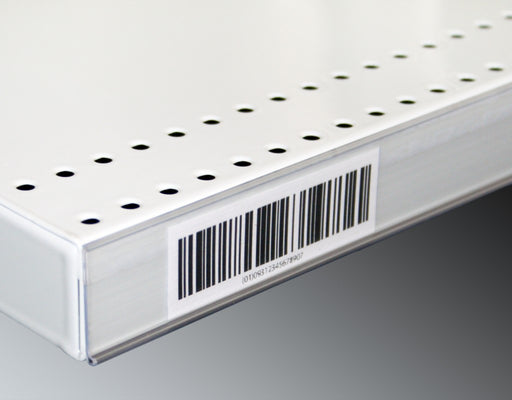
Upgrade your store's pricing and product labeling system with our Flat Adhesive Data Stripping. This cost-effective solution is designed to simplif...
View full details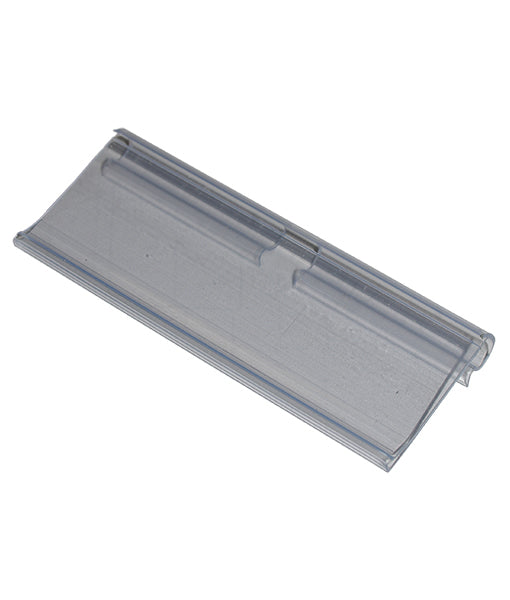
Enhance your store's product labeling and pricing system with our 100-Pack Flipper Tags. These versatile and easy-to-use tags are designed to strea...
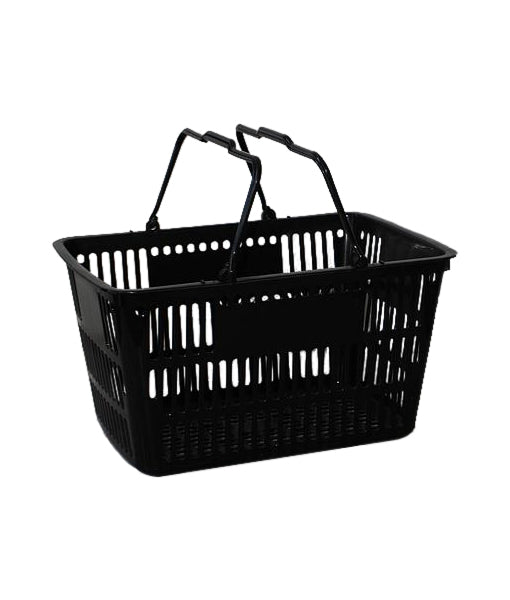
View full detailsUpgrade your customers' shopping experience with our 28 litre Shopping Baskets featuring Metal Handles. These robust and stylish baskets are design...
View full detailsMake shopping a breeze for your customers with our 28 Litre Shopping Baskets featuring Plastic Handles. These lightweight and sturdy baskets are de...
View full detailsRevolutionize your customers' shopping experience with our Roller Shopping Baskets. These innovative baskets are designed for maximum convenience, ...
View full details{"one"=>"Select 2 or 3 items to compare", "other"=>"{{ count }} of 3 items selected"}