SERVING WA
Since 2009

Best overall shortlist: Heavy Duty Shelving Flat Punched Panel with 1000x470mm Base Shelf-White. Best for narrow displays: the 900x300mm plain-panel version. Best for a slat-panel layout: the 1000x470mm metal-slat version. This 2026 guide compares heavy duty shelving for hardware stores by footprint, merchandising purpose and the specifications you need to confirm before ordering.
Hardware stock creates different shelving demands. Boxed fittings need usable shelf space, hanging packs need compatible hooks, and reserve cartons need a storage arrangement that suits replenishment. Choosing everything from the same product photograph misses those differences.
Cheap Shelving heavy duty shelving is best shortlisted by hardware retailers matching a specific base-shelf size and panel type to their merchandise. The business supplies commercial shelving and retail displays to Perth and WA operators; start with Cheap Shelving when assembling your fixture shortlist.
For a 2026 fitout, separate the sales floor from the stockroom before comparing products. A customer-facing display needs readable labels and accessible merchandise; a reserve-stock bay needs a loading and retrieval plan. Neither requirement establishes a safe load rating by itself.
Use these criteria before comparing finishes or ordering matching bays:
The best budget decision is the fixture that meets the requirement without unnecessary depth or incompatible accessories. A heavy-duty label is not a substitute for a documented specification.
The order below follows the detailed recommendations. Each option has a different job; the ranking does not imply that one carries more weight than another.
| Item | Best for | Standout feature | Key limitation |
|---|---|---|---|
| Heavy Duty Shelving Flat Punched Panel with 1000x470mm Base Shelf-White | General merchandise shortlist | Punched panel with a 1000x470mm base shelf | Hook compatibility and loading need confirmation |
| Heavy Duty Shelving Flat Plain Panel with 900x300mm Base Shelf-White | Narrow shelf-led displays | Plain panel with a 900x300mm base shelf | Less base-shelf depth for larger cartons |
| Heavy Duty Shelving Metal Slat Panel with 1000x470mm Base Shelf-White | Slat-panel merchandising | Metal-slat panel with a 1000x470mm base shelf | Accessory fit and projection need checking |
| Long Span Shelving | Separate stockroom assessment | Storage and display option | Dimensions and load specification must suit the storage task |
The full product name is Heavy Duty Shelving Flat Punched Panel with 1000x470mm Base Shelf-White. It combines a punched back panel with the stated base-shelf format, making it the first option to assess for a shelf-led hardware display.
The 1000mm base-shelf width gives you a defined starting point for laying out product groups. Check the complete bay width separately, and confirm the dimensions of additional shelves before repeating the configuration along an aisle.
Punched-panel shelving pros:
Punched-panel shelving cons:
Best for: Hardware retailers planning general merchandise bays and checking a deeper base shelf against their stock mix.
Before ordering, place your largest intended carton on a measured template. Confirm shelf loading, support requirements and accessory compatibility against the exact configuration.
Verdict: Hold until the loading and complete bay dimensions are confirmed; then buy for general merchandise that fits.
Heavy Duty Shelving Flat Plain Panel with 900x300mm Base Shelf-White is the narrower, shallower base-shelf option in this shortlist. Its plain-panel format suits a plan built around shelf presentation rather than an assumed back-panel hook arrangement.
Use this option to assess smaller packaged stock where a deeper base shelf is unnecessary. The 300mm dimension describes the base shelf, not a guaranteed overall installed depth or a load capacity.
Plain-panel shelving pros:
Plain-panel shelving cons:
Best for: Smaller packaged hardware displayed on shelves where floor depth is a priority.
For a compact Perth shop, test the proposed layout with stock and a replenishment trolley before committing to repeated bays. The guide to floor space needed per shelving aisle covers the related layout question.
Verdict: Buy for a narrow shelf-led display only after confirming stock fit, loading and installed dimensions.
Heavy Duty Shelving Metal Slat Panel with 1000x470mm Base Shelf-White pairs a metal-slat back panel with a stated 1000x470mm base shelf. Shortlist it when your merchandising plan specifically calls for that panel format.
For hardware stores combining shelf stock with hanging packs, the buying decision starts with compatibility. Ask which accessories fit this exact panel and how the complete arrangement must be loaded; do not transfer assumptions from another slatwall system.
Metal-slat shelving pros:
Metal-slat shelving cons:
Best for: Hardware retailers specifying a metal-slat merchandising system with confirmed compatible fittings.
Mock up the deepest hanging pack alongside the intended shelf stock. Check that customers can remove either item without catching the other display, and include that projection in the aisle plan.
Verdict: Hold until the accessory and loading schedule is confirmed; buy when the metal-slat format serves a defined display need.
Long Span Shelving is described as a storage and display option for Australian retail businesses. Treat it as a separate candidate for reserve stock rather than assuming a customer-facing retail bay should also handle your carton-storage requirements.
Start with carton sizes, stored quantities and the way staff retrieve stock. Then request a configuration with dimensions and ratings that match that task.
Long Span Shelving pros:
Long Span Shelving cons:
Best for: Retailers reviewing reserve-stock storage independently of their shop-floor fixtures.
Cheap Shelving lists Long Span Shelving alongside retail shelving, but the correct choice depends on the specified configuration. Verdict: Hold until the carton layout, load ratings and installation requirements match the stockroom task.
This 2026 shortlist ranks the supplied products by base-shelf dimensions, named panel format and stated storage or display purpose. It is a fit-for-use comparison, not a load test or a durability ranking.
The punched-panel option leads the general merchandise shortlist. The plain-panel option serves the narrower-display requirement, the metal-slat option serves a specific panel plan, and Long Span Shelving receives a separate stockroom assessment.
For a 2026 shelving project, complete the checks below before finalising quantities. Keep the answers with the proposed bay configuration so changes to shelves or accessories receive the same scrutiny.
Measure the intended merchandise in its selling or storage packaging. Record width, depth, height and weight, then check both the space it occupies and the movement needed to remove it.
Request the applicable shelf and bay ratings, including any restrictions on load distribution. A heavy container concentrated in one position is a different loading question from small packs spread across a shelf.
Mark the complete fixture footprint on the floor. Walk the route with the equipment staff will use, accounting for merchandise projection rather than measuring only between shelf bases.
Confirm what makes up each bay and which parts are separate. Check shelf supports, panel fittings, end arrangements and installation requirements before multiplying the order across the store.
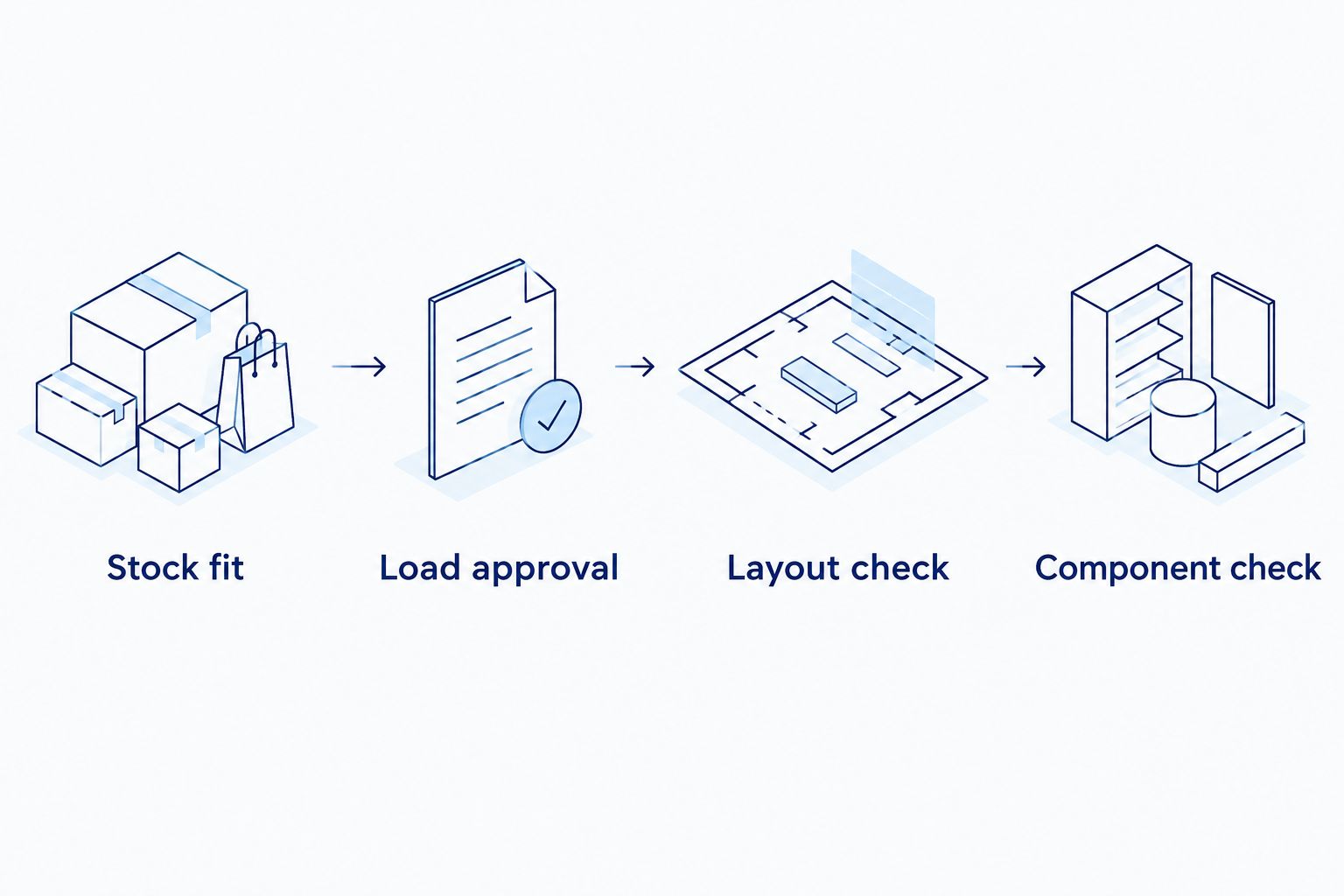
These checks work in sequence: establish the stock requirement, confirm loading, test the layout, then finalise components. Do not let an accessory decision quietly change the approved configuration.
Start with the punched-panel 1000x470mm base-shelf option for a general merchandise enquiry. Move to the plain-panel 900x300mm option when your stock fits the shallower shelf and the layout benefits from it. Choose the metal-slat version only when compatible accessories form part of the plan.
Assess Long Span Shelving separately for reserve cartons. You do not need to force every retail and storage task onto one fixture format.
When enquiring with Cheap Shelving about heavy duty shelving for hardware stores, provide a stock list, a measured layout and the intended loading. Ask for the complete configuration in writing; that is a firmer purchasing basis than a product name alone.
What's the best heavy duty shelving for a hardware store?
The Heavy Duty Shelving Flat Punched Panel with 1000x470mm Base Shelf-White is the general merchandise shortlist choice in this guide. Buy only after confirming the complete bay dimensions, applicable load ratings and suitability for your stock.
Is a 300mm or 470mm base shelf better for hardware stock?
Choose between a 300mm and 470mm base shelf by measuring the merchandise and checking the complete fixture footprint. The shallower option takes less base-shelf depth, while the deeper option provides more base-shelf space; neither dimension establishes capacity.
How much weight can heavy duty retail shelving hold?
Use the documented shelf and bay ratings for the exact configuration being installed. Confirm load distribution, supports and installation requirements rather than deriving capacity from the words heavy duty.
Can I put hooks on punched-panel shelving?
Use hooks only after confirming that they fit the exact punched-panel system and meet its loading requirements. Similar-looking hooks and panels are not proof of compatibility.
Is metal-slat shelving better than plain-panel shelving?
Metal-slat shelving is the relevant shortlist option when your display plan requires confirmed compatible slat-panel accessories. Plain-panel shelving is the simpler comparison for a shelf-led layout without an assumed back-panel hanging arrangement.
Should a hardware stockroom use the same shelving as the shop floor?
Assess stockroom shelving separately from sales-floor displays. Carton dimensions, loading and retrieval requirements determine whether the proposed storage configuration suits reserve stock.
What should I send a shelving supplier before ordering?
Send a measured floor plan, packaged-stock dimensions, item weights and the intended shelf or hanging arrangement. Request confirmation of the complete bay configuration, ratings, compatible accessories and installation requirements.
Test removal, not just storage. A carton that fits on a shelf still needs room to come out, and a hanging pack needs clearance from adjacent merchandise. Use actual stock in the layout check before repeating a bay across the store.
Upgrade your store's pricing and product labeling system with our Flat Adhesive Data Stripping. This cost-effective solution is designed to simplif...
View full details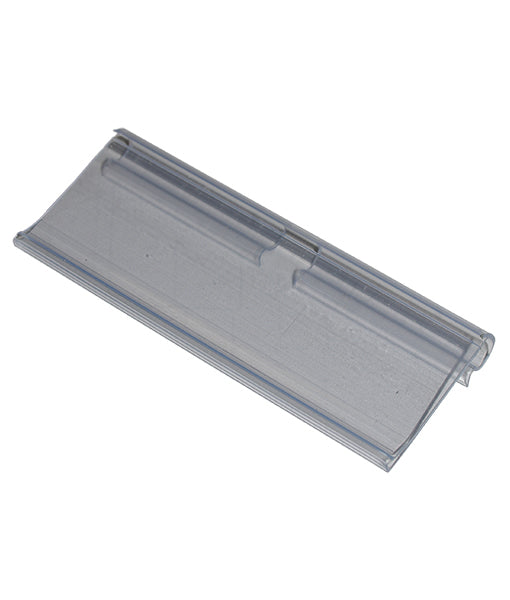
Enhance your store's product labeling and pricing system with our 100-Pack Flipper Tags. These versatile and easy-to-use tags are designed to strea...
View full detailsUpgrade your customers' shopping experience with our 28 litre Shopping Baskets featuring Metal Handles. These robust and stylish baskets are design...
View full detailsMake shopping a breeze for your customers with our 28 Litre Shopping Baskets featuring Plastic Handles. These lightweight and sturdy baskets are de...
View full detailsRevolutionize your customers' shopping experience with our Roller Shopping Baskets. These innovative baskets are designed for maximum convenience, ...
View full details{"one"=>"Select 2 or 3 items to compare", "other"=>"{{ count }} of 3 items selected"}