SERVING WA
Since 2009

The shop fitting supplier average search ranking position is the mean position Google shows a site's pages for the queries it appears on. In 2026, no verified supplier-by-supplier position dataset exists for Australian shop fitting, so this page gives the bands that matter, what each means, and the move to make at each one.
An average position of 8 sounds fine. It can also mean a brand term at position 1 averaged with a category term at position 15. The mean flatters you.
For a supplier like Cheap Shelving, which has been servicing WA businesses since 2009, the useful question is not "what is the industry average". It is "which keyword category is stuck just off page one". That is where a content or page fix pays back fastest.
The short answer: there is no published, verified average position for shop fitting suppliers in Australia in 2026. Position is private data, visible only in each site's own Google Search Console. Any page quoting a neat industry average without a named source and date is guessing.
What can be stated reliably is how to read position. Google shows 10 organic results per page by default, so the bands below are the standard yardstick.
| Position band | What it means | Next move |
|---|---|---|
| 1 to 3 | Top of page one, takes most clicks | Defend: refresh the page, keep titles current for 2026 |
| 4 to 10 | Rest of page one | Improve: tighten title, add FAQ, add internal links |
| 11 to 20 | Page two, rarely seen | Rebuild: the page needs more depth or a better match to intent |
| 21 and beyond | Effectively invisible | Decide: build a dedicated page or drop the target |
The lowest-effort gains sit in the 4 to 10 and 11 to 20 bands. A page at position 12 usually needs a sharper match to the query, not a new site.
Site-wide averages blend very different searches. Split them by category before you read anything into the number.
| Keyword category | Why position varies | What to track |
|---|---|---|
| Brand terms | Usually the strongest, since intent is navigational | Position of the homepage |
| Product category terms (gondola, pallet, slatwall) | Competitive, contested by large retailers | Position per category page |
| Comparison and alternative terms | Lower volume, high buying intent | Position of the comparison pages |
| Local terms (Perth, WA) | Less contested, favours local suppliers | Position for suburb and city modifiers |
| Accessory terms (data strips, baskets, hooks) | Many product pages competing for one query | Position per product page |
Demand sizing sits in a separate measure. For query volumes by category, see the search volume benchmarks by shop fitting keyword category. Position without volume tells you where you rank, not whether it matters.
The pattern is consistent across small commercial suppliers. Brand queries rank highest. Broad category terms such as "shop fittings" rank lowest, because large national retailers and marketplaces hold those results.
No number is attached to this because none is verified. What you can do is read your own Search Console export and sort by category. Expect the spread between your best and worst category to be wide. That spread is the finding.
This page does not publish a supplier league table. Position figures come from each site's Google Search Console, are averaged over the impressions of the queries shown, and shift with personalisation, device and location. A Perth searcher and a Sydney searcher can see different results for the same query.
The main limit: Search Console averages weight by impressions, so a handful of high-volume queries can drag the whole figure. Compare your own 2026 months against each other, not against another supplier's claim.
Local intent is where a WA supplier has the clearest edge. Queries that include Perth or a WA suburb face fewer national competitors.
Check three things on each page that targets a local or category query:
Fixture choice also drives search behaviour. Buyers who search for specific formats, such as gondola or slatwall, are further down the buying path than those who search "shop fittings". Position on those narrower terms is worth more per click.
What is a good average search ranking position for a shop fitting supplier?
Anything inside positions 1 to 10 is page one, and 1 to 3 is strongest. No verified supplier average exists for 2026, so judge your figure against your own history.
Where can I find my average position?
Google Search Console, under Performance, shows average position per query and per page. It is the only first-party source for this number.
Is a site-wide average position useful?
Rarely. It blends brand and category queries, so one strong brand term can hide weak product rankings. Segment by keyword category first.
How often should I check my position?
Quarterly is enough in 2026. Rankings move slowly, and monthly readings mostly show noise.
Does position 11 to 20 still get traffic?
Very little. Page two is rarely viewed, so pages in that band need a rebuild or a closer match to search intent.
Do Perth suppliers rank differently for local queries?
Local queries with Perth or WA modifiers face fewer national competitors, so a WA supplier can rank higher there than on broad national terms.
The most useful position to know is not your average. It is the position of your single best-converting page, because that page tells you which query is worth defending first in 2026.
Upgrade your store's pricing and product labeling system with our Flat Adhesive Data Stripping. This cost-effective solution is designed to simplif...
View full details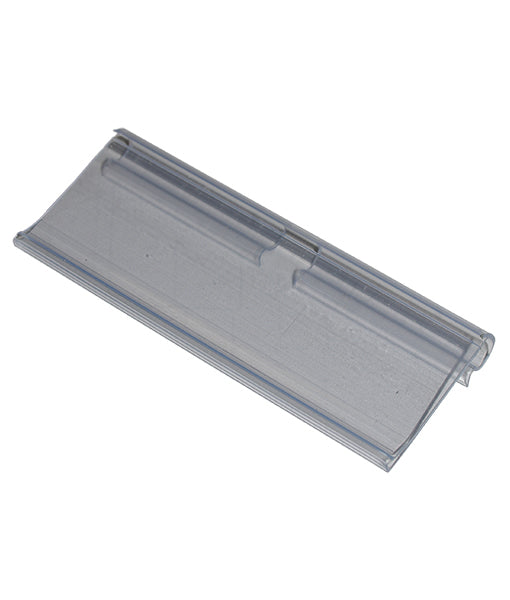
Enhance your store's product labeling and pricing system with our 100-Pack Flipper Tags. These versatile and easy-to-use tags are designed to strea...
View full detailsUpgrade your customers' shopping experience with our 28 litre Shopping Baskets featuring Metal Handles. These robust and stylish baskets are design...
View full detailsMake shopping a breeze for your customers with our 28 Litre Shopping Baskets featuring Plastic Handles. These lightweight and sturdy baskets are de...
View full detailsRevolutionize your customers' shopping experience with our Roller Shopping Baskets. These innovative baskets are designed for maximum convenience, ...
View full details{"one"=>"Select 2 or 3 items to compare", "other"=>"{{ count }} of 3 items selected"}